Send Four Measurements, Get the Excavator Seat That Fits
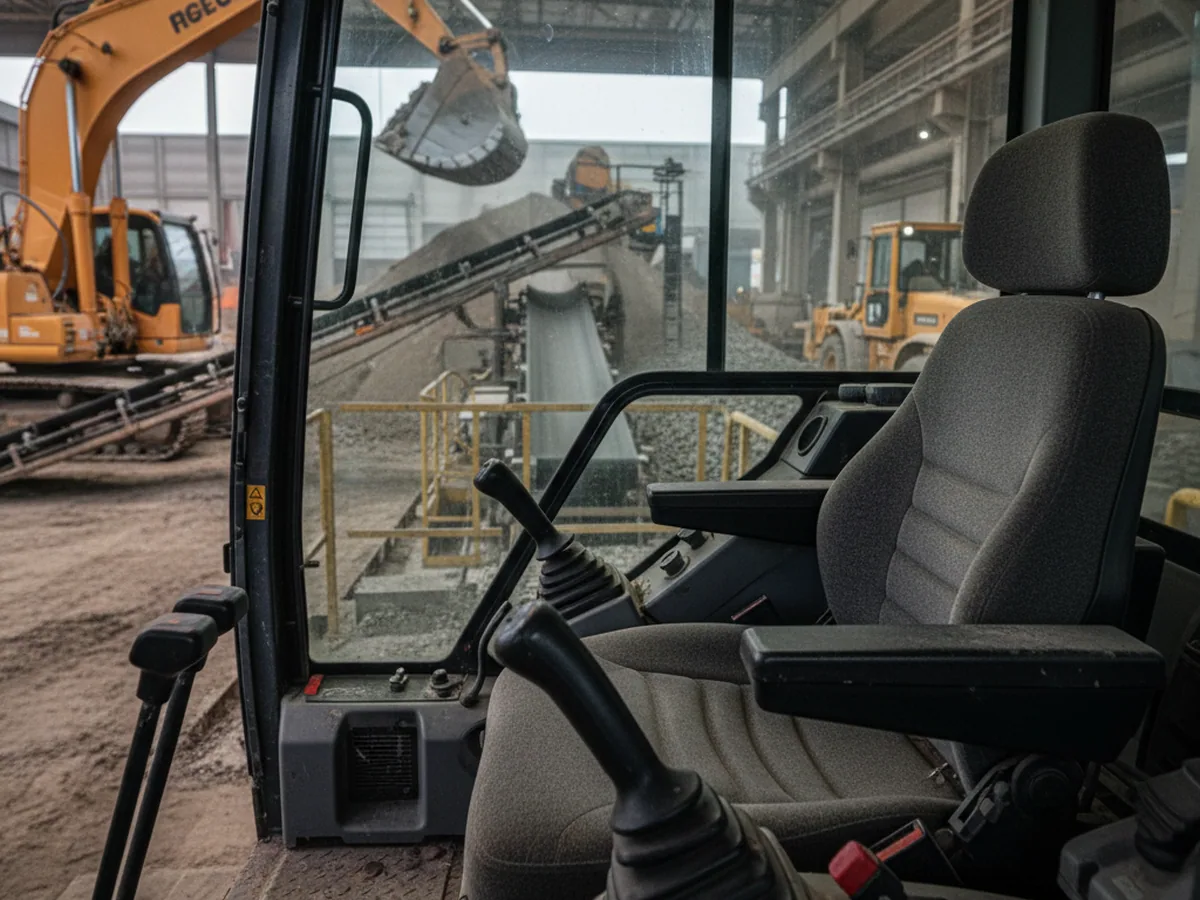
KL02 and YS2-8 are the two models built for excavators, made on six automated lines at a 35,000 m² plant where stamping, welding, foaming and assembly all run under one roof. Send the mounting measurements off your machine and the answer names which models physically fit and which do not.
KL02Mechanical high back. Full-body and head support for long shifts.
YS2-8Folds forward 27.5°. 80 mm suspension travel, 50–130 kg.
48 hoursFrom your measurements to a model-by-model fitment answer.
Who we build for
Excavator Seats Built In-House
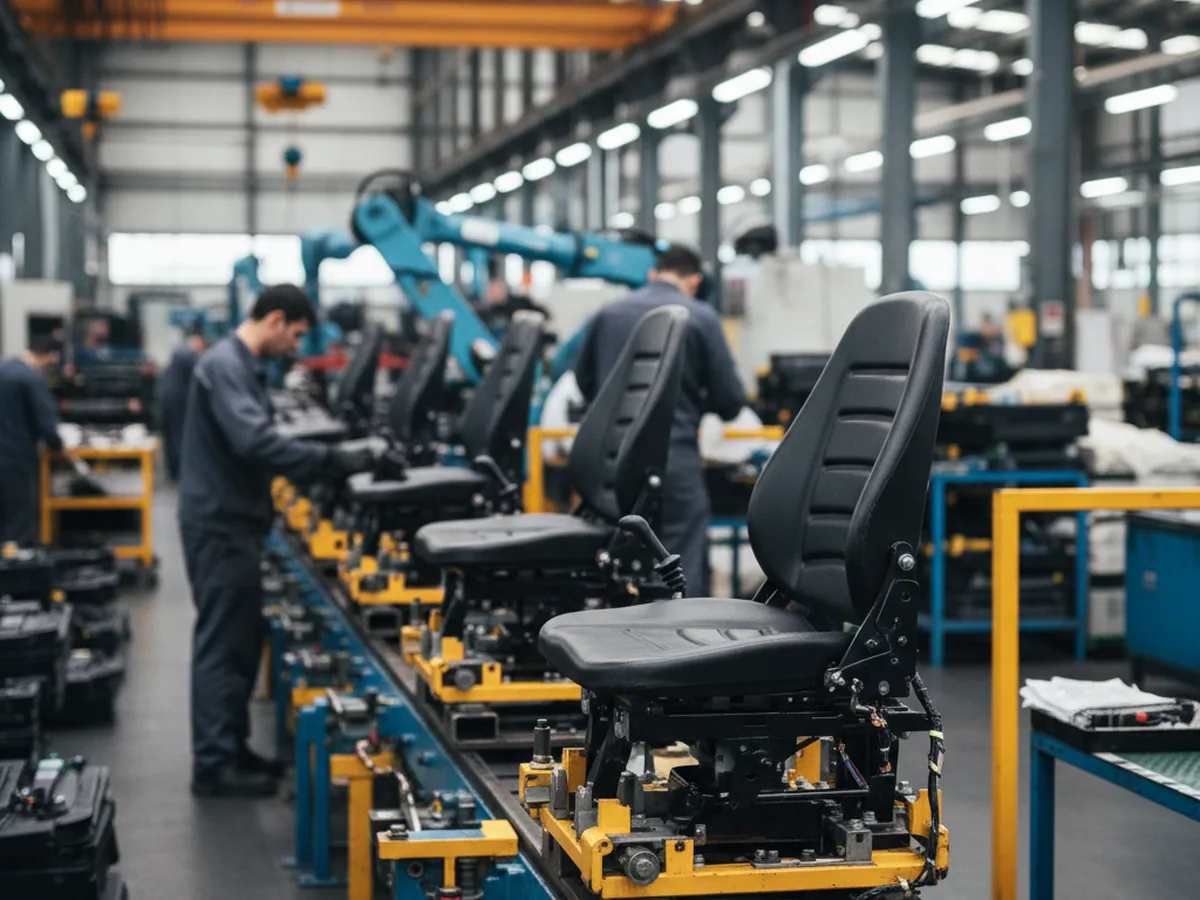
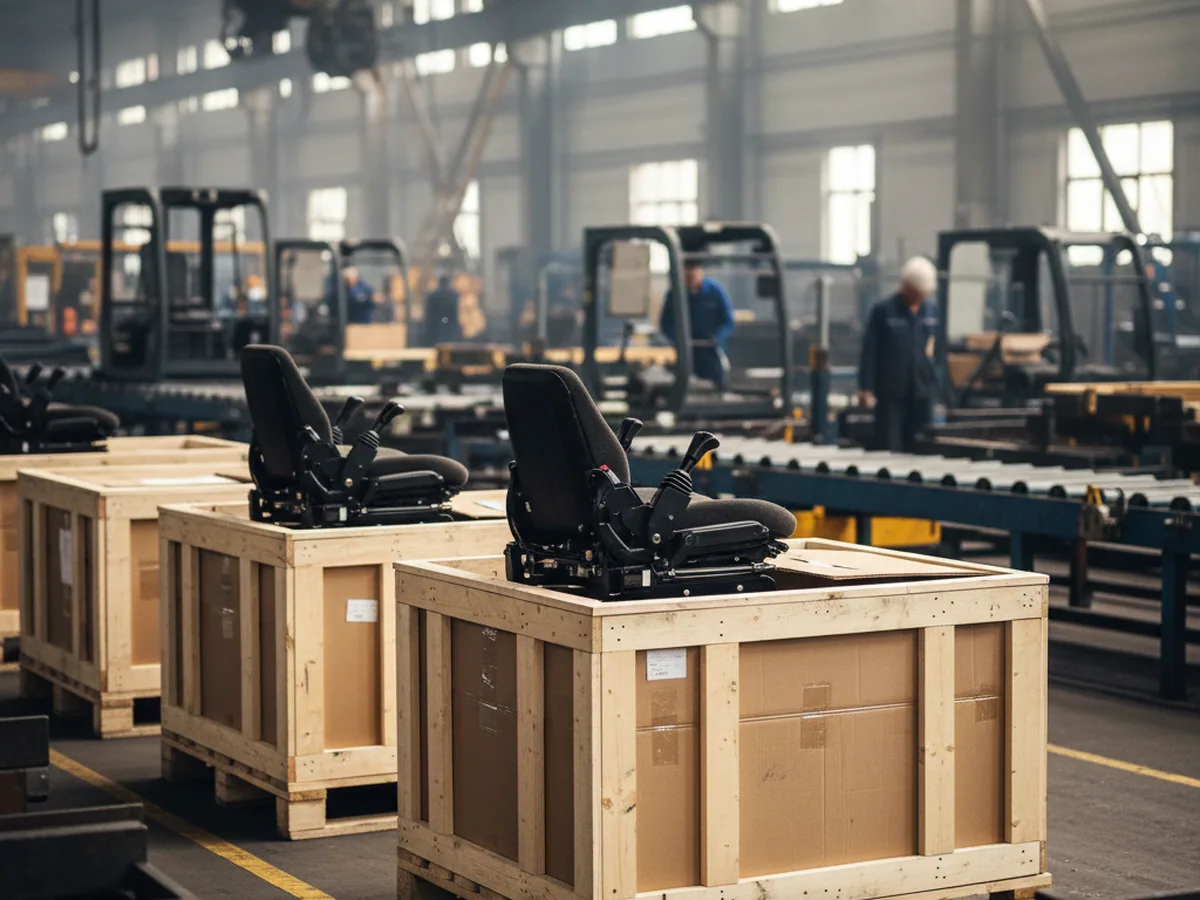
KL02 and YS2-8 are built on six automated assembly lines rated at 500,000 seats a year, at a 35,000 m² plant where stamping, welding, foaming and assembly all run in-house. The excavator seat you order is an assembly we make, not one bought in and badged.
Aftermarket distributors and importers
Replacing worn seats across a mixed fleet, usually with one sample of each model on real machines before a stocking order goes out.
Excavator builders and tier-one suppliers
Specifying a seat for a machine programme, working from a drawing or from the envelope the cab leaves around the seating position.
Private-label wholesalers
Selling under their own brand, with marking placed and dimensioned on parts that go to nobody else.
Every suspension assembly crosses one of the fourteen machines in our own test centre before it ships, and the bench it crosses is the shock absorber fatigue bench described further down this page.
35,000 m² plant
6 automated lines
500,000 seats a year
30+ seat patents
The choice
Two Excavator Seat Models
Two models in the range are built for excavators. The cab and the shift settle which one, and both routes start with the same four measurements.
YS2-8
The model for cabs that need the seat out of the way
The backrest folds forward 27.5°, clearing the space behind the seat for entry and for access to whatever sits under the rear glass.
Suspension travel
80 mm
Operator weight
50–130 kg
Fore-and-aft
150 mm
Height
60 mm
Fitted with
Adjustable armrests, retractable belt, PVC cover
Specify it where the belt is part of the machine’s configuration and where the operator sets seat height as well as reach.
KL02
The model for long shifts on heavy machines
A mechanical suspension seat with a high back giving full-body and head support, which carries the operator’s upper body through a swing and on the long slow cycles where the operator stays seated for the whole shift.
Suspension
Mechanical, high back
Backrest
High back, full-body and head support
Warranty
12 months
The published configuration is the high-back mechanical assembly. Anything else you need on it is confirmed against your machine before sampling rather than at the quotation stage.
Cab
A compact cab that needs the backrest folded forward for entry or rear access
points to YS2-8
Shift
A machine worked in long shifts, where head support gets asked for by name after the first week
points to KL02
Spec
A retractable belt and 60 mm of height adjustment written into the machine configuration
points to YS2-8
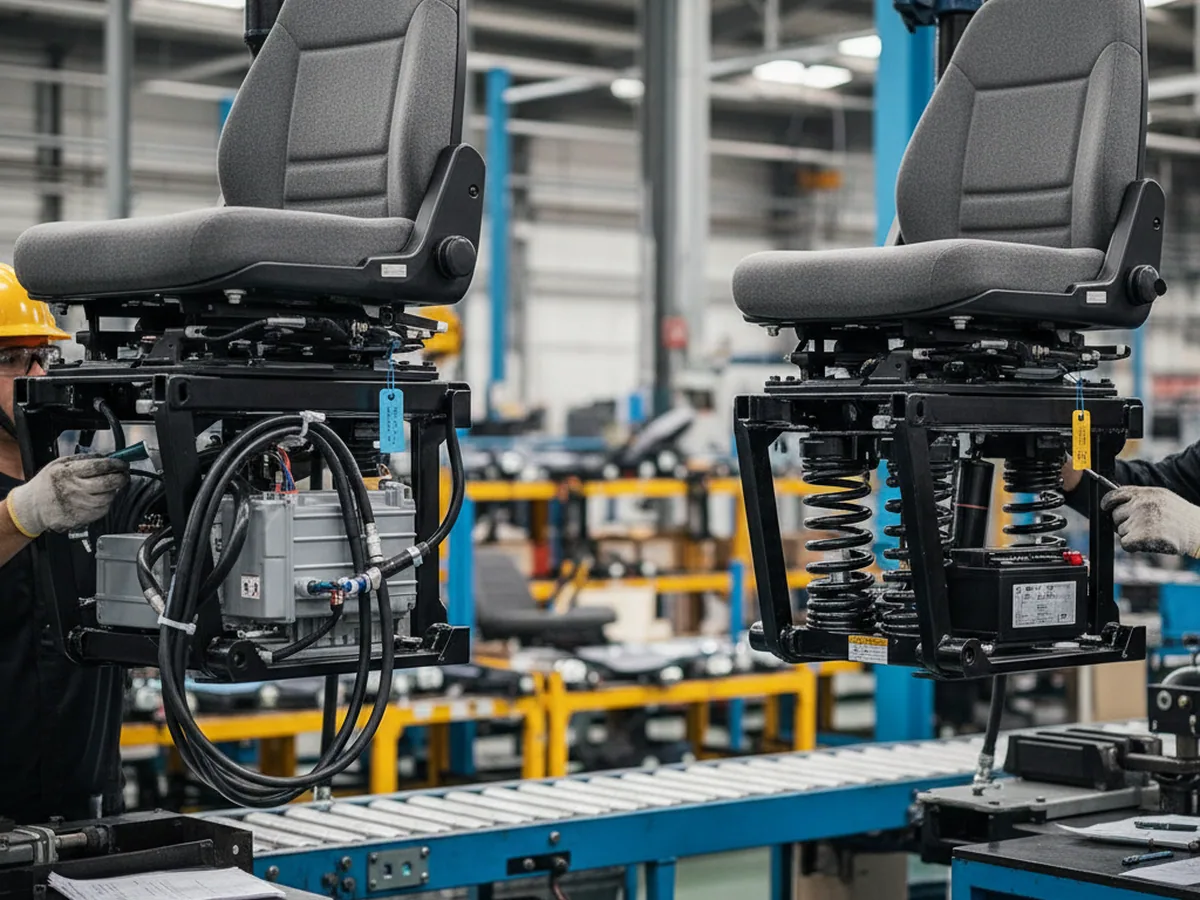
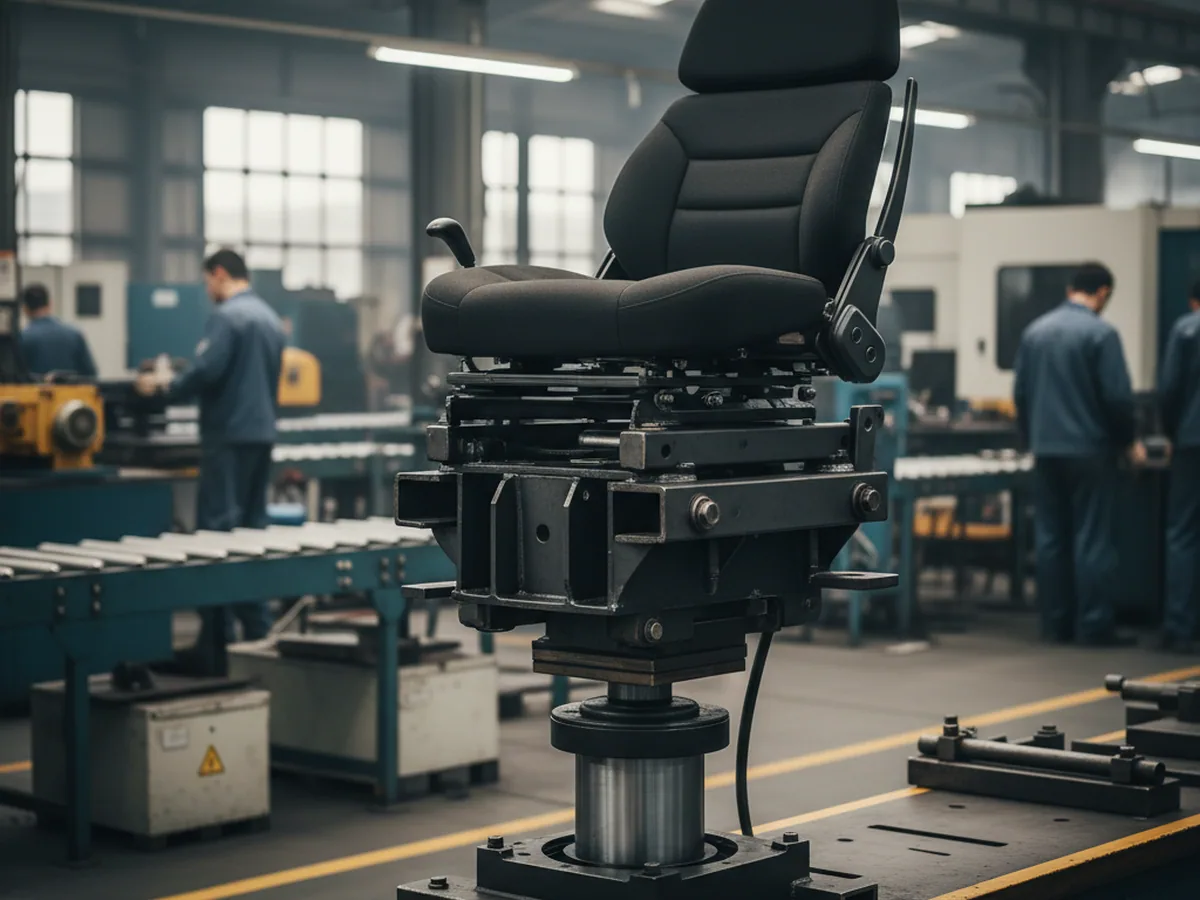
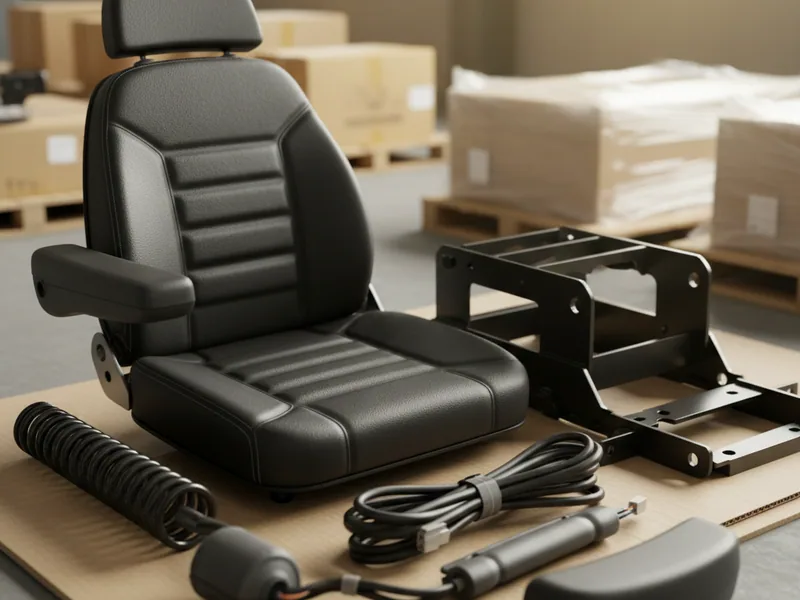
Two suspension bases from the same range, hung side by side before the cushions go on.
For a distributor stocking against a mixed fleet, YS2-8 carries the widest adjustment range from a single part number, which covers a lot of cab layouts and a lot of operators without a second line item. KL02 is the one to hold for the machines that work in shifts. Both models also go onto loaders, dozers, rollers and cranes, and the side-by-side comparison across the whole construction range sits on construction machinery seats.
The cab and the shift decide the model. Tonnage does not, and neither does the badge on the boom.
Published figures
Excavator Seat Specifications
Both excavator seats, figure by figure. Cells marked with a dash are figures not published for KL02.
Specification
KL02
YS2-8
Suspension
Mechanical, high back
Mechanical
Backrest
High back, full-body and head support
Fold-forward, 27.5°
Operator weight adjustment
—
50–130 kg
Suspension travel
—
80 mm
Fore-and-aft adjustment
—
150 mm
Height adjustment
—
60 mm
Armrests
—
Adjustable
Seat belt
—
Retractable
Cover material
—
PVC
Warranty
12 months
12 months
Where a dash sits
Send your measurements and the fitment answer covers KL02 alongside YS2-8, with the dimension that decided it named in the reply.
12-month warranty
PVC cover
Retractable belt
27.5° fold-forward
What settles it
Four Fitment Measurements
Four measurements taken off the machine settle whether an excavator seat goes on, and none of them needs a model number from us.
Three seat bases, and which one you have
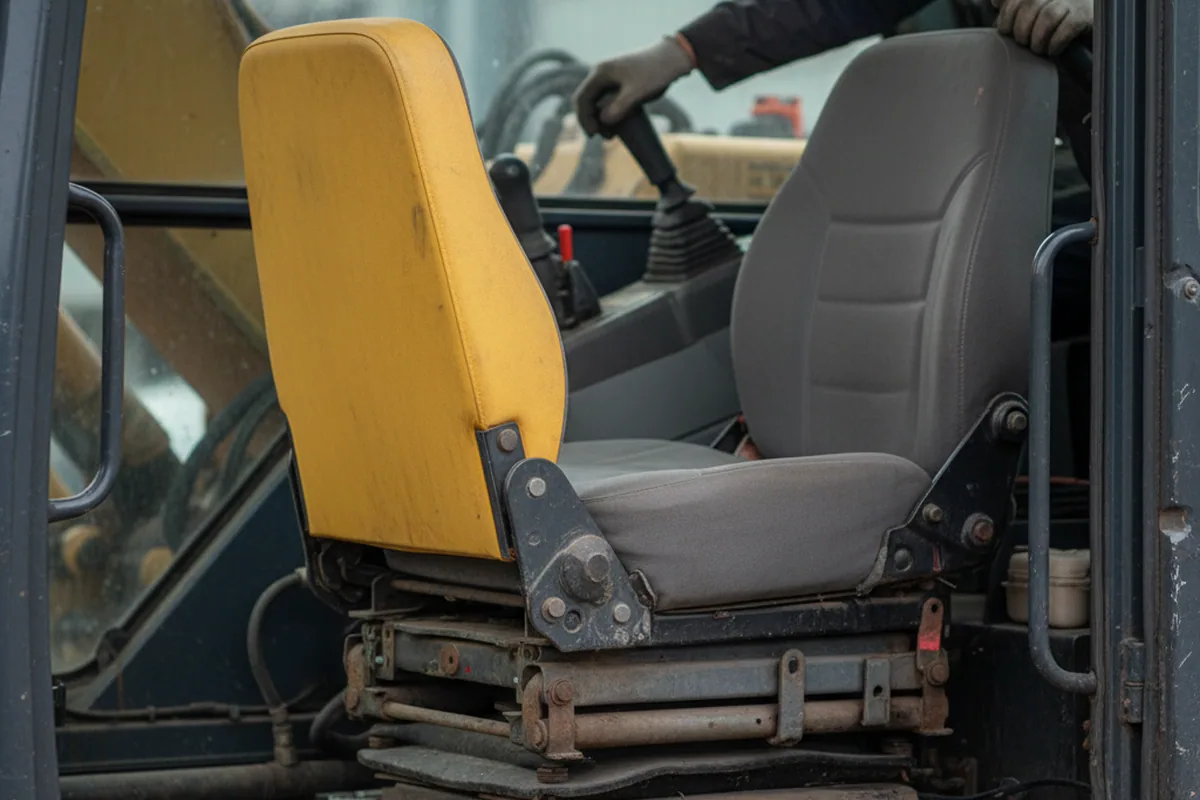
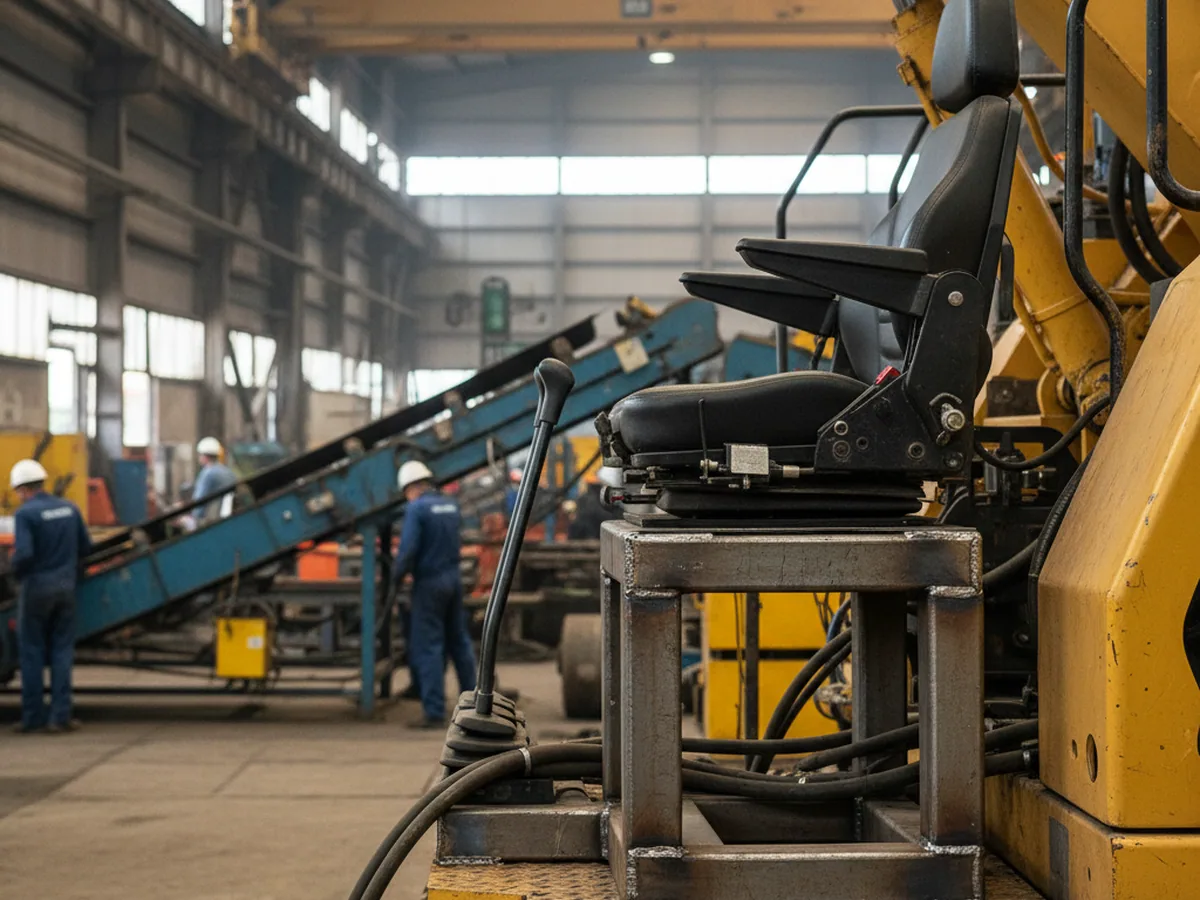
What the seat sits on varies more on excavators than on any other machine we supply. Photograph the base from the side as well as from above, because the side view shows how much of your headroom figure the base itself is already using.
Plain floor plate
Fabricated pedestal
Suspension box with its own rails
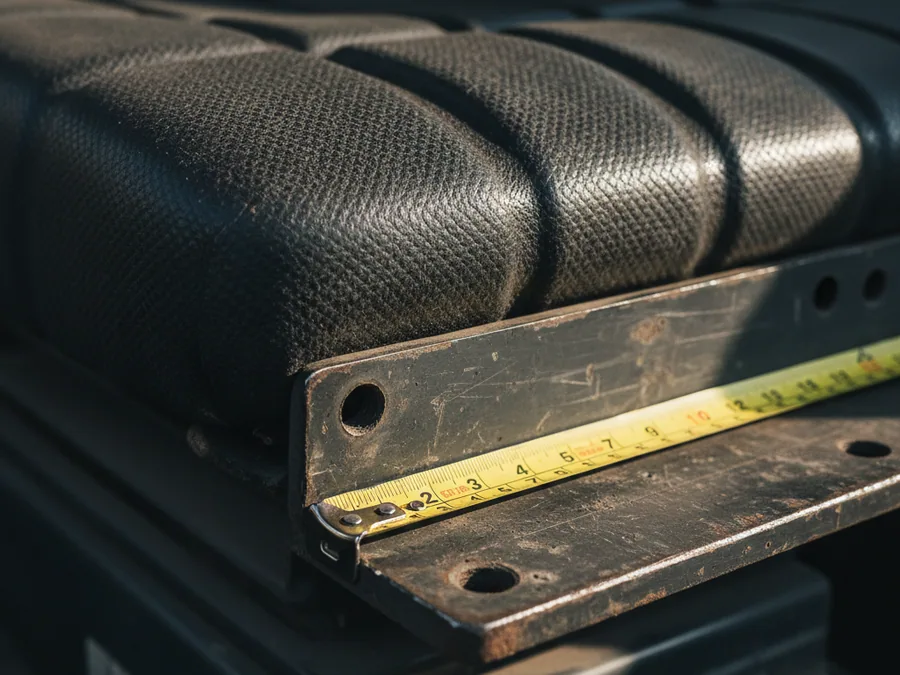
A photograph with a tape measure laid square across the plate answers 01 on its own.
Bolt spacing on the seat base
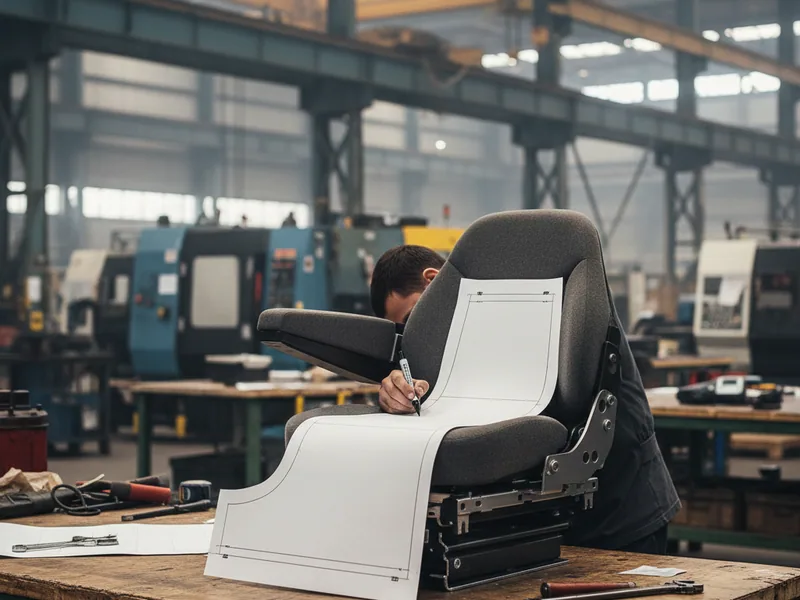
Measure the seat plate or pedestal the current seat sits on, centre to centre, front-to-back and side-to-side. A photograph with a tape measure laid square across the plate is a valid answer and is often faster than writing figures. This one measurement removes most of the range in a single step.
Clearance above the seat base
Measure from the base to the cab roof or canopy over the seating position, and say whether the current seat was installed or removed at the time. This figure decides how much suspension travel the cab can give back: YS2-8 carries 80 mm of travel and needs the headroom to use it.
Fore-and-aft room around the seat
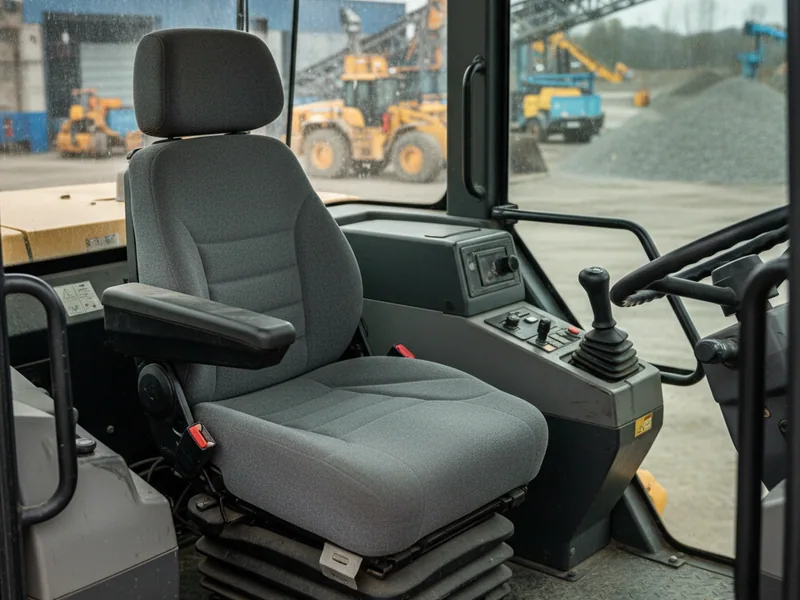
Measure the space in front of the seat to the joystick consoles and behind it to the bulkhead or rear glass. On an excavator the consoles are frequently floor-mounted rather than seat-mounted, which changes how much of the 150 mm of fore-and-aft travel is usable and whether the fold-forward backrest has room to come down.
Belt anchor points
Say where the belt anchors today, on the machine structure or on the seat itself, and how many points. YS2-8 comes with a retractable belt; a floor-anchored belt has to be known before sampling rather than after the pallet lands.
One more photograph
One frame of the whole seating position taken from the door captures the console layout, the belt anchors and the rear clearance at once, and settles questions the four figures alone leave open.
A fabricated pedestal seen from the side. The side view is what shows how much headroom the base is already using.
Send those four items with the operator weight range, the quantity and the date you need it. First reply within 24 business hours.
Once the measurements are in, the answer comes back within 48 hours, naming the models that physically fit and the models that do not, along with the measurement that ruled a model out. Where nothing in the range fits your machine, that answer arrives at this stage rather than after sampling.
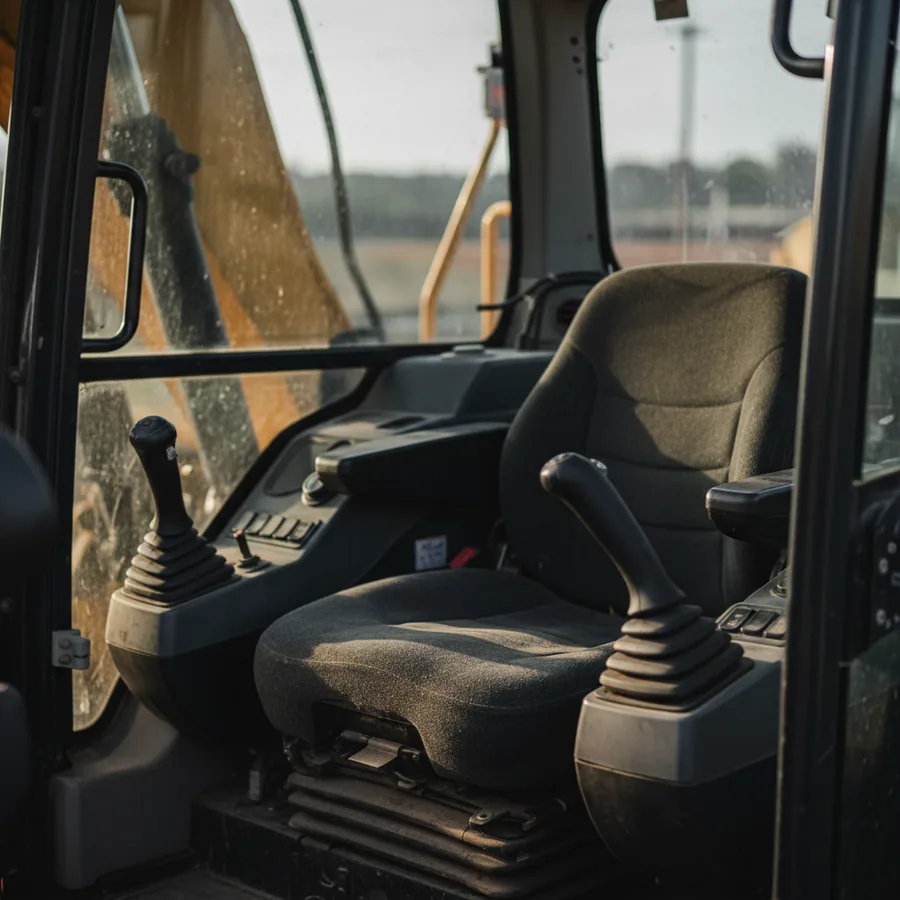
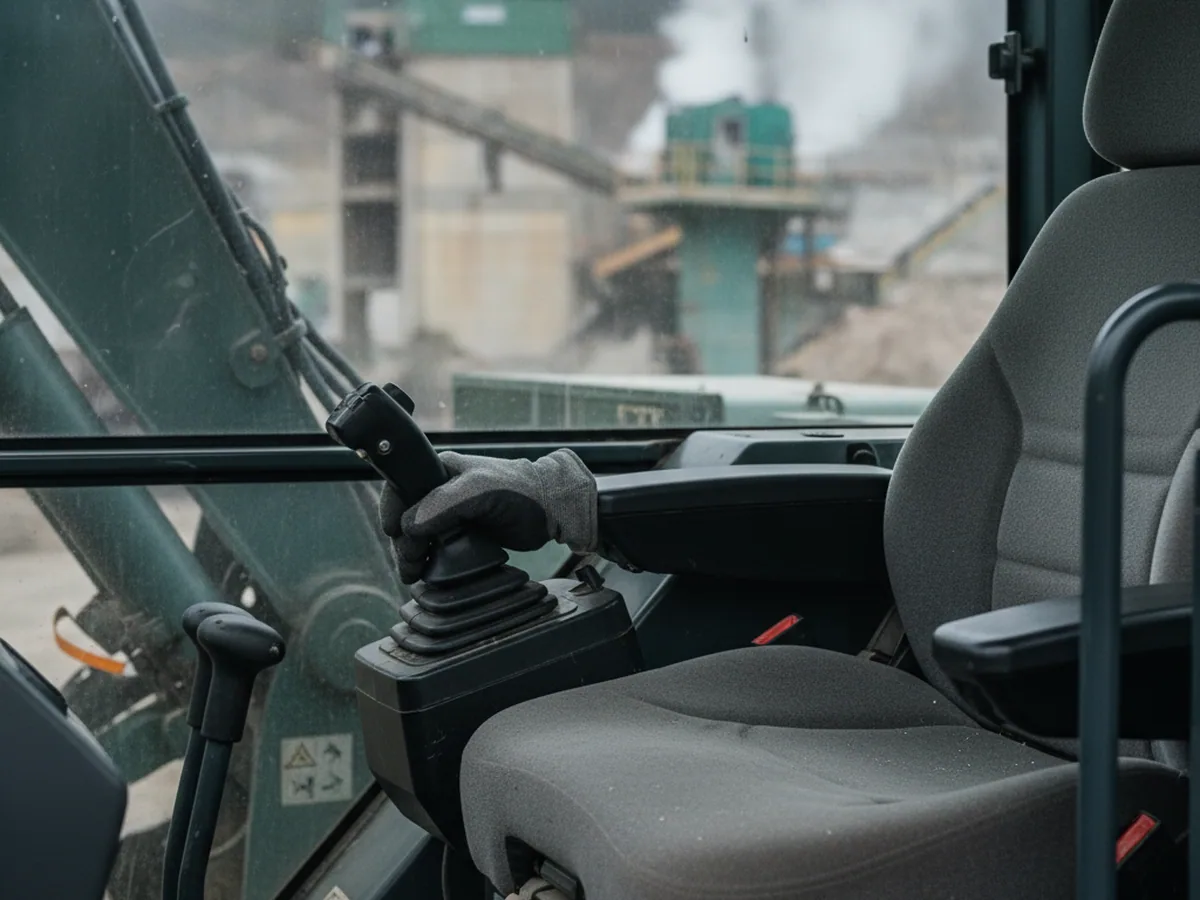
An excavator works from a standing position and turns. The operator sits off the slew axis, so every swing of the house feeds a lateral component into the seat on top of the vertical input from tracking, from the bucket meeting ground and from the machine settling on its tracks.
That combination drives four things in the way these excavator seats are built.
The operator sits off the axis the house turns about, so the swing arrives sideways.
The backrest carries the upper body
KL02 has a high back with full-body and head support, which gives the operator something to lean into through the acceleration and deceleration of the house. Head support matters most on the long cycles, where the operator is turned and looking down into the trench for hours and the neck is loaded off-centre for most of the shift.
Fails as: bracing against an armrest to stay square.
The armrests take the arm load
On an excavator the forearms rest while the hands work the joysticks, so armrest support is continuous rather than occasional. YS2-8 carries adjustable armrests so the arm is supported at the height the console actually sits at, and the retractable belt keeps the operator in the seat through the swing.
Fails as: an armrest carrying half a body instead of an arm.
The weight adjuster centres the stroke
The 50–130 kg operator weight adjustment on YS2-8 sets spring preload for the person in the seat. Set correctly the seat sits mid-stroke with travel available in both directions; set for the wrong weight it rides at one end of its 80 mm and the operator takes the vertical input through a suspension with nothing left to give.
Fails as: felt hardest on the settling movement at the end of each swing.
The seat position sets the sightline
On an excavator the seat position sets the sightline over the boom side of the machine. YS2-8 gives 150 mm of fore-and-aft travel and 60 mm of height to set it with, so the operator can put their eye where the cut is instead of leaning to find it.
Fails as: an operator out of the backrest for most of the cycle.
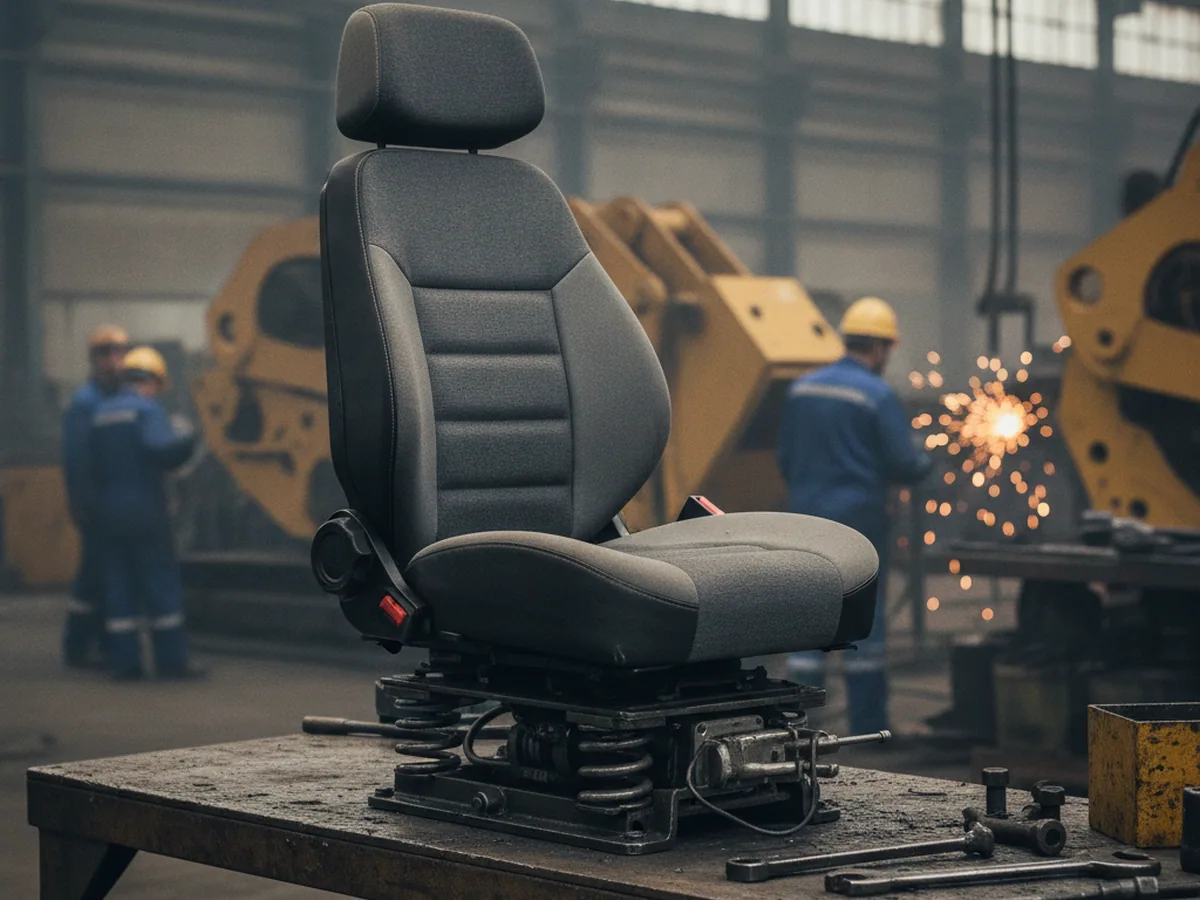
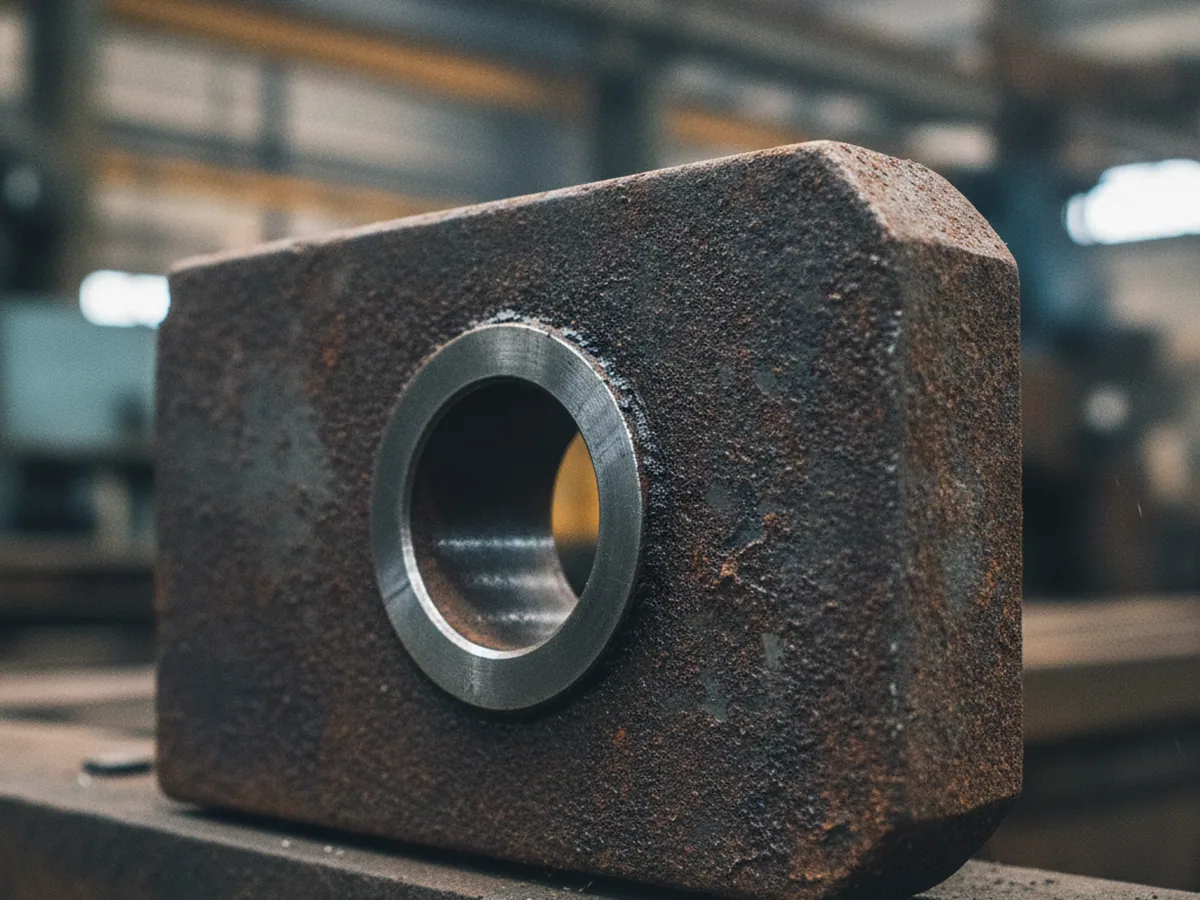
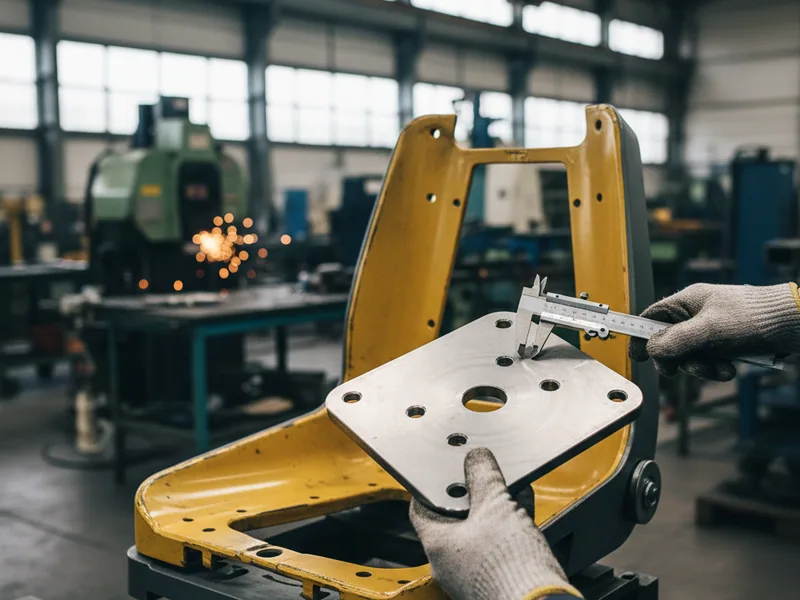
A reaction bracket after machining, before it goes into the suspension.
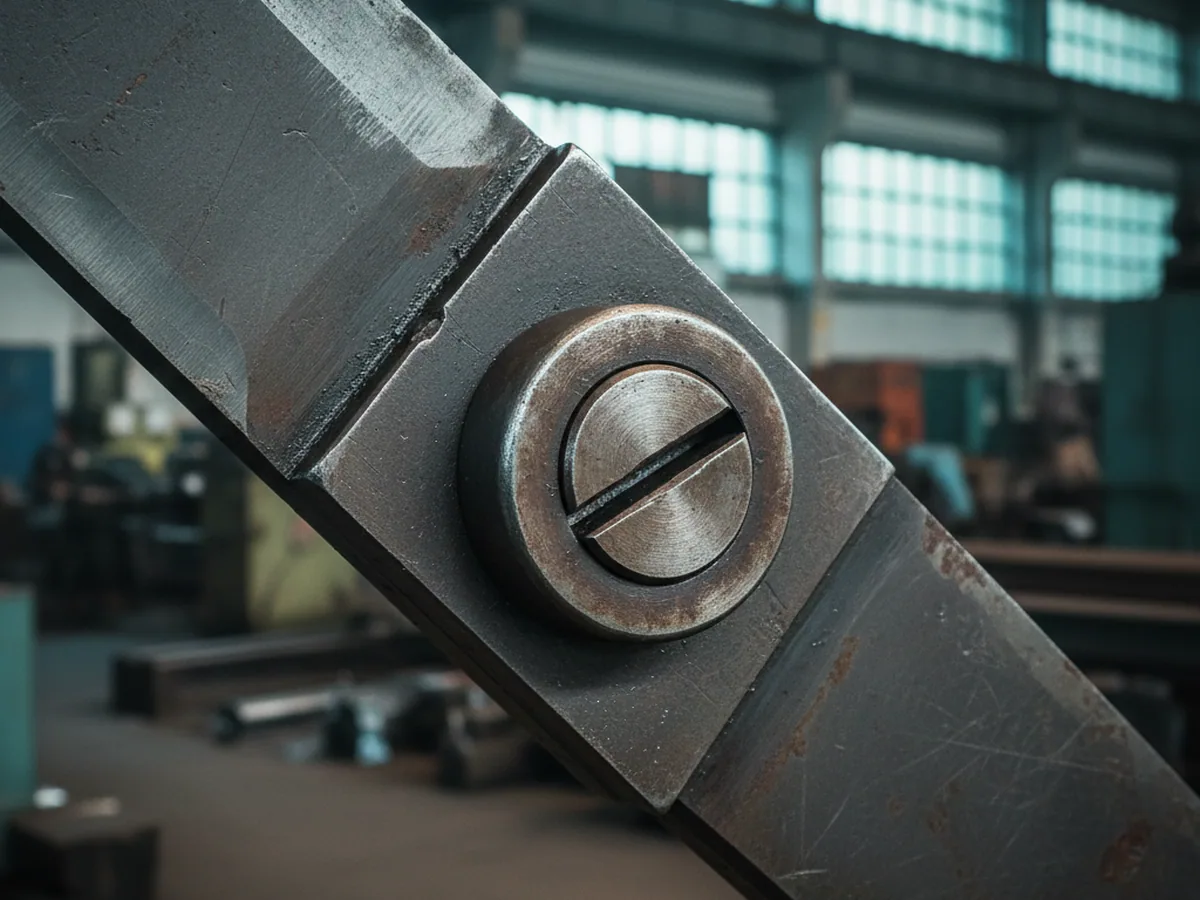
A scissor pivot, the first of the three joints sectioned at the end of a run.
Stamped in-house
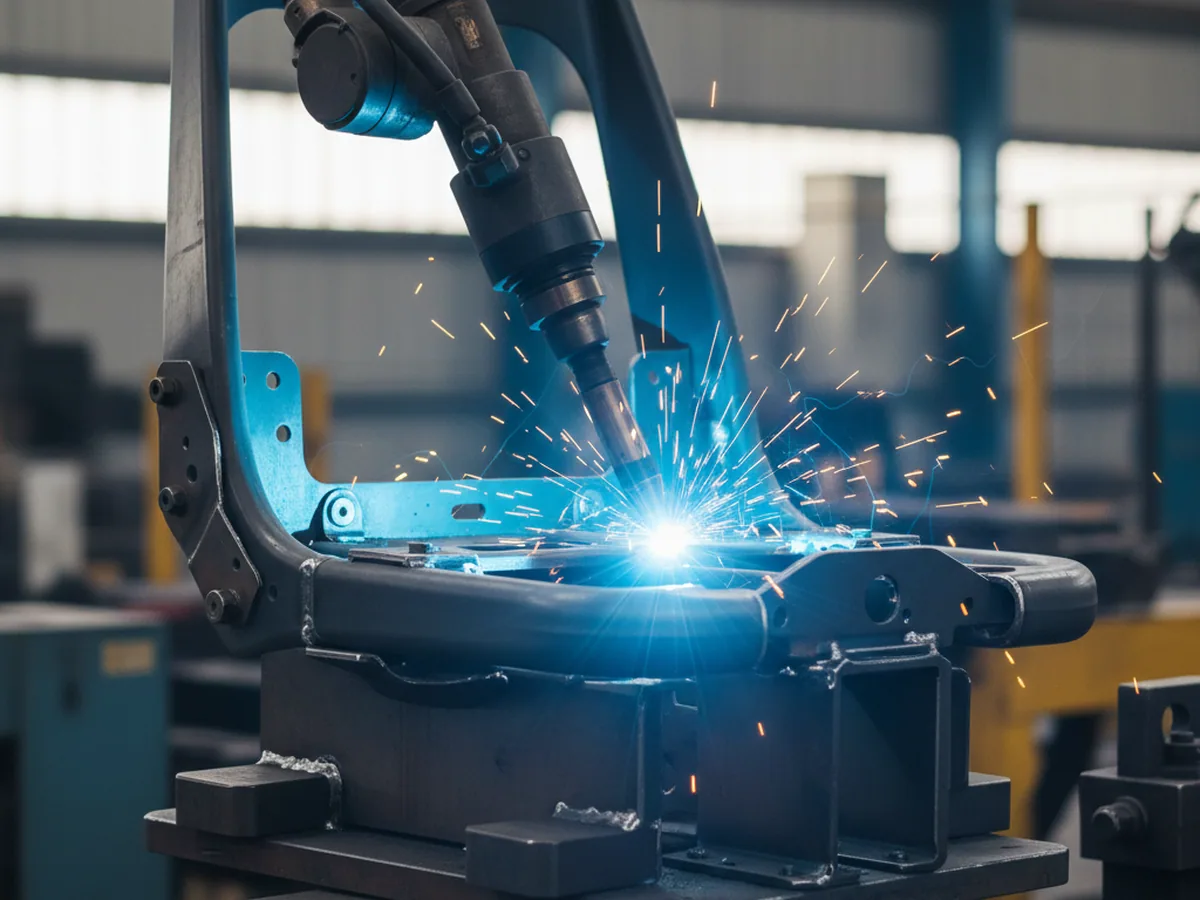
Robot welded
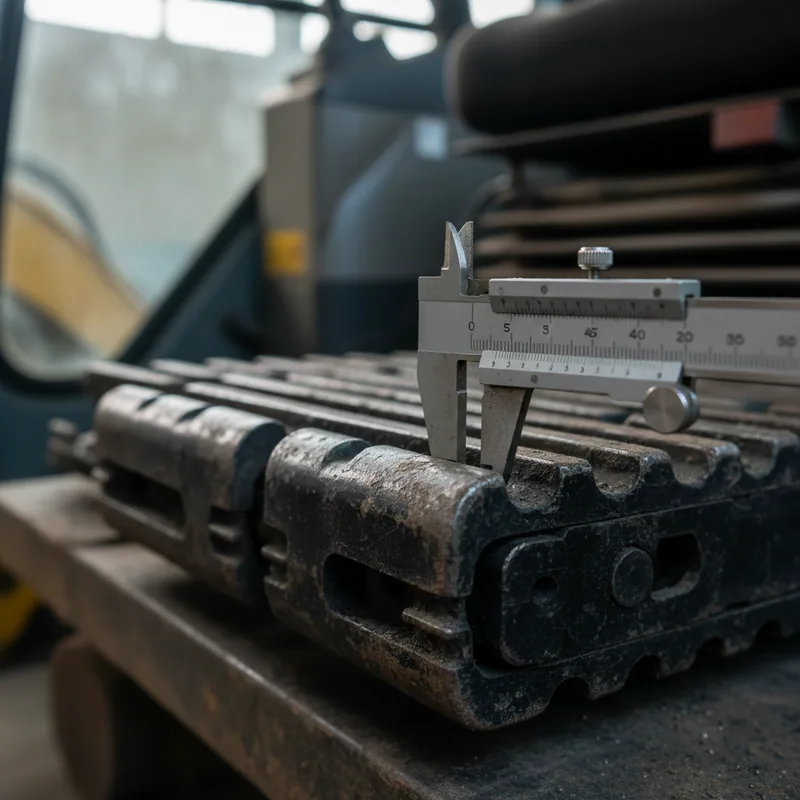
Sectioned, not eyeballed
Where the swing lands
Three Joints Under Side Load
Lateral input from the swing ends up in three joints, and those three are the pass criterion on our suspension test.
Scissor pivotsWhere the parallelogram takes the sideways component of every swing.
Damper eyesThe two ends the shock absorber hangs on, loaded off-axis rather than straight.
The weight adjuster reaction bracketLoaded every time the preload spring pushes back against the frame.
The criterion
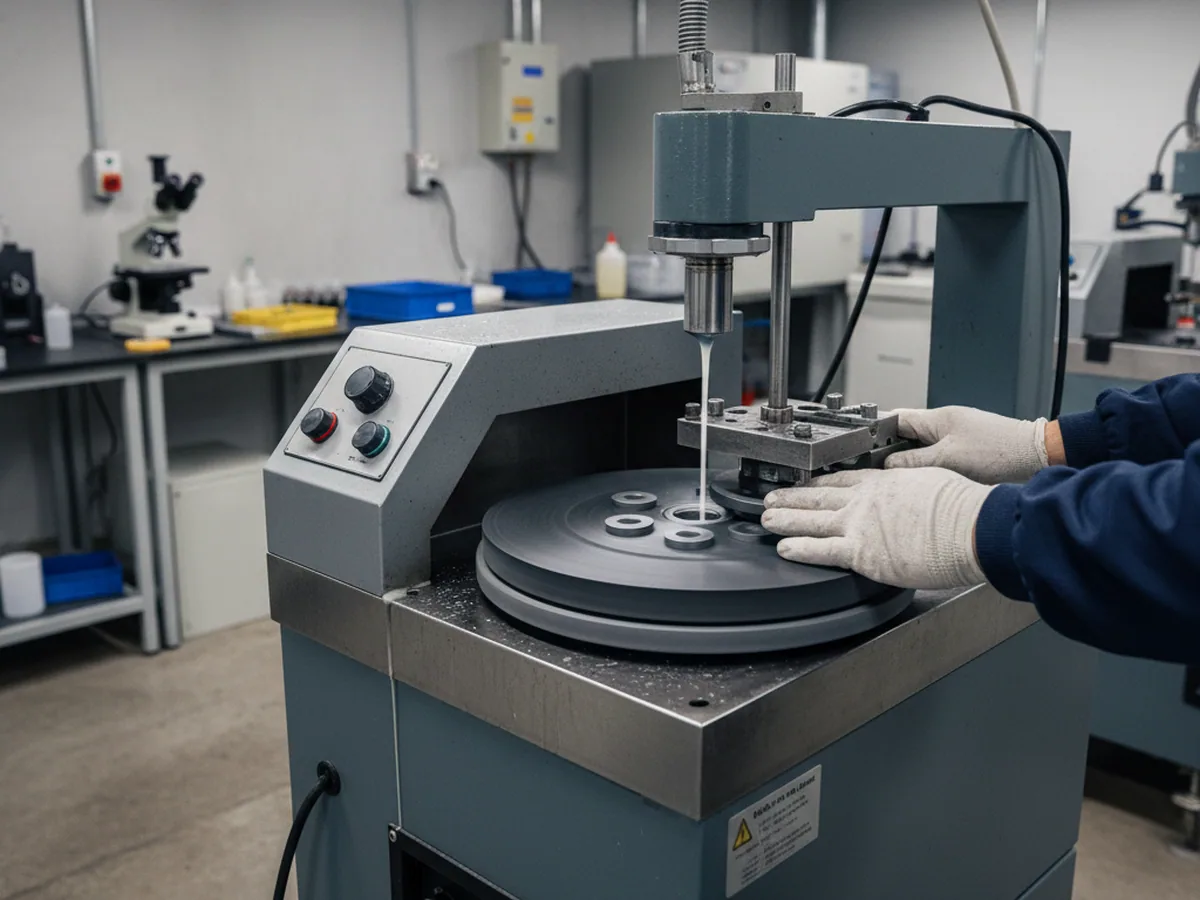
Zero crack initiation at all three at the end of the run, confirmed by metallographic sectioning rather than by visual inspection. All three joints are stamped and welded in our own workshops, and the metallographic cutting, inlaying and polishing machines that sectioning requires are ours. All three machines are visible when you audit the plant.
Our premium suspension systems are developed jointly with East China Jiaotong University, a provincial key university in Jiangxi whose name you can check independently.
The bench
Suspension Assembly Bench Testing
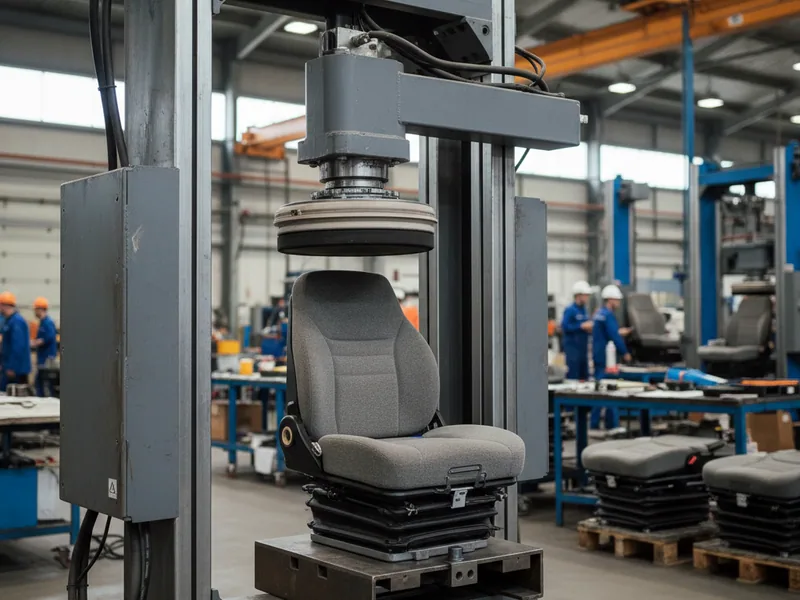
Suspension assemblies are tested as they will ship, frame and spring pack and damper together, on the shock absorber fatigue bench at the model’s full rated stroke. The bench runs at 1 Hz at room temperature, and the run is a hundred thousand cycles rather than a sample of the first few thousand, because the failures worth catching are the ones that appear late.
100,000cycles per run, at full rated stroke
≥95%of rated travel still there at the end
≤15%damping decay at the reference speed
When a criterion fails
The batch is held, traced back to a specific weld cell or damper lot, corrected and re-tested. The hold lifts only on a pass, and the third criterion, zero crack initiation at the three joints, is read off a sectioned sample rather than off the surface.
What goes over at qualification
Photographs of all fourteen machines in the test centre, one by one, by email.
An open invitation to see the bench and the metallography room in person.
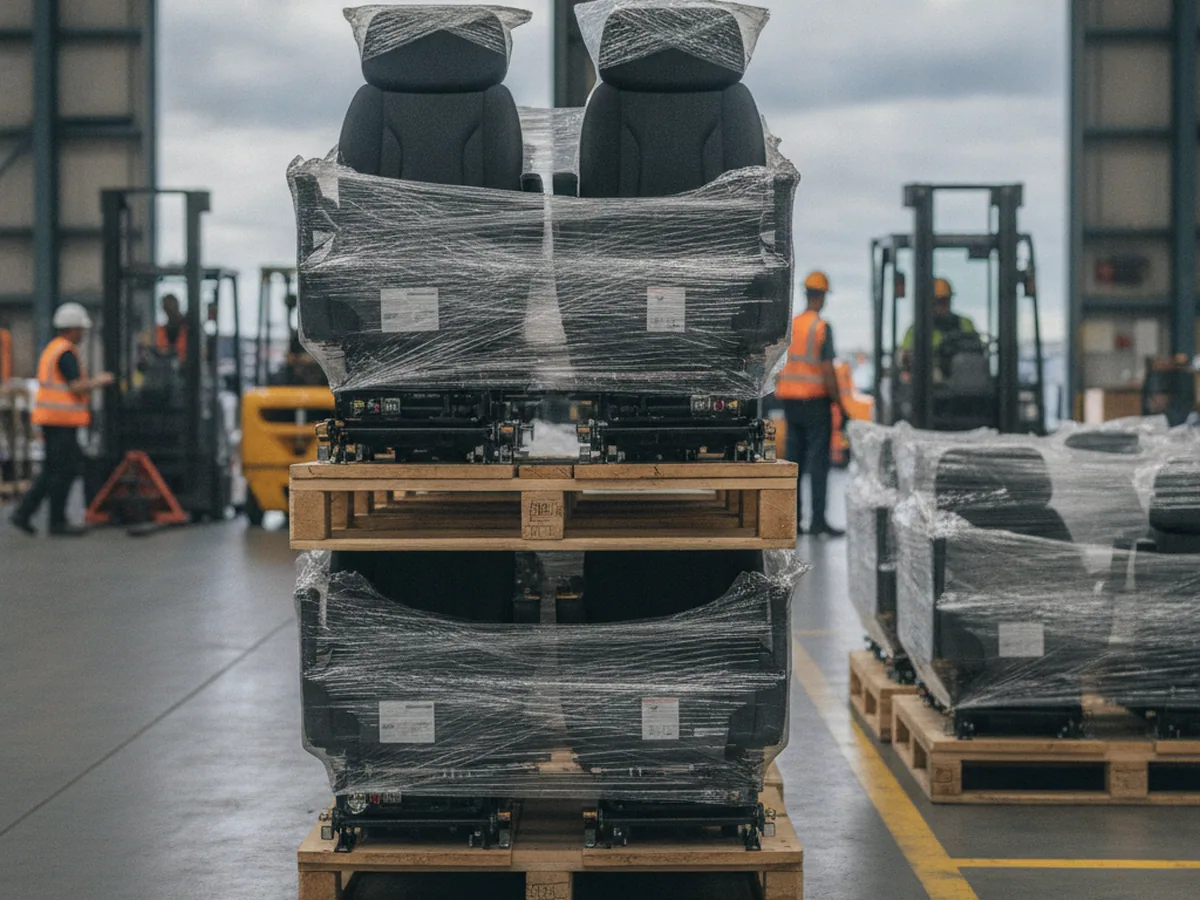
A sample fitted on the real machine is the only fitment test that settles the question completely.
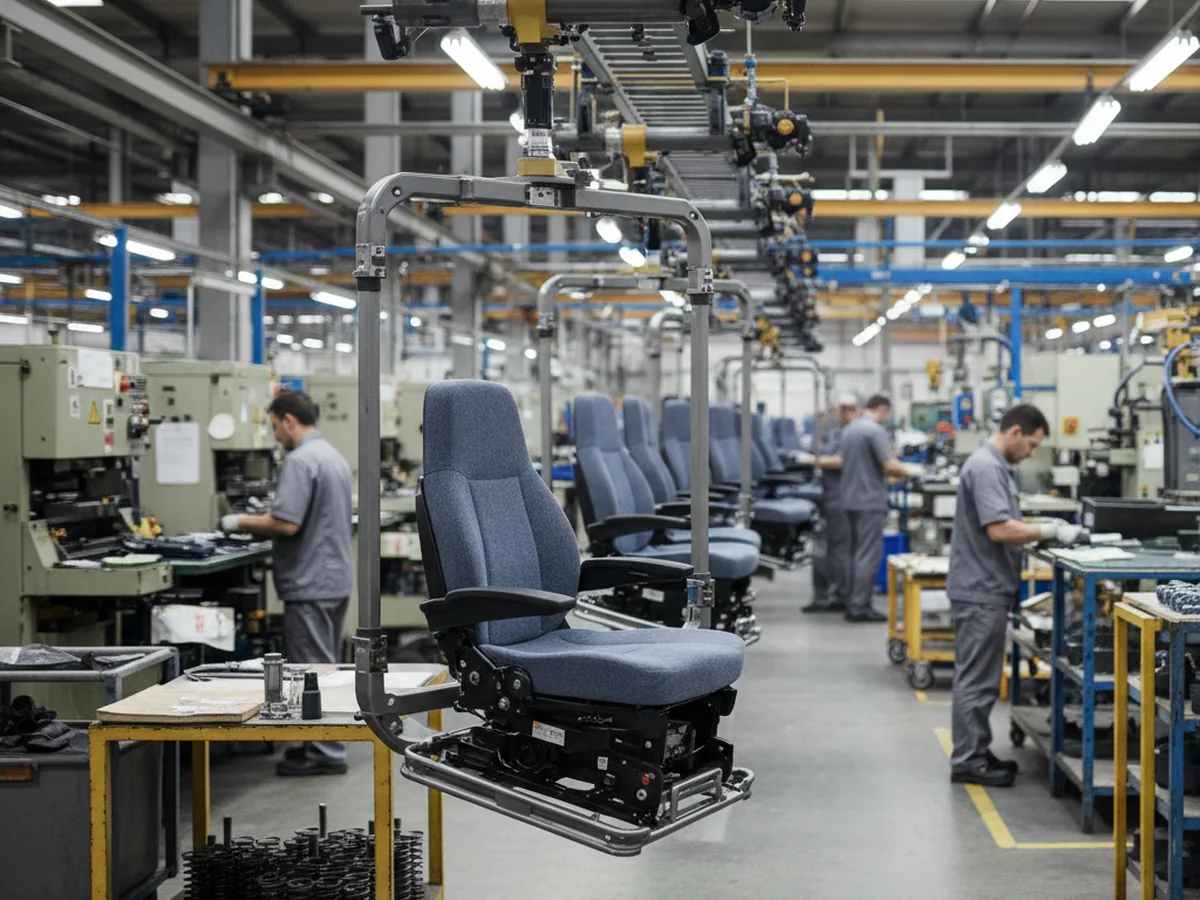
Suspension assemblies travel between stations on the overhead conveyor, one seat per carrier.
In our own plant
Four Processes Under One Roof
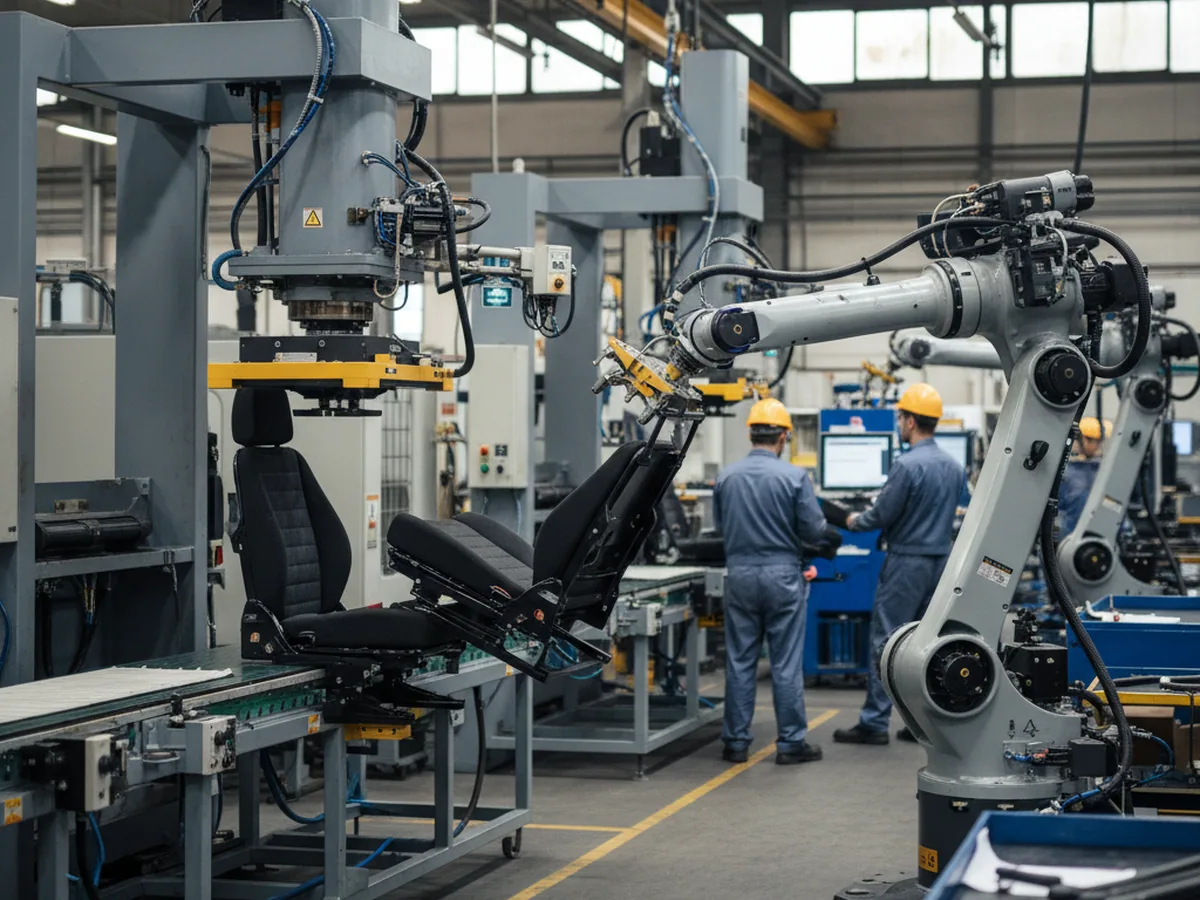
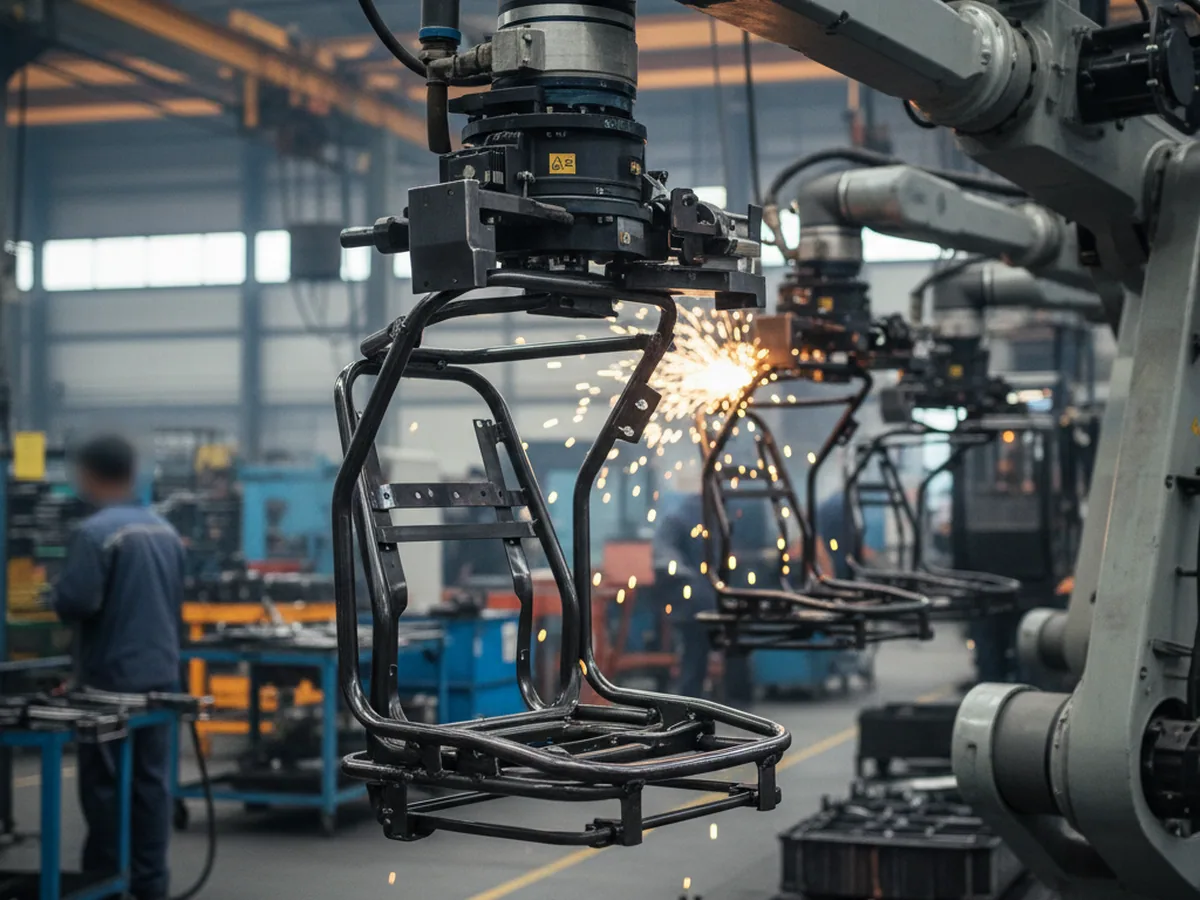
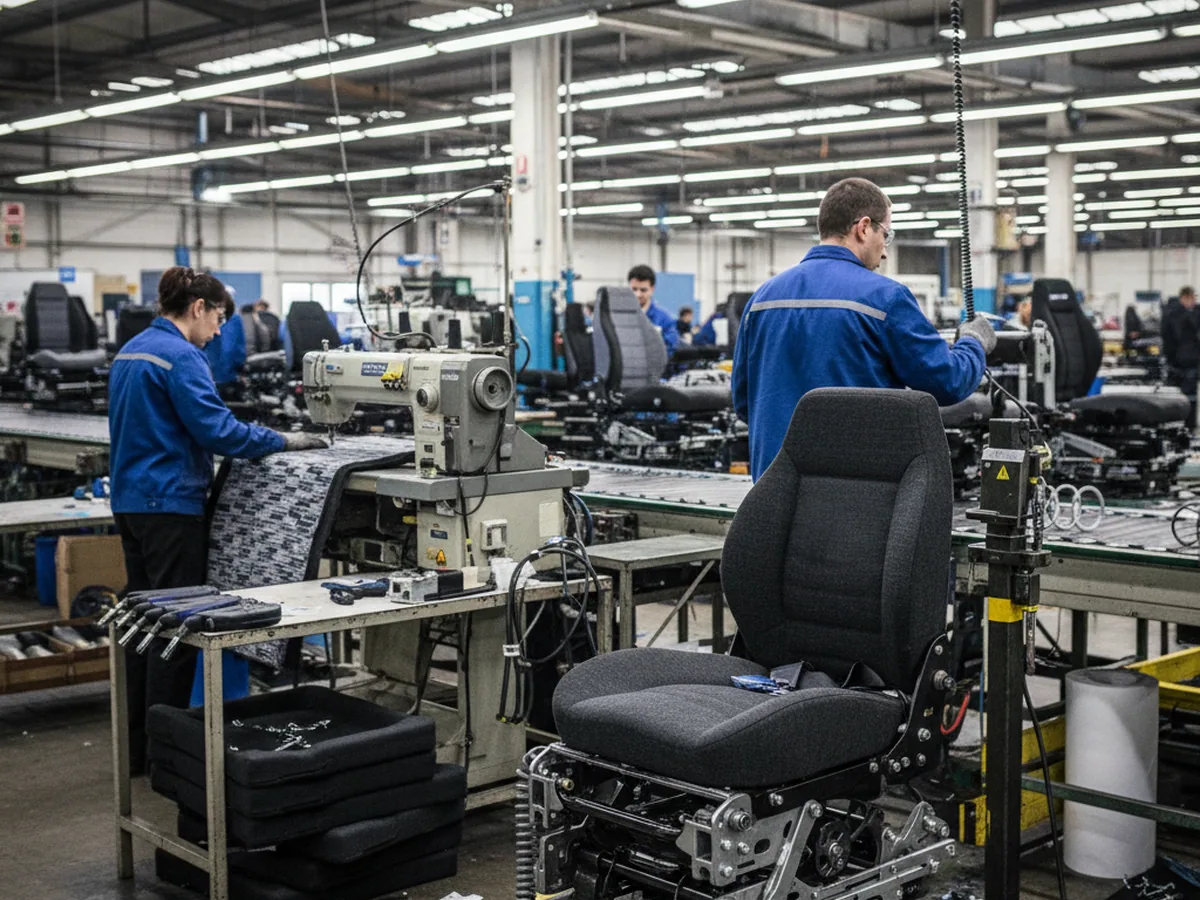
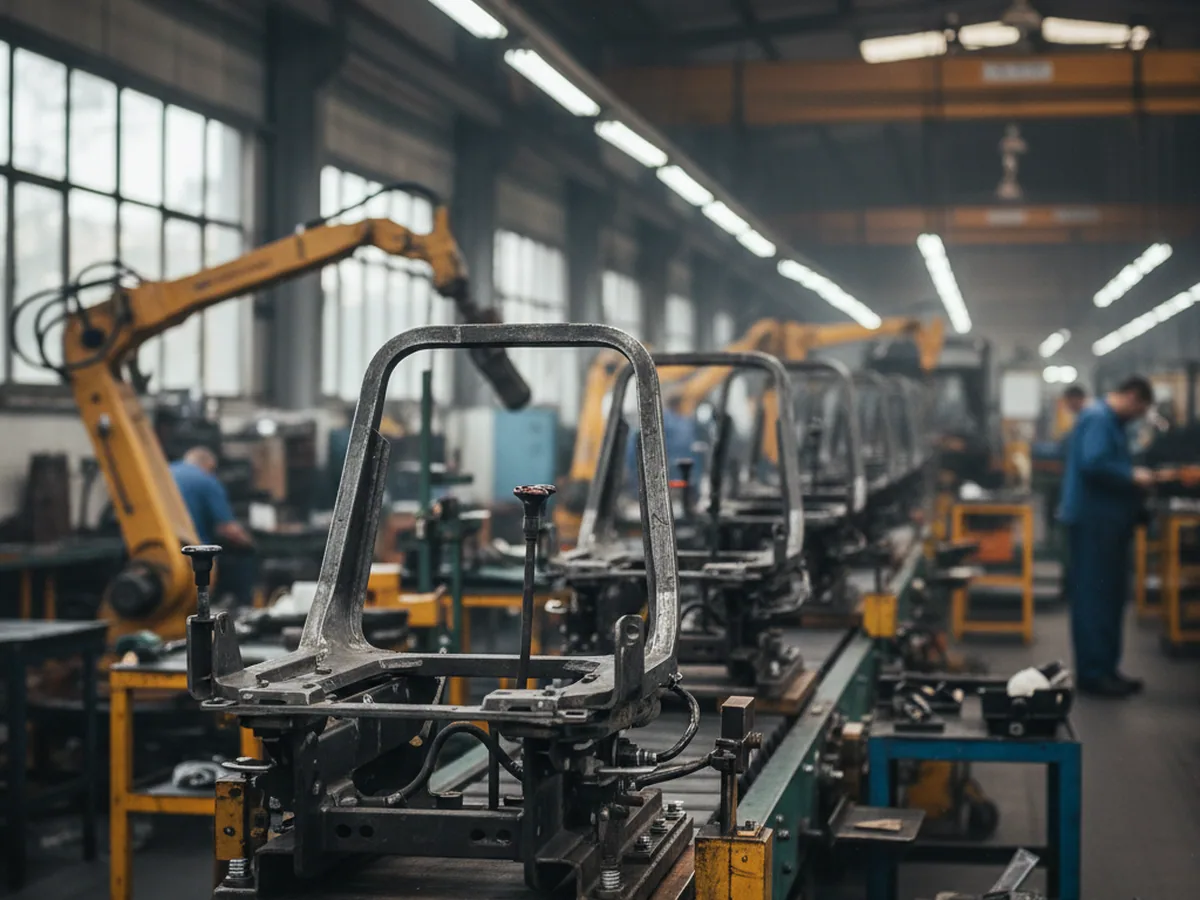
Stamping, welding, foaming and assembly all run in our own plant, on six automated lines. Nothing in the frame or the foam is subcontracted, which is what makes a finished excavator seat traceable back to the weld cell that built it.
Stamping
Frames and brackets pressed in-house from stock steel.
Welding
Robot cells, each one identified on the batch record.
Foaming
Cushions moulded on site, not bought in as finished pads.
Assembly
Six lines, with the suspension assembly tested before it joins the seat.
YS2-8 ships with a PVC cover, adjustable armrests and a retractable belt.
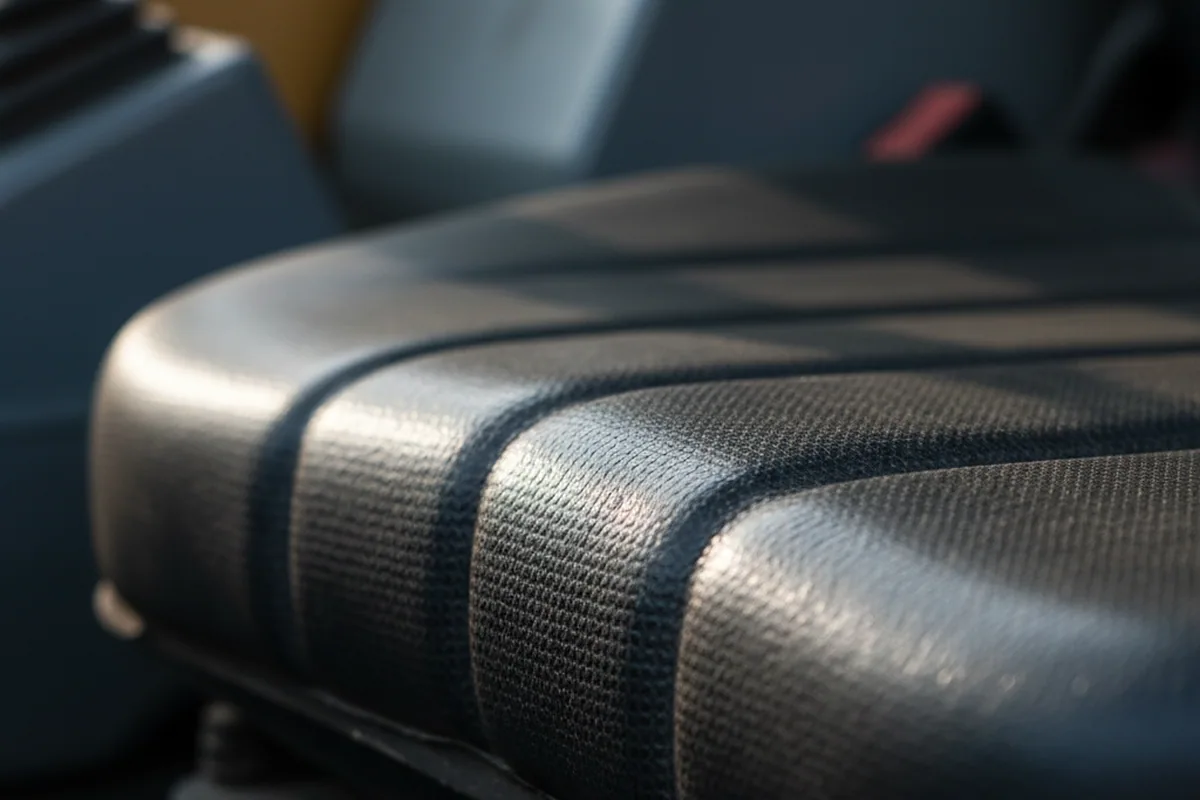
PVC
The usual choice for excavator work, because it wipes down after a day of site dust and wet boots.
Fabric
Available where the cab is enclosed and the machine works cleaner.
Rail slides
They matter where your base already carries rails and you want the seat to sit on them rather than bring its own.
Fitted and supplied across the range
Seat covers, PVC or fabric
Armrests, adjustable
Seat belts, retractable
Rail slides
Suspension assemblies
Pressure sensors and micro switches
Swivel rotary consoles
The presence circuit
If your excavator looks for a switch when the operator stands up, we need the connector type before sampling rather than after. Say so at enquiry and it goes onto the sample.
The same items are available as spare parts afterwards, which is what most aftermarket buyers come back for. Part numbers, minimums and part-level lead times are on seat spare parts.
Programme work
OEM and Private Label Scope
For excavator builders and private-label buyers, four things can change: dimensions, structure, cover material and colour, and marking. Our 22-person R&D team works from your drawing or from the envelope you can give us, and the four in-house processes mean a structural change goes through our own stamping and welding rather than a subcontractor’s queue.
Tooling you fund is yours
Dedicated moulds and fixtures you pay for belong to you, are stored at our plant, and are used only for your orders.
Your marking stays yours
Parts carrying your marking are not sold to any third party. Both points read the same way in a purchase agreement as they do here, so you can write them into your own contract and hold us to them.
Custom programmes run on the same 20–30 day production schedule as stock models once the sample is approved, so the schedule you plan against after approval is the schedule a stock model gets. Send marking artwork in a vector format with the placement dimensioned on the seat. The wider OEM and ODM process, including what can and cannot change on your drawing at each stage, is at custom OEM seat manufacturing.
Three steps to a programme
A sample built against your drawing
A first order on a single model
Annual replenishment as the machine programme or the stocking range widens
Schedule and paperwork
Lead Times, Warranty and Documents
Samples ship in 7 days and production runs 20–30 days, counted from order confirmation. Every excavator seat carries a 12-month warranty, and the sample stage is where fitment gets confirmed on the real machine, so build it into your schedule rather than around it.
Quality management is certified to ISO 9001:2015 and the product range carries CE. Ask at qualification and both certificates go over by email. Both are described at certifications.
Documents with the shipment
Certificate of Analysis or Conformance
Insurance documentation
Certificate of Origin
Other export documents your entry needs
We ship regularly into Europe, North America, South America and Southeast Asia, so the paperwork your entry calls for is usually paperwork we have issued before. Tell us at order confirmation which documents your import requires and in whose name they should be issued: reissuing a Certificate of Origin after the container has sailed costs more time than getting it right at booking.
One round
Excavator Seat Enquiry Checklist
Copy this list into your first email and it can be answered in one round.
Machine make and model, and the excavator seat currently fitted if there is one
Replacement on machines in service, or a seat for a machine you are building
Bolt spacing on the seat base, centre to centre, front-to-back and side-to-side, or a photograph with a tape measure across the plate
Floor plate, fabricated pedestal or suspension box with rails
Clearance from the seat base to the cab roof or canopy
Fore-and-aft room to the joystick consoles and to the rear bulkhead
Belt anchor points: machine-side or seat-side, and how many
Presence switch or pressure sensor, and the connector type if the machine has one
Operator weight range you are seating
Cover material preference, PVC or fabric
Quantity and the date you need delivery
Any marking or private-label requirement, with artwork if you have it
A reply follows within 24 business hours, and the fitment answer within 48 hours of the measurements arriving, naming the models that fit and the ones that do not.
OFF THE AXIS
Where it runs wider
Related Pages on This Site
Where the question runs wider than an excavator.
Construction machinery seats
The full model comparison across loaders, dozers, rollers and cranes, for a fleet that runs wider than excavators.
Bolt spacing, the headroom above the seat base, the fore-and-aft room and the belt anchor points, with your machine model and quantity.
First reply within 24 business hours. Fitment answer within 48 hours of the measurements arriving, naming the models that fit your machine and the ones that do not.