Lawn mower seat supplier
Lawn Mower Seat Supplier for Machines That Arrived Without a Model Number
Ride-on, zero-turn and groundcare machines — plus the lawn mower covers and spindle mandrel assemblies that go on them. Send what you can photograph and measure; get back which seats go on and which do not.
Send a machine type and two photographs — the seat down, and the seat raised. No part number needed; why those two shots.
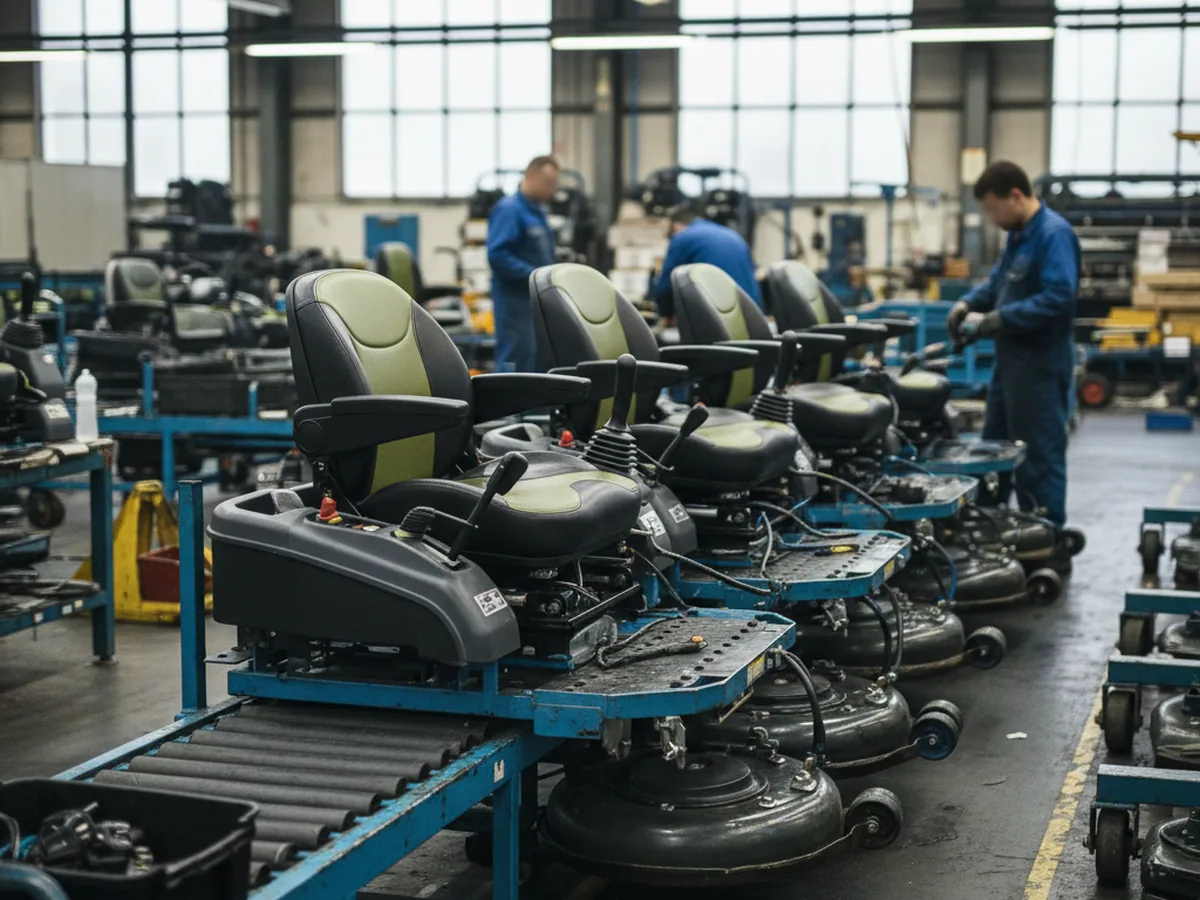
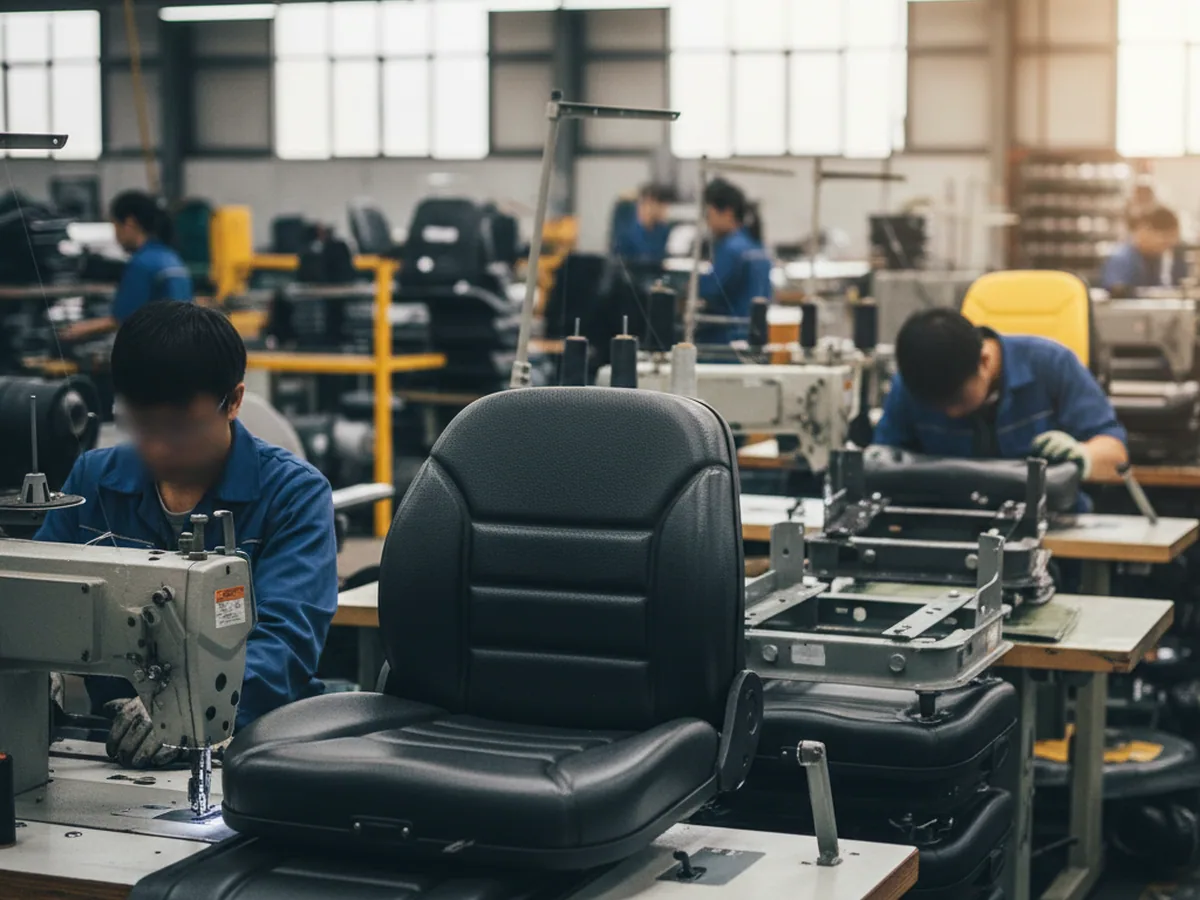
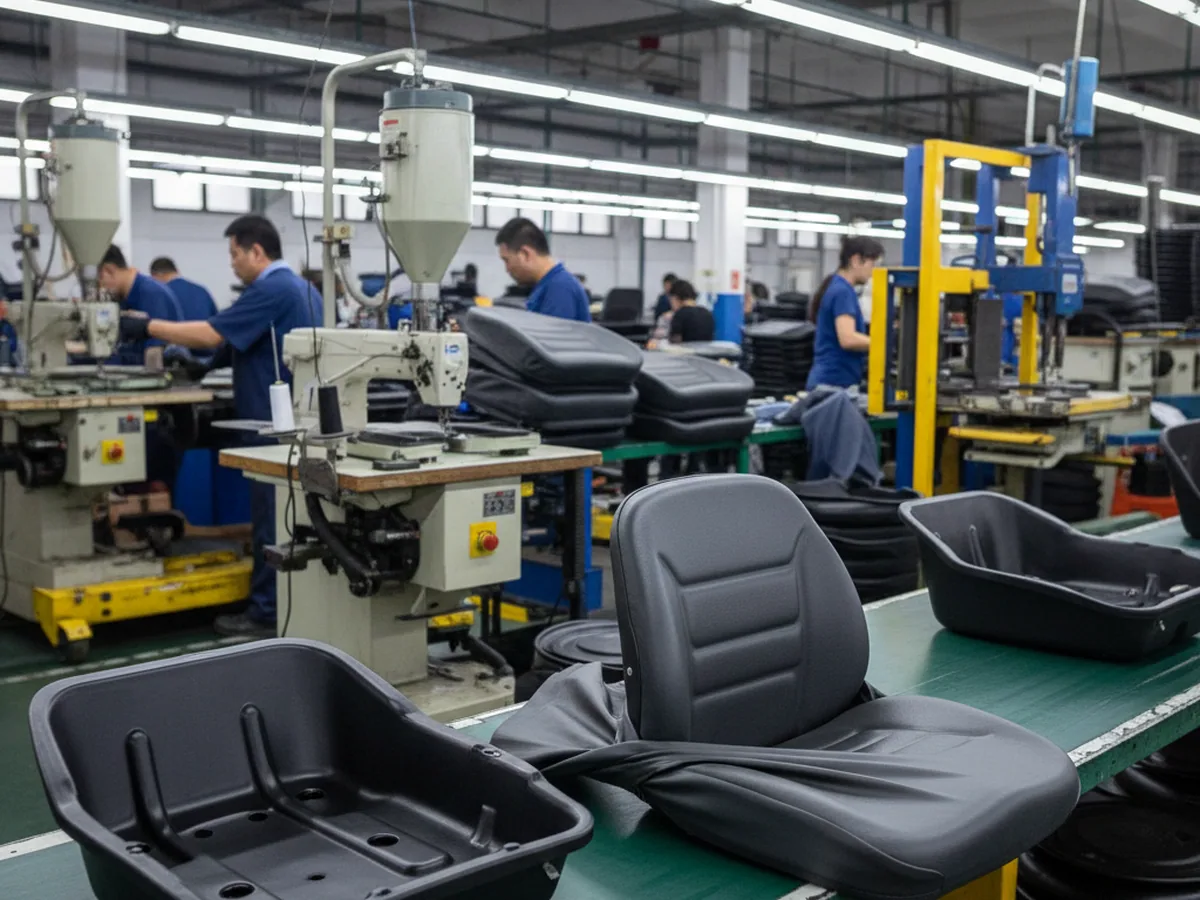
- Stamping, welding, foaming, assembly — all ours
- OEM & ODM
- ISO 9001:2015 and CE
What makes this category its own
Three Traits of a Mower Seat Order
Every other category we build for is bought on specification. This one is bought three other ways as well.
The machine usually arrives without a name
Groundcare machines outlive their seats several times over. By the time a seat splits:
- the person ordering the replacement is often not the person who bought the machine
- the maker may have stopped supplying that part
- whatever was printed under the seat has been through enough sun and sap to be worth nothing
So the opening question is not which model. It is which machine.
It is the one seat somebody sits in before paying
- A forklift seat
- is invisible to whoever signs for the forklift.
- A ride-on mower
- is sold off a dealer floor to somebody who sits in it first, alongside last season's units of the same model.
That puts the seat in front of the buyer as a finished article, and it changes what a groundcare OEM has to ask a seat supplier for.

The order is often not a seat at all
Sometimes the frame and the hinge pan are sound and only the cover has gone. Groundcare is the one category in our parts line with entries named after it:
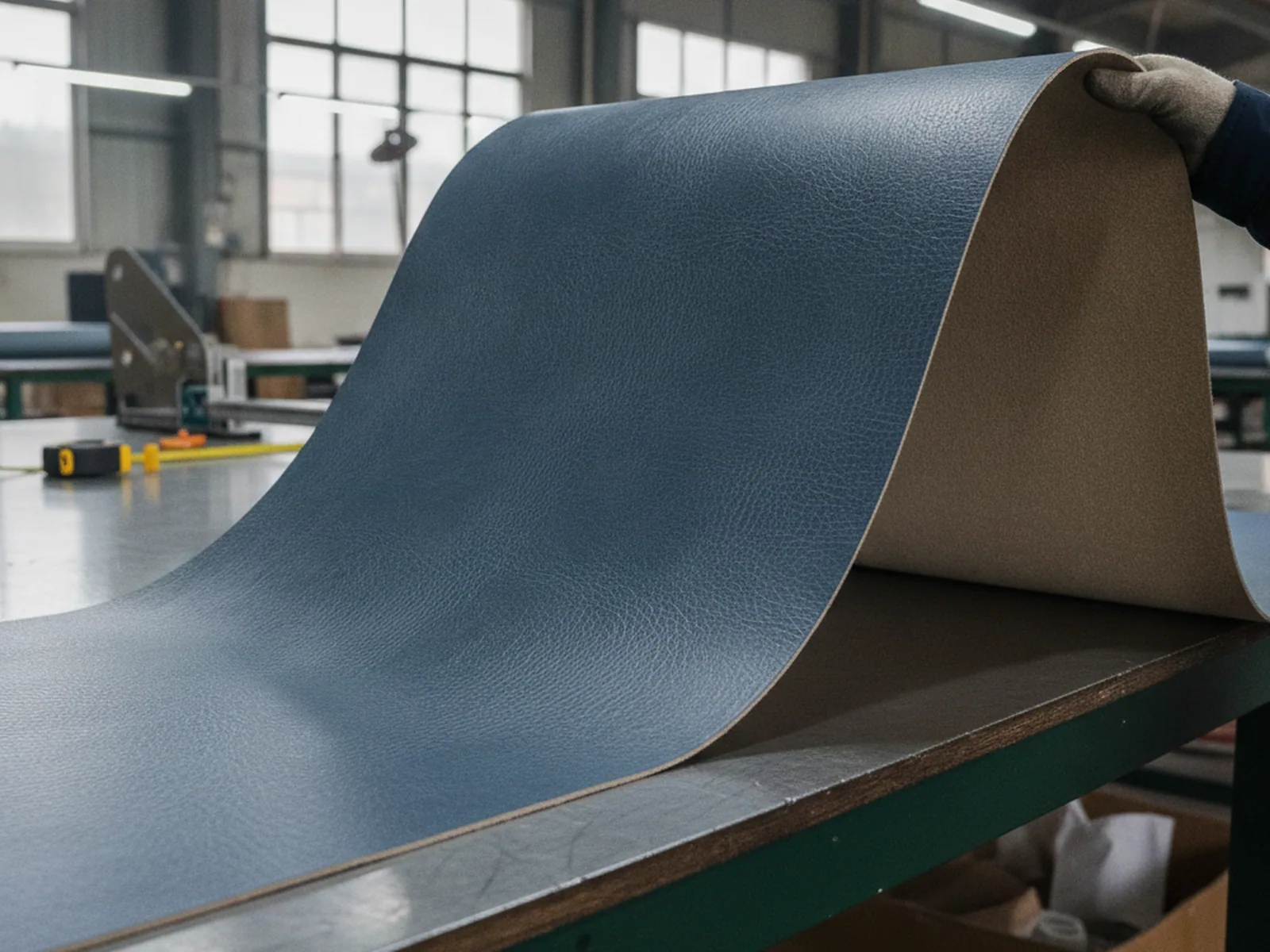
- a lawn mower cover
- a spindle mandrel assembly, under the cutting deck
What we carry in this category
YY70 Lawn Mower Seat, Cover and Spindle Assembly
Three entries in this category. Fitment for all three is answered from your machine, not from a catalogue row.
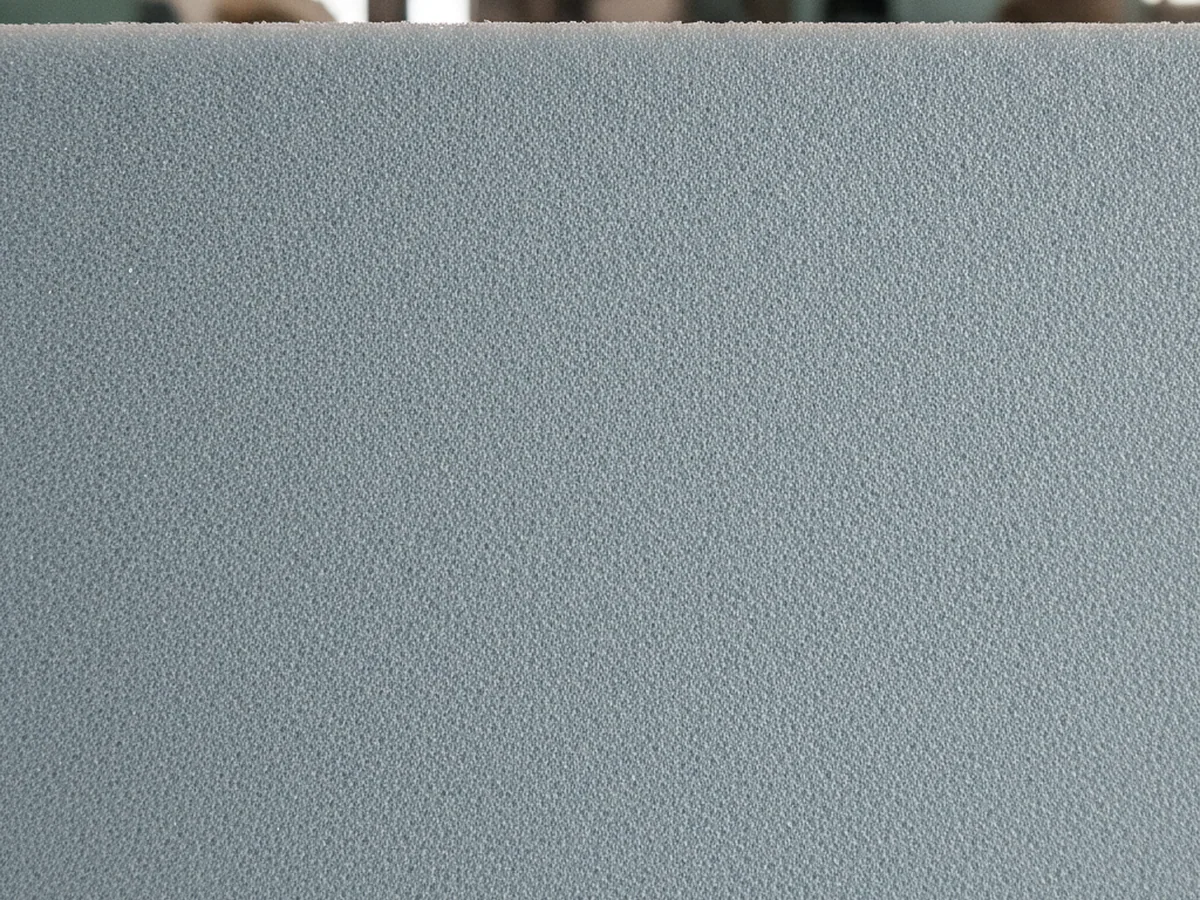
- Complete seat
YY70 — the complete lawn mower seat
Our complete seat for ride-on and zero-turn mowers and groundcare machines.
- Published spec
- — (not published)
- Fitment
- Answered per machine from your two photographs and machine type.
- Ordered
- Sample first, then a stock or custom run.
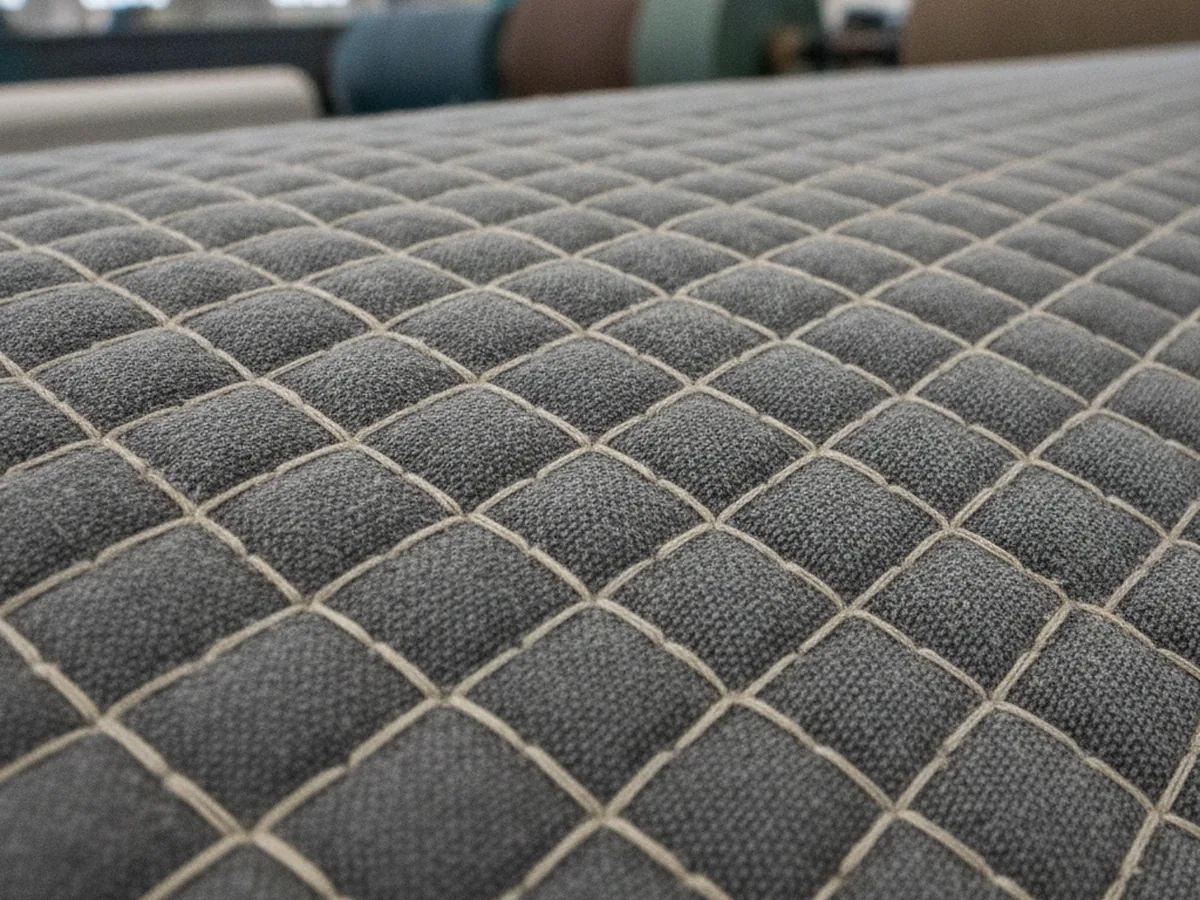
- Cover
Lawn mower cover
A cover ordered on its own, for machines whose frame and hinge pan are still sound.
- Ordered
- Without the seat.
- Range
- Replacement seat parts.
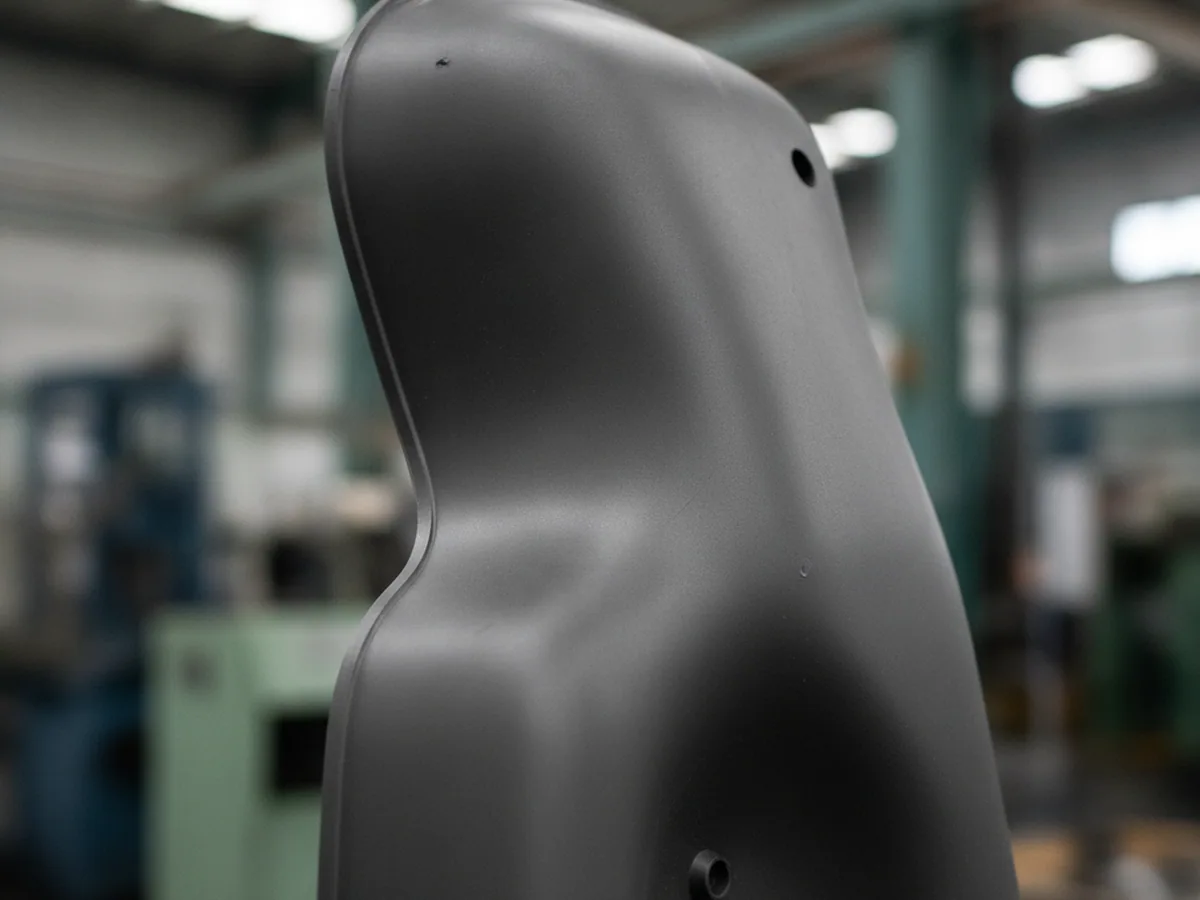
- Deck part
Spindle mandrel assembly
- Position
- Under the cutting deck — not a seat part.
- Why it is here
- Groundcare is the one machine where we already appear in two places — one supplier at two positions.
A dash on this page means the figure is not published for that model, not that the seat lacks it. The route to a fitment answer is the same whether a row is full or empty.
Every other seat we make is judged after it is bought. This one is judged before.
What the seat is bolted to
Lawn Mower Seat Pan as Access Panel
Everywhere else in this range, the seat sits on something. Here, the seat is the something.
What is underneath it
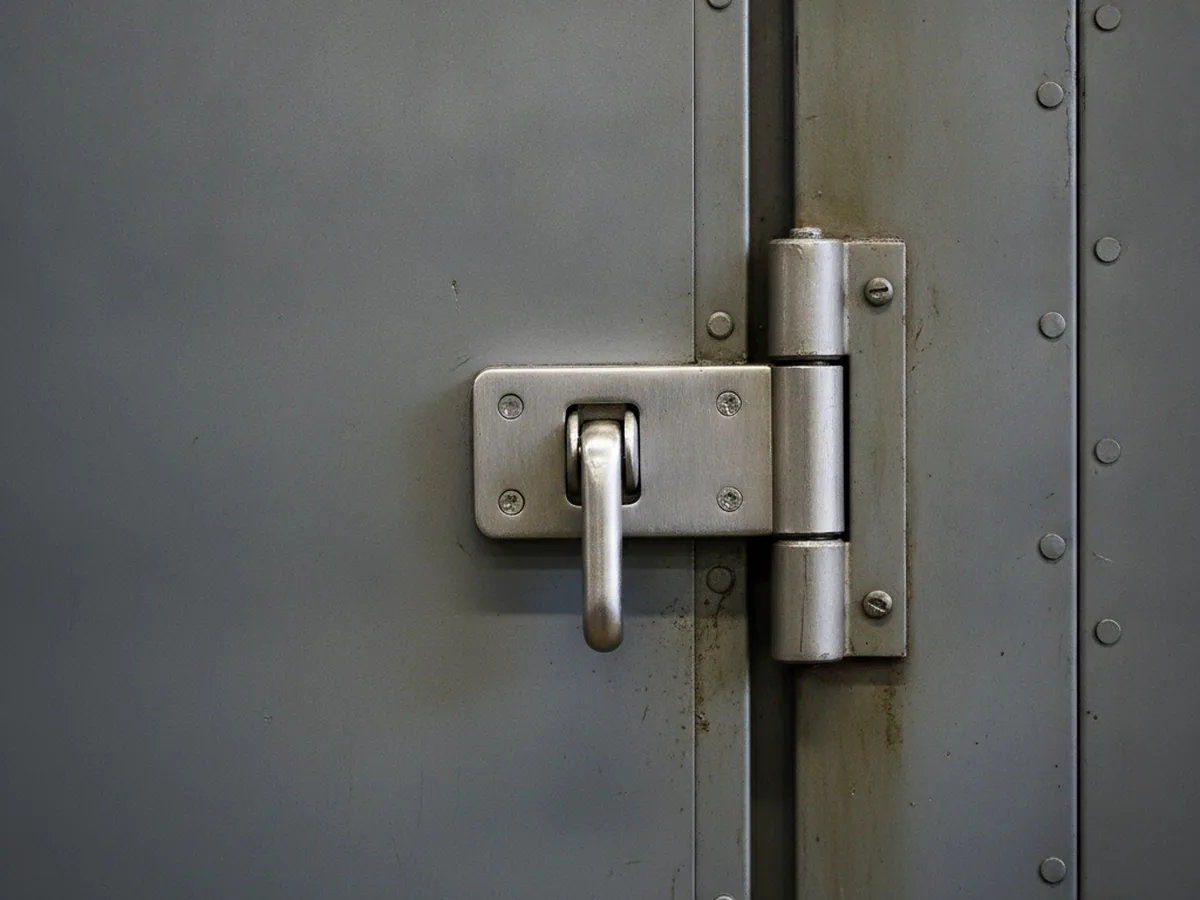
Lift the seat on a ride-on mower and you are usually looking at the battery, the fuel filler, or the top of the engine deck. The seat is not resting on an access panel. The pan it is bolted to is the access panel, on a hinge, and it gets raised and dropped every time anyone services the machine.
Why that moves the fitment question
On a forklift the seat sits on a battery cover somebody else built, and the question is head clearance. Here it is a different question. The pan is part of the seat assembly, so what it bolts through, how thick that sheet is and where the hinge line falls all belong to one conversation instead of three.
Those figures are read off your machine, not off a catalogue row — a mounting figure that is wrong gets found by a fitter with the machine already in pieces.
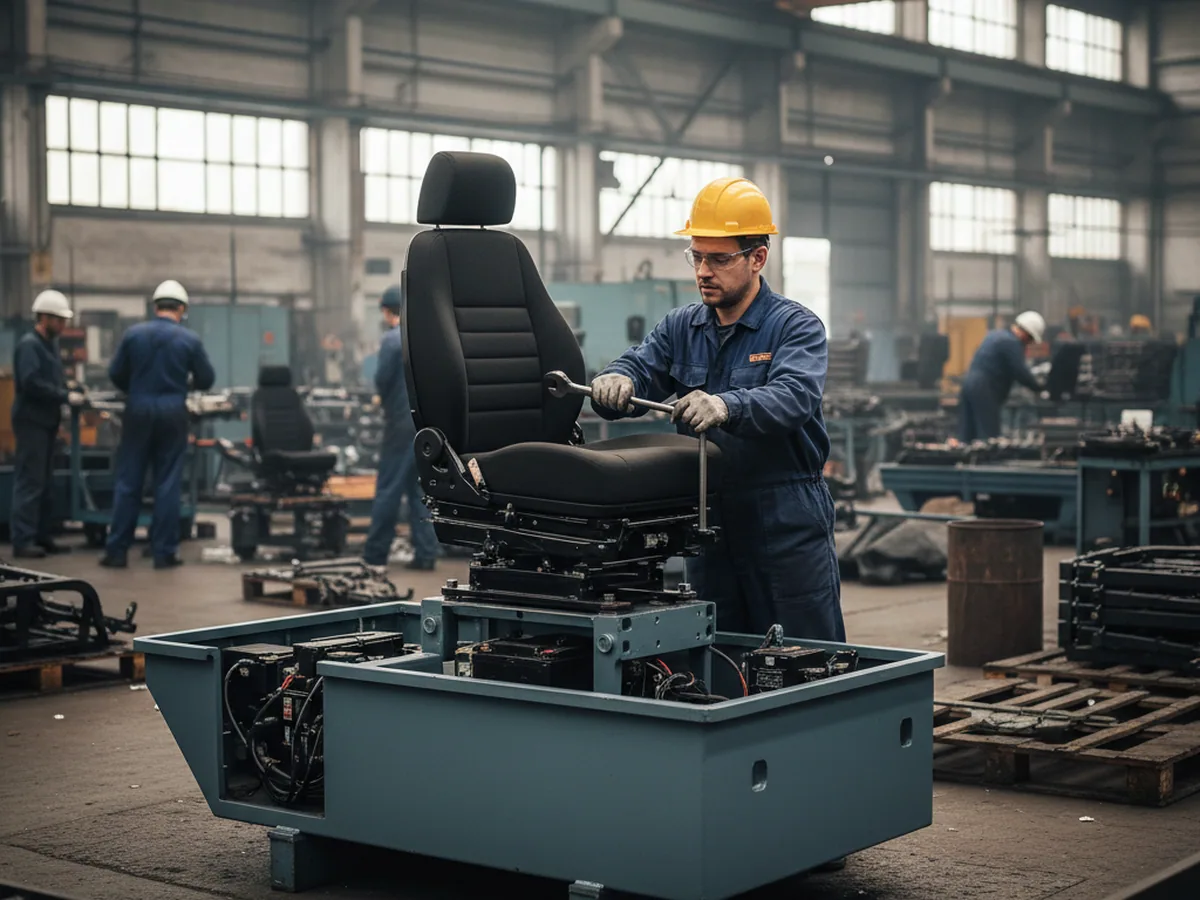
What we ask for instead
- One photograph with the seat down.
- One with it raised, including where the hinge is fixed.
- What the pan itself is bolted to.
That set answers more than a bolt pattern does, because it shows the hinge line and the clearance behind it at the same time — and neither of those is a number you would have had to measure.
A word worth being exact about
The Word “Universal”
It is the most common word in this category's aftermarket. It is worth being exact about what it can carry.
| What the word suggests | What it can actually mean |
|---|---|
| It will fit my machine | The base has more than one bolt pattern drilled in it |
| Somebody has checked | Nobody has checked this machine in particular |
| One part covers the range | One part covers the machines whose holes happen to line up |
| If it does not fit, that is unusual | Nothing in the word tells you how often it does not |
Per machine, not universal
A lawn mower seat is answered against the machine it is going on: send the pictures and get back a yes or a no for that machine — and a no arrives before a sample is paid for. How mounting compatibility is decided, hole by hole.
How a fitment answer gets made
Starting From a Machine With No Model Number
Three things worth sending, in the order they are worth taking.
You will not need a part number for any of this.
- 1
The pan and its hinge line
Photograph the seat down, then raised. In the raised shot, include where the hinge is fixed and what sits directly beneath the seat. This shows what the seat has to clear on its way up, and what the pan is carrying when it is down.
- 2
The holes as they are now
Photograph the underside with the seat off, and lay a rule across the hole centres in both directions. What matters is a picture with a scale in it, not a figure you have to vouch for.
- 3
The machine and how it works
Tell us the machine type, whether it is a zero-turn or a steered ride-on, and roughly how the machine is used through a year. That last one changes which seat we would put in front of you, and it is the part people leave out most often.
If one of those is the thing you want settled first, lead with it in the message — send what you can measure
Why a groundcare OEM asks first about appearance
Showroom Consistency for Groundcare OEMs
For a groundcare OEM, seat consistency is a showroom problem before it is an engineering one.
A ride-on mower is sold off a floor, with a unit from the batch before standing next to it. The buyer:
- walks up to it
- sits in it
- puts a hand on the cover
- pushes the cushion with a thumb
- Not judged
- Mounting, weight range, travel.
- Judged
- Whether the two seats look like they came from the same place.
Nobody rejects a mower because of the seat. They buy the one standing next to it.
That is why the first question a groundcare OEM puts to a seat supplier is often not a fitment question at all. It is whether these will read the same in six months as they do in this container:
- the gloss on the cover
- the run of the stitching
- the fill of the foam
Because the cost of getting that wrong is not the price of a seat. It is a machine on the floor that stopped being the one people sit in.
What the OEM is actually buying
- Not
- a travel figure.
- But
- a part that will look the same on the tenth machine down the row as it did on the first, because the row is where the decision gets made. What an OEM seat programme gets asked.
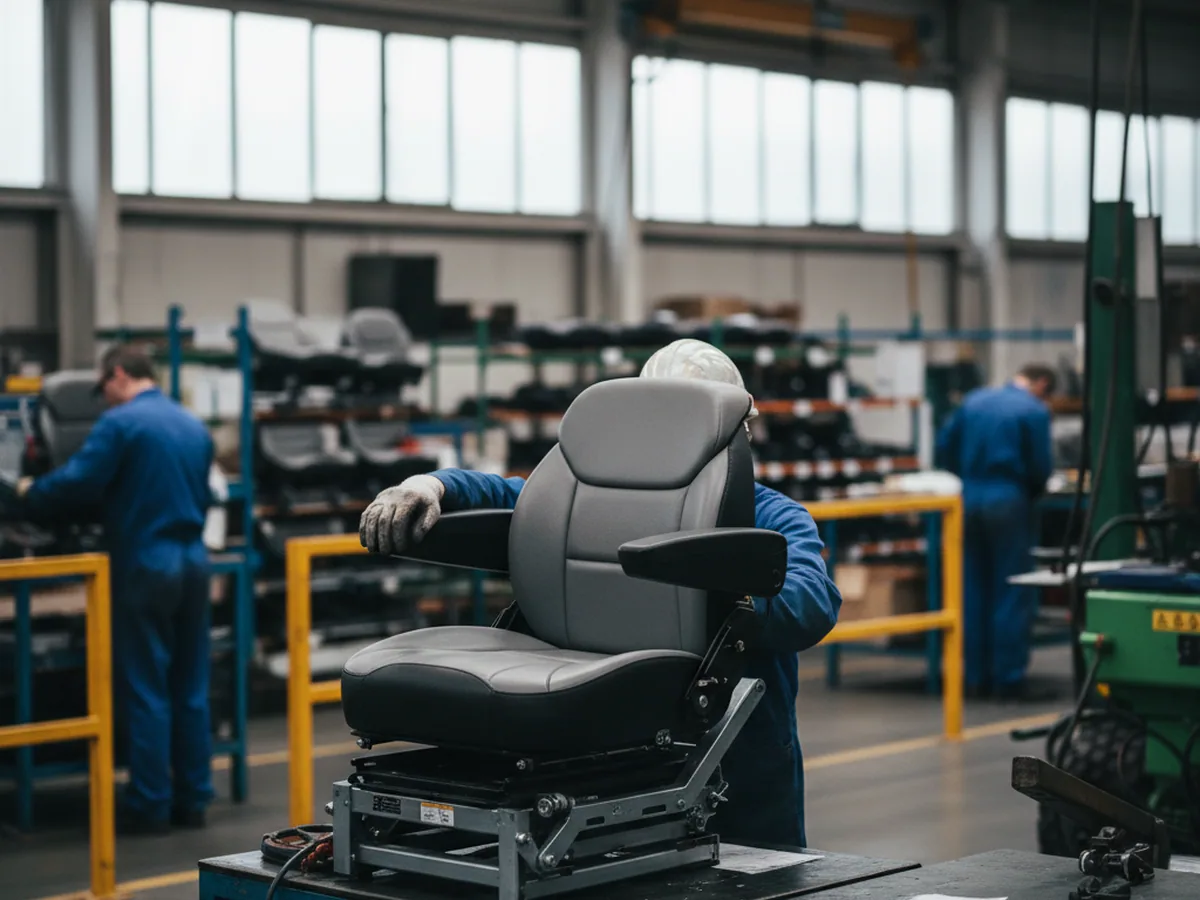
Where batch-to-batch difference has an address
Batch Consistency: Four Operations, One Site
The answer is an address, not an assurance.
Stamping
Welding
Foaming
Assembly
Four operations, one building
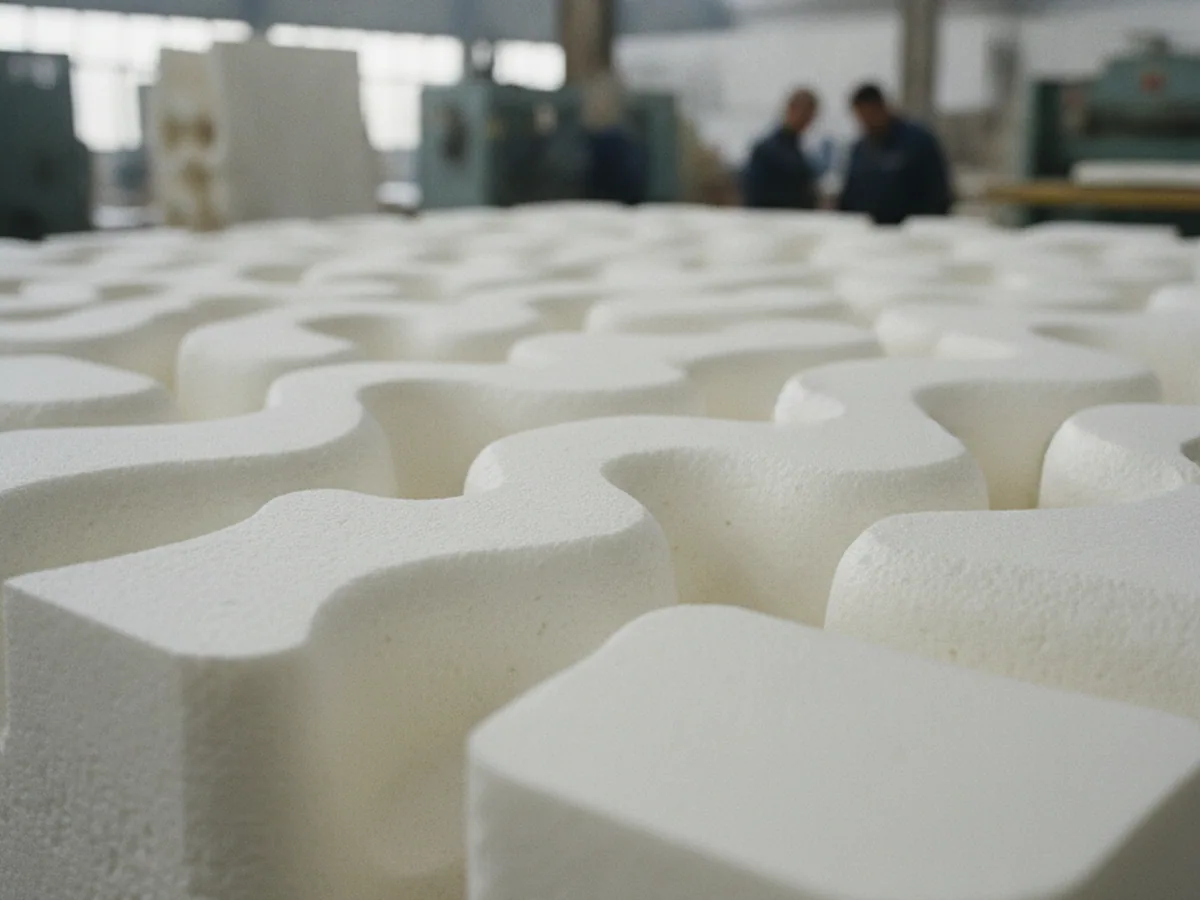
Stamping, welding, foaming and assembly are all ours, on one site, none subcontracted — and all four answer to one schedule. Plant, lines and capacity are on the factory page.
What that buys you on appearance
Cover gloss, stitch run and foam fill are settled at three different operations.
- Under one roof, run against the same build
- A difference between two batches has one place to be accounted for.
- Bought in from three suppliers
- That difference has three possible origins and no single owner — and the conversation about it takes three phone calls instead of one.
When batch two does not match batch one
When you tell us batch two does not match batch one, we can go and look — and the place we go is inside this building rather than into somebody else's order book.
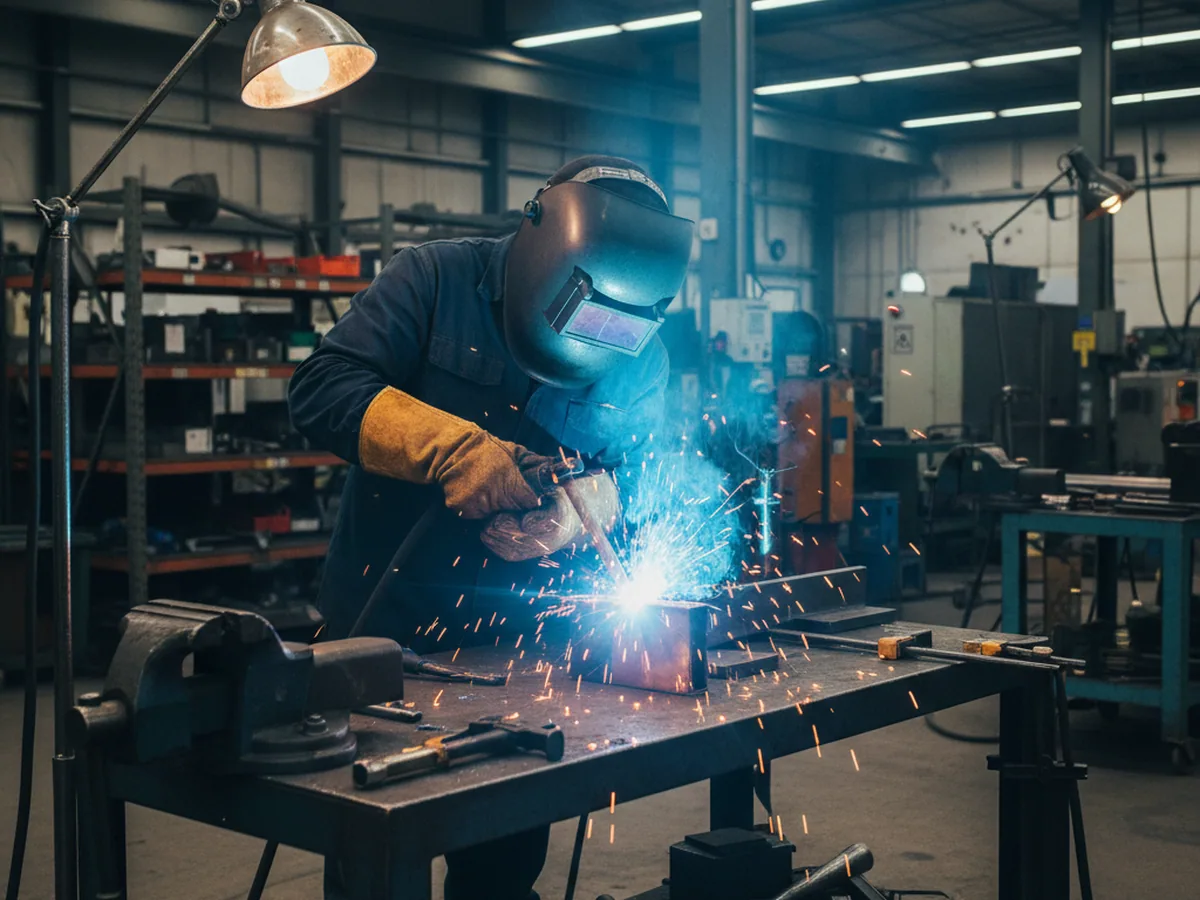
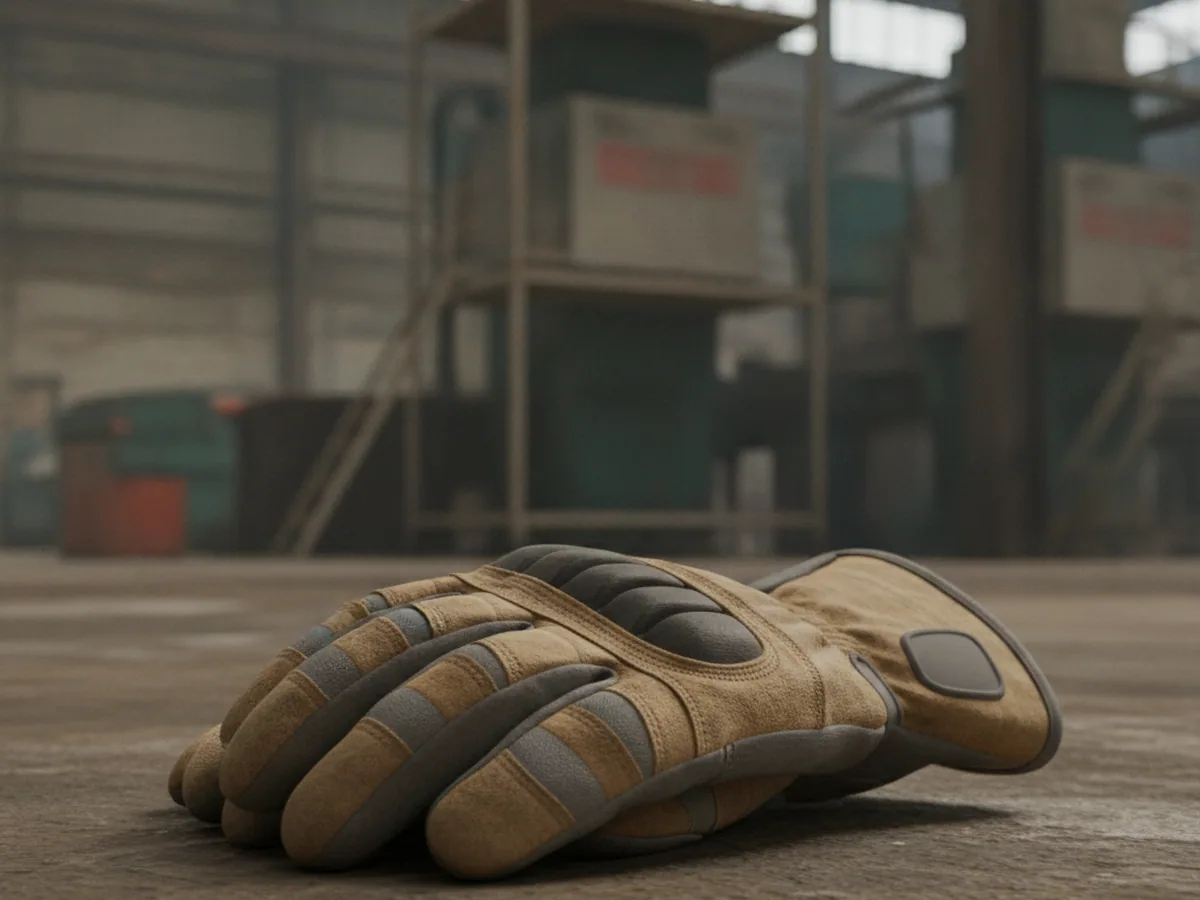
Two entries named after this category
Lawn Mower Seat Cover and Spindle Mandrel Assembly
Groundcare is the only category in our parts line with entries named after it.
- Seat part
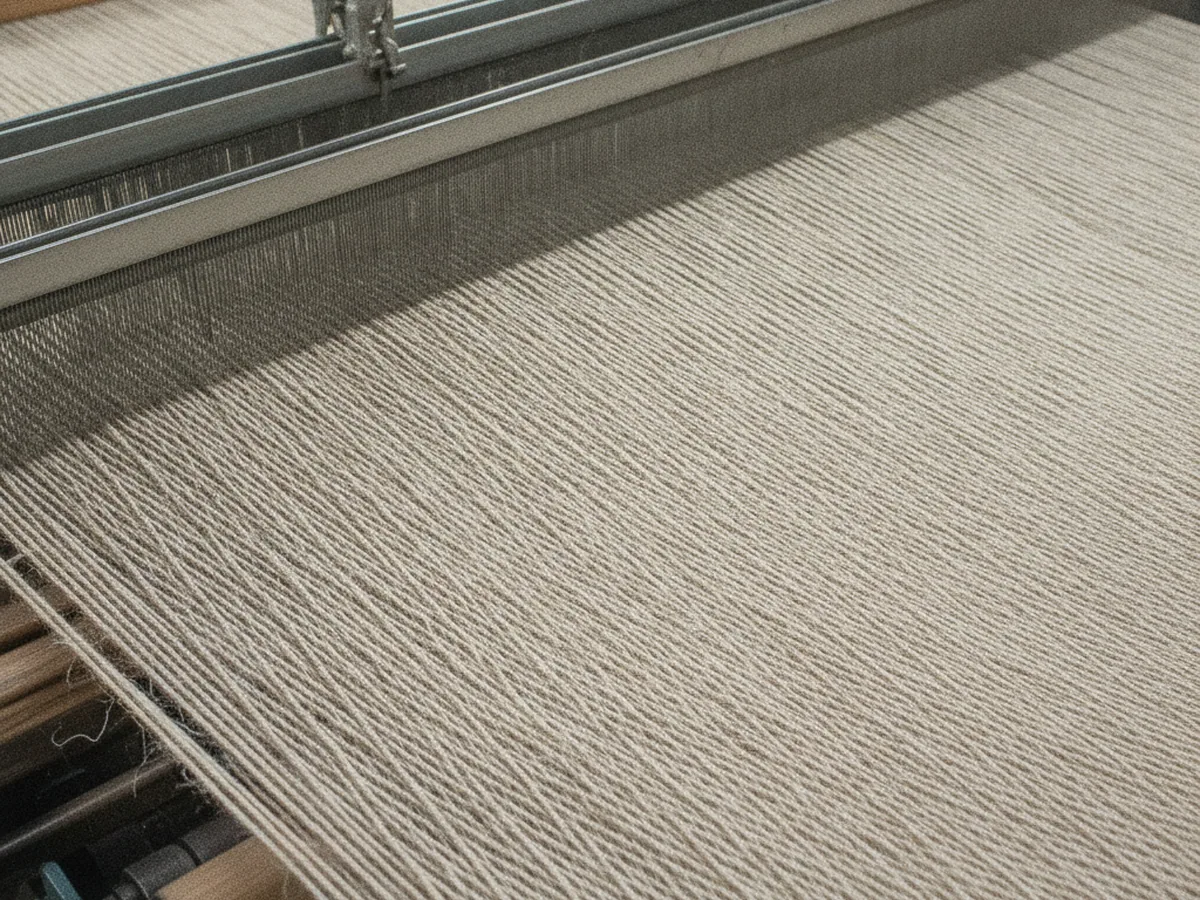
Lawn mower cover
- Every category we serve
- uses seat covers.
- Only one of them
- has a cover carried under its own name in our parts line.
Held as its own line item, not as a size of the general seat cover.
- Deck part
Spindle mandrel assembly
- Where it sits
- Under the cutting deck — not a seat, not attached to a seat, nowhere near the operator.
- Why it is in our line
- Groundcare is the one machine where we already appear twice on the same bill of materials: once at the seat, once under the deck.
Why that matters, and to whom
- To a machine builder
- One supplier covering two positions on one machine, on one schedule.
- To a parts catalogue
- Two listings that can be sourced from one place, with one account behind them.
The bench that speaks to this category
Hinge Weld Metallography
The hinge is the joint this category works hardest. Here is how we look inside one.
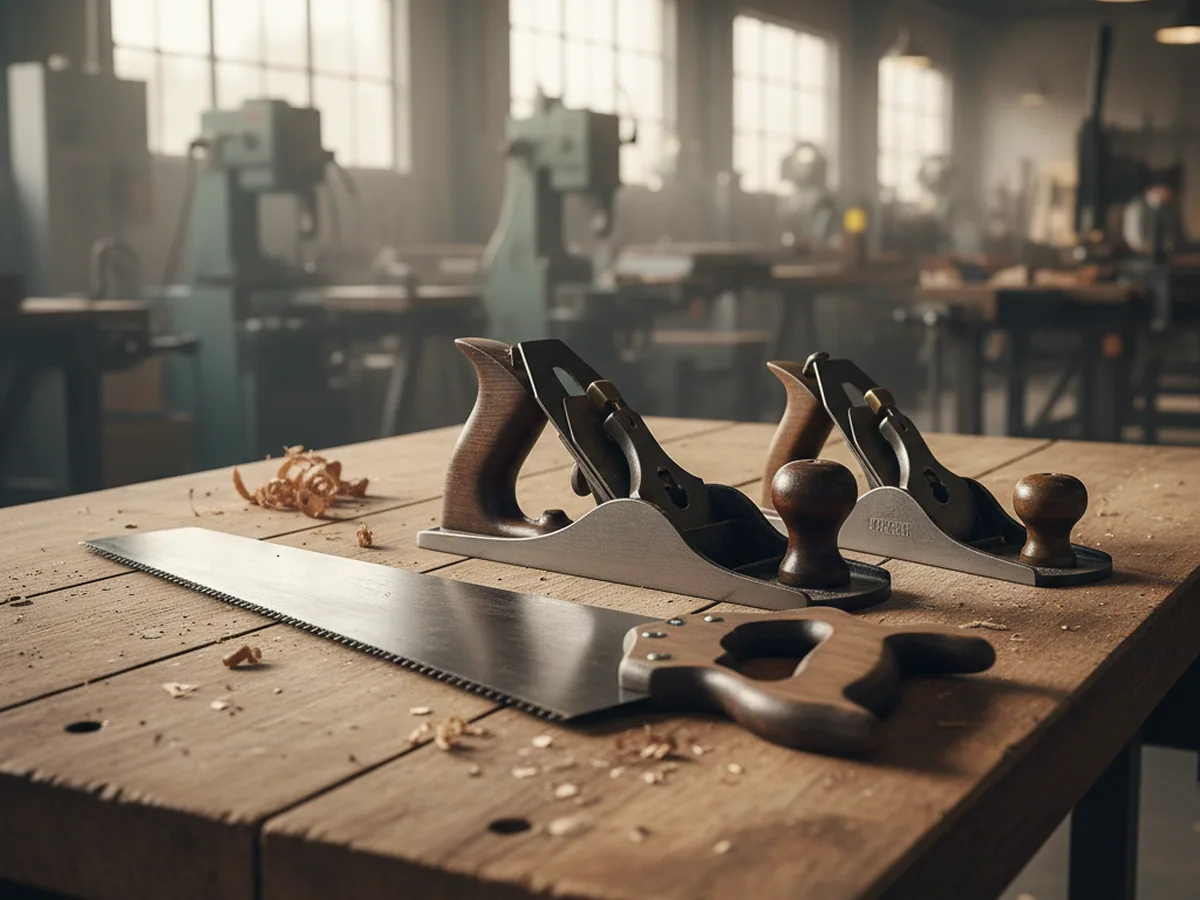
Cut
A section is taken across the joint.
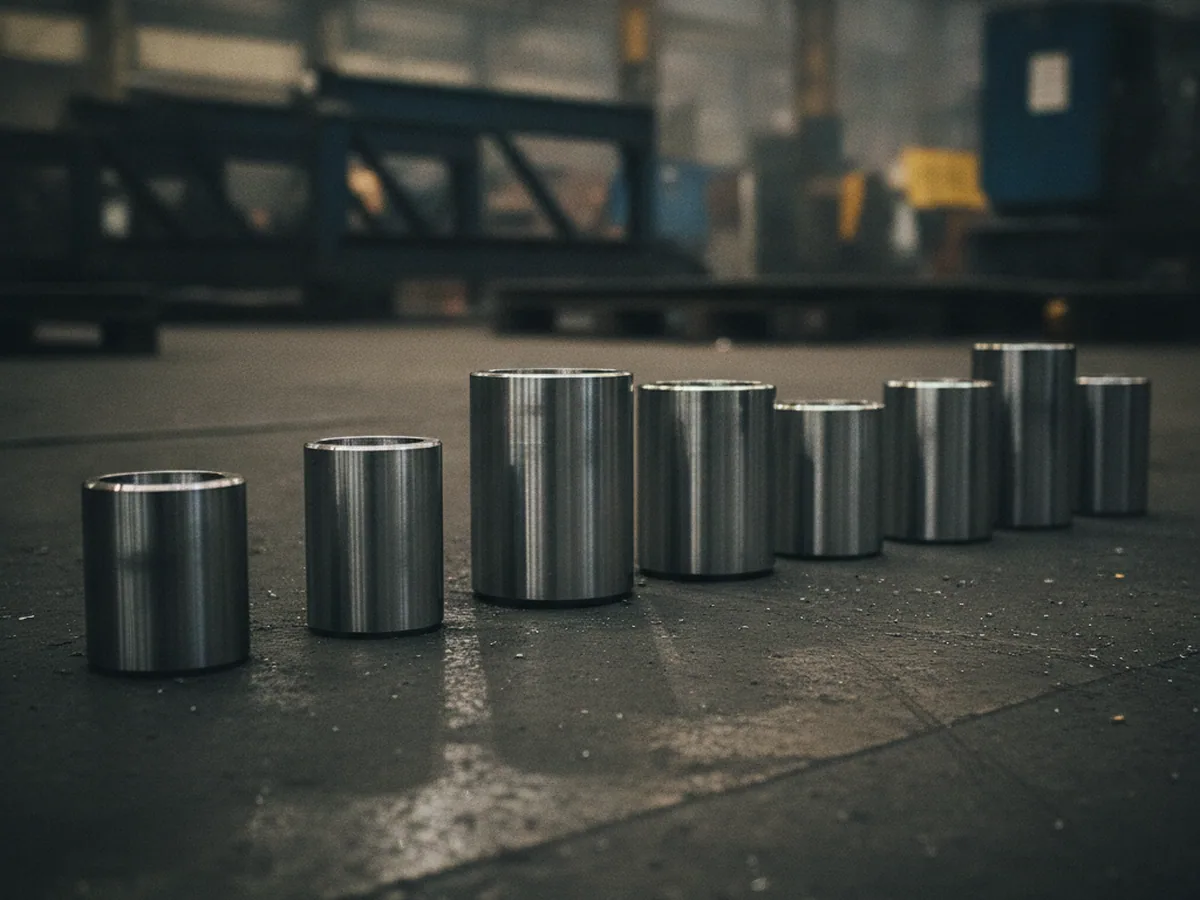
Inlay and polish
The face is prepared so the inside can be read.
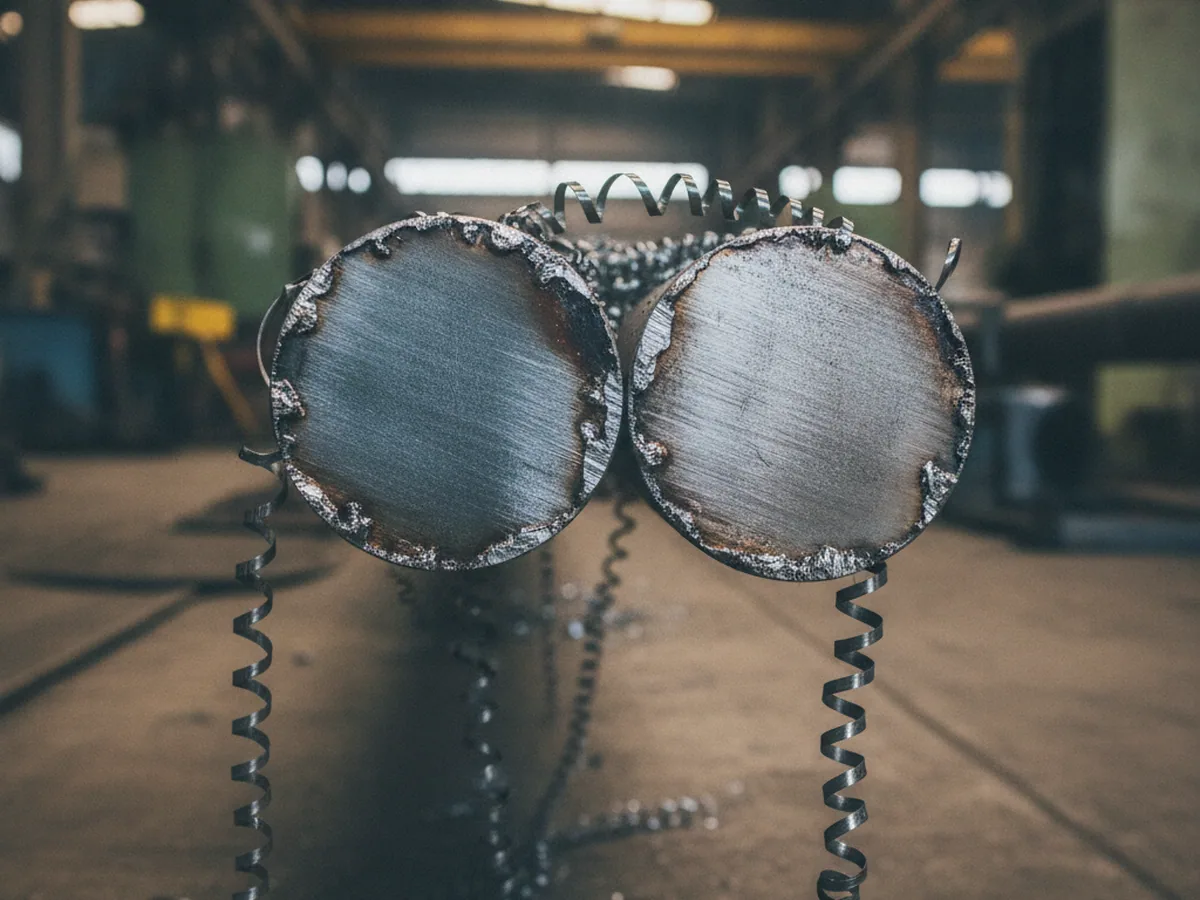
Look
What the bead hid is now visible.
The mechanism
The seat pan on a ride-on mower is a hinged access panel. A hinge that is raised and dropped through every service is a fatigue joint, and a fatigue joint cannot be judged from the outside — the bead tells you about the last pass, not about the metal underneath it.
- Our metallographic set
- a cutting machine, an inlaying machine and a polishing machine
- What it does
- takes a weld and opens it, so the inside of the joint is looked at instead of inferred.
What you are handed at qualification
- Test centre
- 14 machines, all on our own floor — three are the metallographic set above; a combustion test box is a fourth.
- At qualification
- Photographs, taken bench by bench. How the test centre is run, bench by bench.
Cut once. Sat in for years.
What we hold
Certificates
ISO 9001:2015 · CE — scans sent by email at qualification, alongside the bench photographs. What each certificate covers.
First order
First Order: Sample, Run, Warranty
- Sample 1 pc · 7 days
- Stock 50 pcs per model
- Custom 200 pcs per model
- Production 20–30 days from order confirmation
- Warranty 12 months
On a machine we have only seen in photographs, the sample is the step that turns a fitment answer into a fact — put it on the machine before a run is agreed. How the three order shapes work.
Questions from the workshop
Lawn Mower Seat Questions From the Workshop
Four that only come up once the machine is a mower. General questions — minimum order, suspension types, export documents — are on the FAQ page.
I do not even know what this machine is called. Where do I start?
With photographs. The machine type and two pictures of the seat, one down and one raised, are enough to begin — what else helps, and why.
The seat lifts to reach the fuel filler. Does that limit what I can fit?
It shapes the conversation rather than limiting it. The raised-seat photograph is the one that settles it, because it shows the hinge line and what the pan has to clear.
Is a zero-turn the same as a steered ride-on for seat purposes?
Not always. Tell us which one it is when you send the pictures, because it changes which lawn mower seat we would put forward — and how the machine is used through a year changes it again.
If I order a sample and it fits, does the production clock start then?
No. Production is counted from order confirmation, not from the day the sample fits — the run sizes and lead time.
Start without a part number
Start Without a Part Number
Two photographs and a machine type are enough to get a fitment answer back.
A fitment answer needs three things to start: the machine type, a photograph of the seat down, and a photograph of it raised. Anything else you can measure is useful rather than required, and none of it is a part number.
If the answer is that nothing in our range goes on your machine, you get that answer too, and you get it before a sample is paid for.
- ISO 9001:2015
- CE
- Photographs of the seat down, the seat raised and what the pan is fixed to go to sales@klseats.com
- 0086-136 1700 5124 · 0086-791-8577 6525
- What to photograph before you write
If one question brought you here, put it in the first line of the message. It is the fastest thing to answer.
First reply within 24 business hours; a named fitment answer within 48 hours of your photographs.