Forklift Seat Manufacturer — Four Low-Back Mechanical Models
KL01, KL11, YY03 and YY53. All four are low-back and mechanical because the overhead guard does not move — and none of them suit stand-on or reach trucks, which carry no seat at all. Send three measurements and your operator weight range, and what comes back names which of the four will bolt onto the base you actually have — and, for the ones that will not, what stopped them.
Three Truck Constraints: Guard, Reversing, Entry Load
A forklift seat is shaped by parts of the machine that cannot be changed. Each of the three below rules out something a general machine seat would offer you.
Guard height is fixed, so seat height, backrest and suspension travel draw on one allowance
The Overhead Guard Sets One Ceiling for Three Dimensions
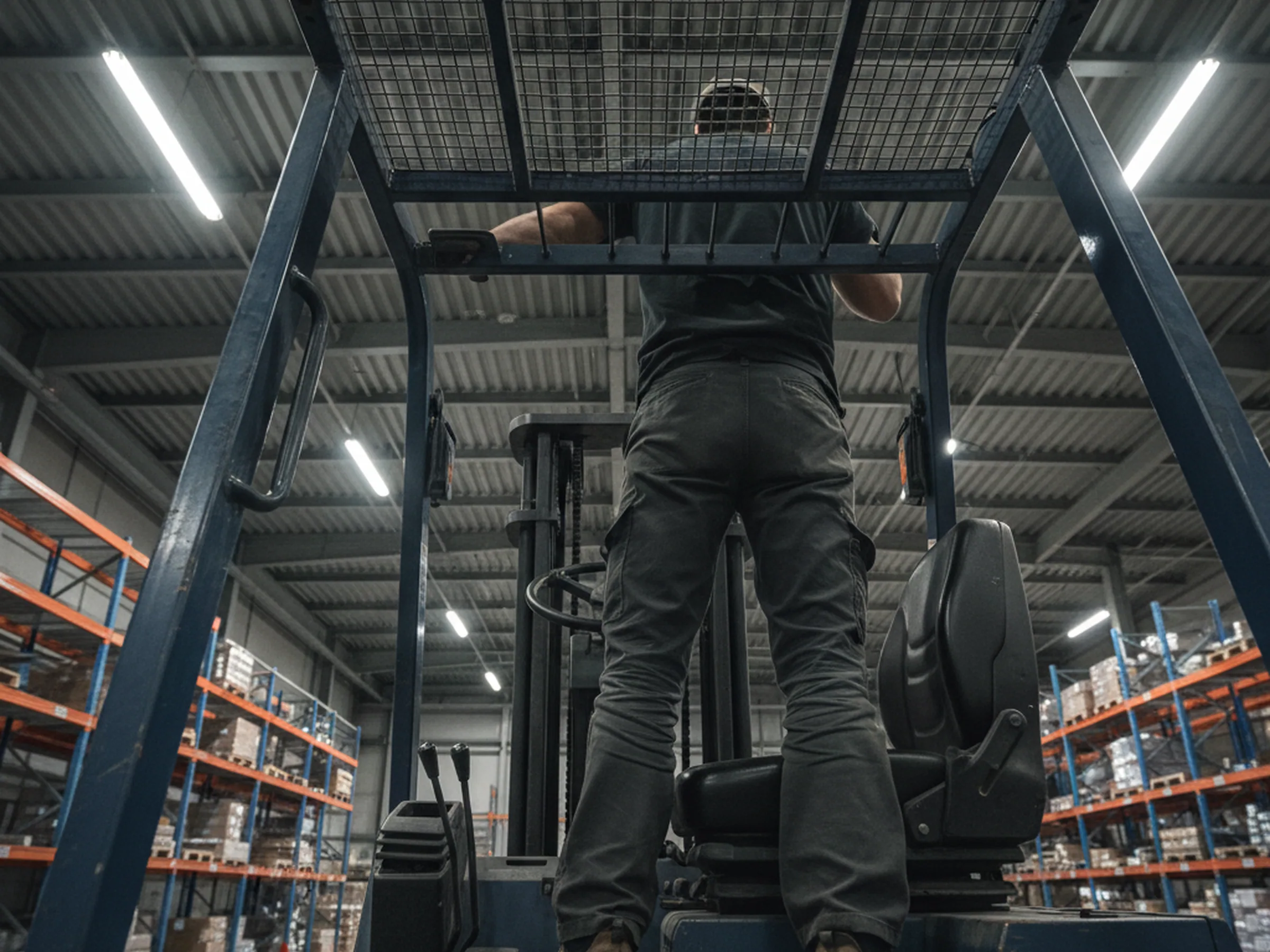
The guard above the operator's head is structural and its height is fixed, so three things share a single allowance — whatever the seat adds at the base, the operator's head loses at the top:
Seat height.
Backrest height.
Suspension travel.
That is why all four forklift seat models are low-back, and why the published travel figures sit in a narrow band — 50 mm on KL01, 48 mm on YY53. Earthmoving seats run far more travel than that, and under a fixed guard that much travel ends with a helmet against steel.
Reversing Is Normal Operation, Not the Exception
With a load on the forks the forward view is blocked, so travelling in reverse is standard practice, not a manoeuvre. Anything behind the operator's shoulders competes with that view. Our forklift seats carry no headrest — a design consequence of the reversing duty cycle, not a feature left out to save cost.
The Load That Shapes the Frame Is a Person Climbing In
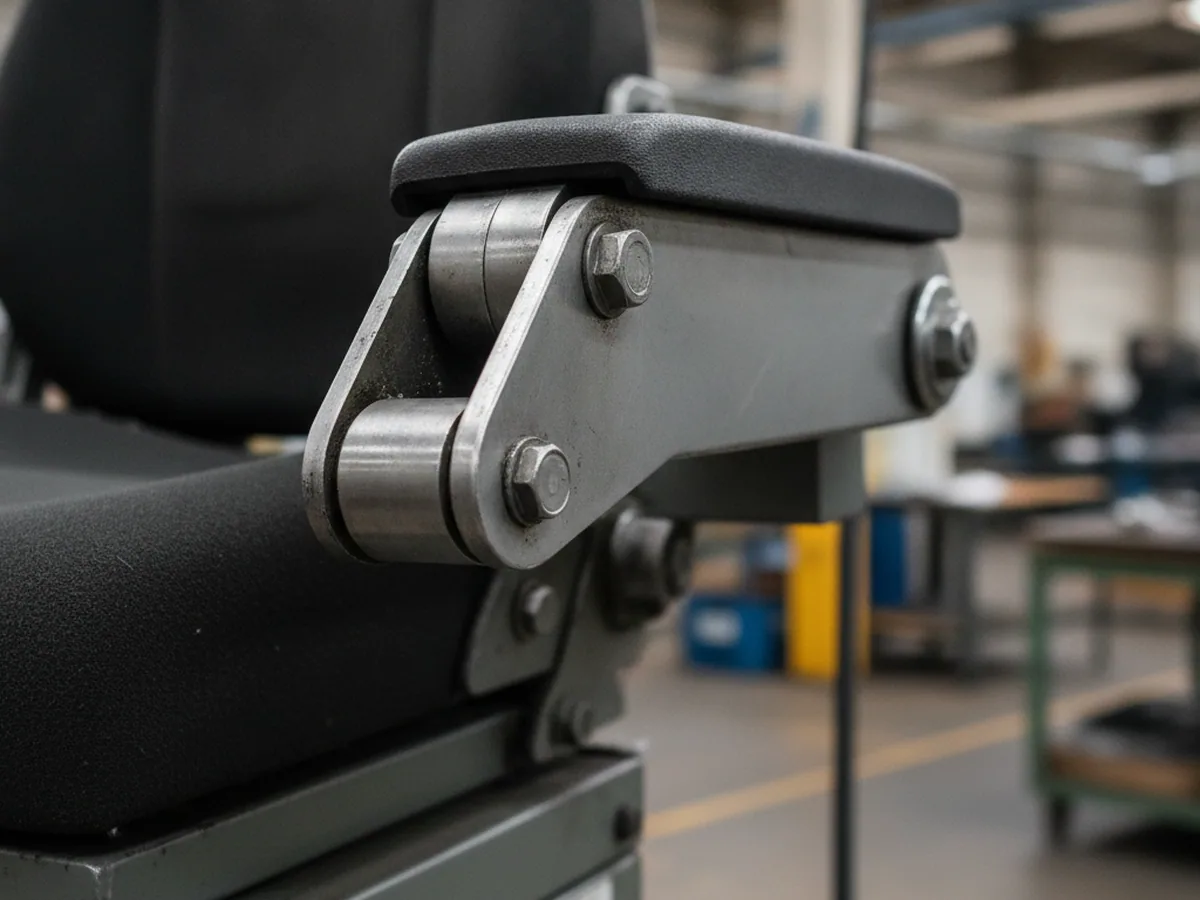
On a truck that moves loads rather than ground, the heaviest repeated input is not the floor. It is someone stepping on the outer edge of the cushion to get in and out, all shift, from the same side. That side load sizes the frame, the bolster and the armrest hinge — so the frame specification tells you more than any damping figure.
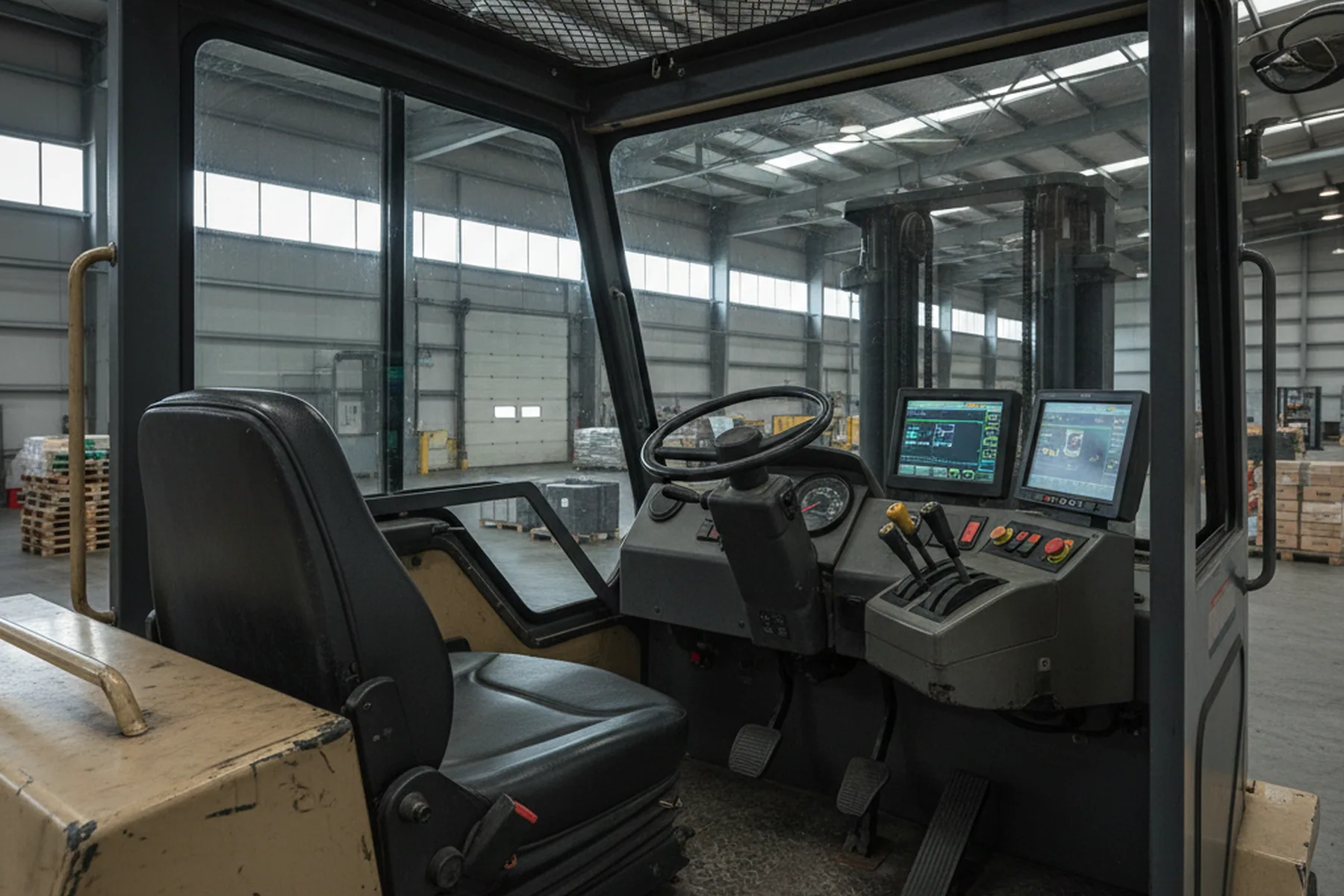
Fixed overhead structure — the constraint every dimension below it answers to
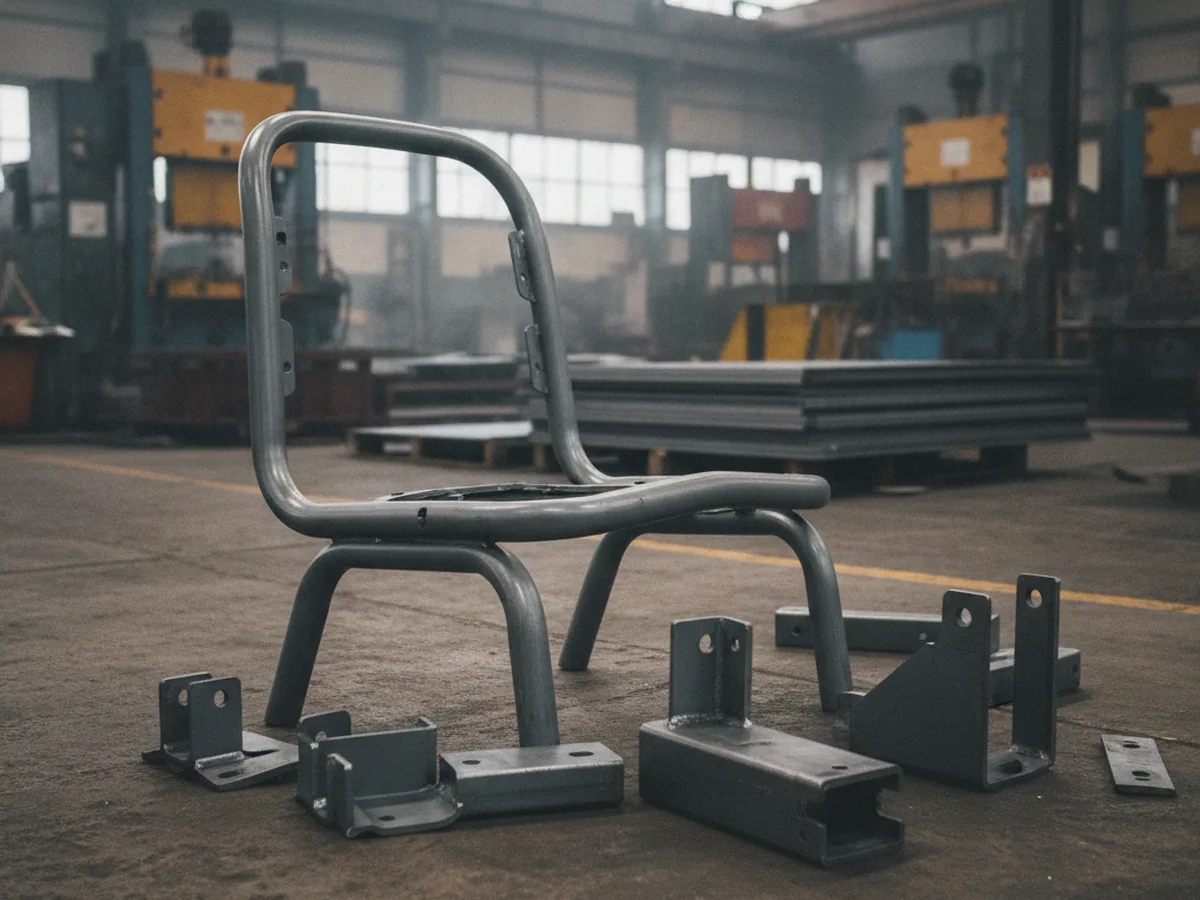
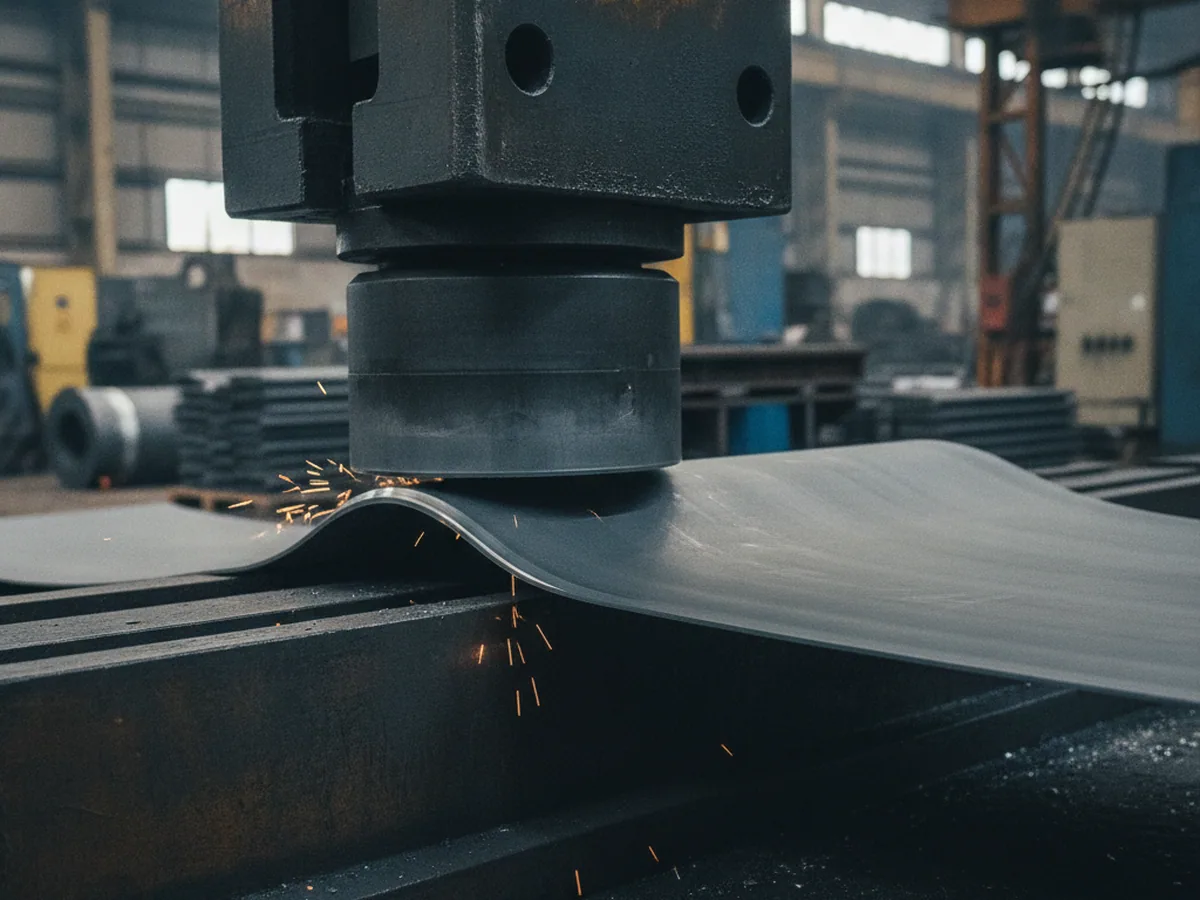
Low-back frame and bracketry — pressed in-house
Everything on this page starts from numbers you take off your own truck
Fixed guard height
Rules out high-back and long-travel suspension on this category.
Reversing duty cycle
Rules out a headrest.
Entry and exit loading
Makes frame and bolster specification matter more than damping figures.
The range
Four Forklift Seat Models: KL01, KL11, YY03, YY53
One product line, four entry points. The differences that matter are the operator weight band and the fore-and-aft travel — everything else on this list is common to all four.
KL01
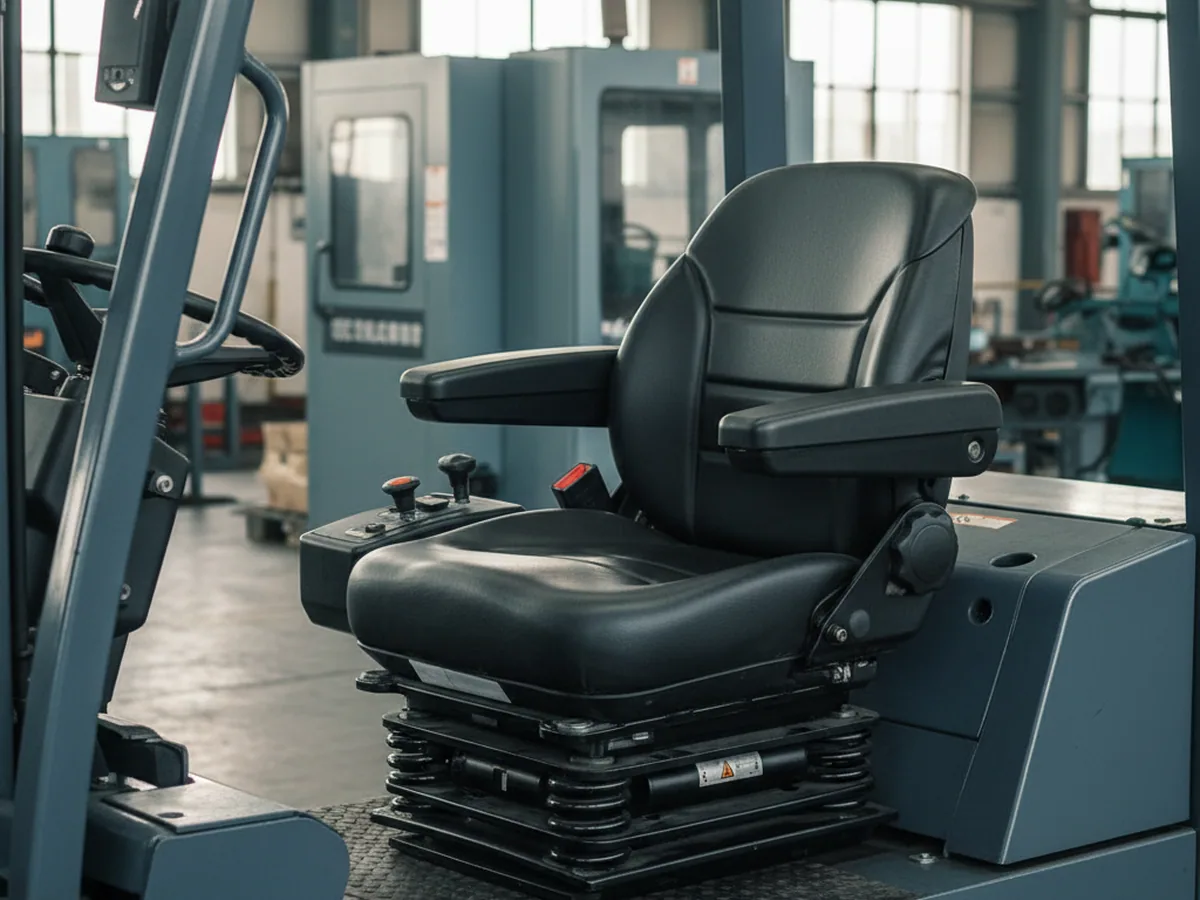
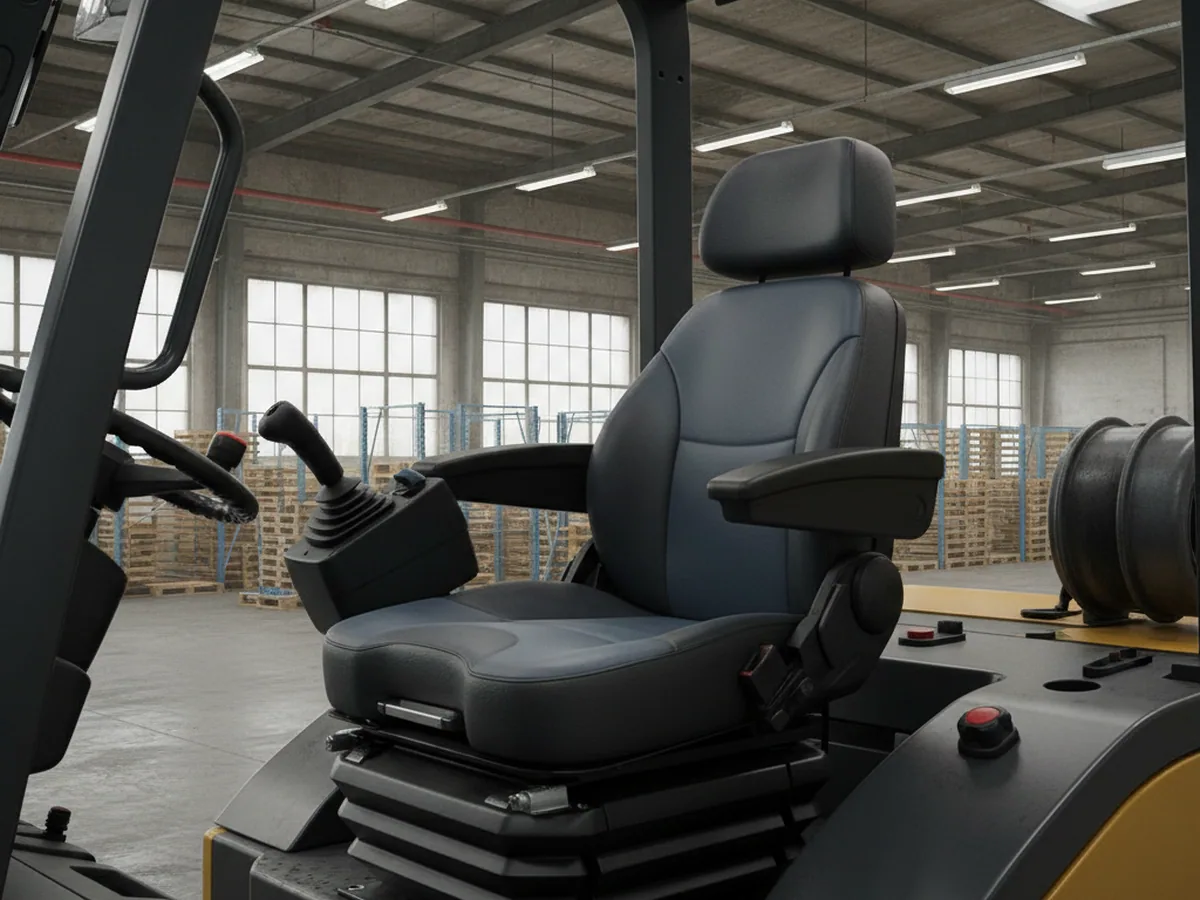
Mechanical low-back with an adjustable backrest and a raised option. Operator weight 50–130 kg, suspension travel 50 mm, fore-and-aft adjustment 165 mm. Flip-up armrest and presence-switch provision. Offered in PVC or fabric on the same frame.
50–130 kg
50 mm travel
KL11
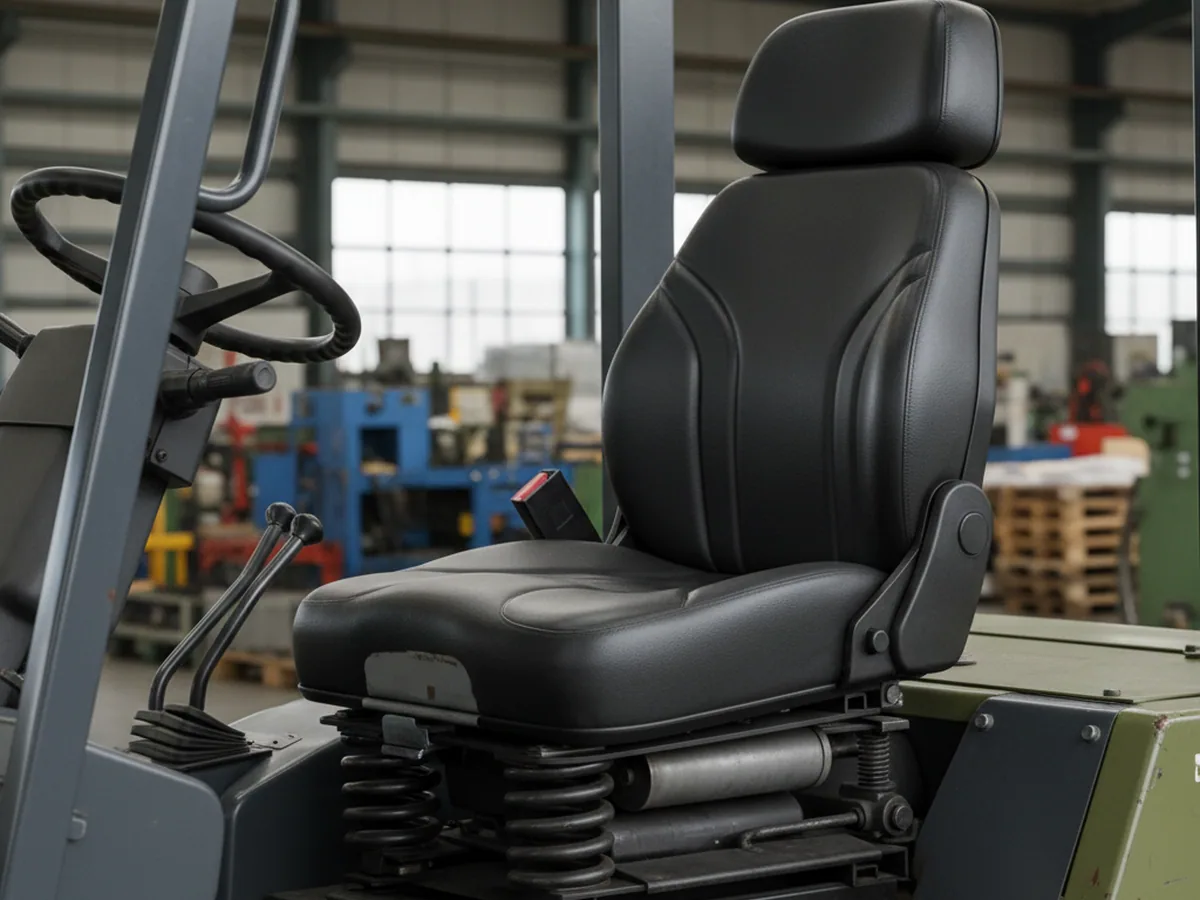
Mechanical low-back, no headrest, moulded rear shell. Operator weight 50–130 kg. Flip-up armrests both sides; presence switch, seat belt and slide rail are available as options rather than fitted as standard. Wear-resistant black PVC.
50–130 kg
No headrest
YY03
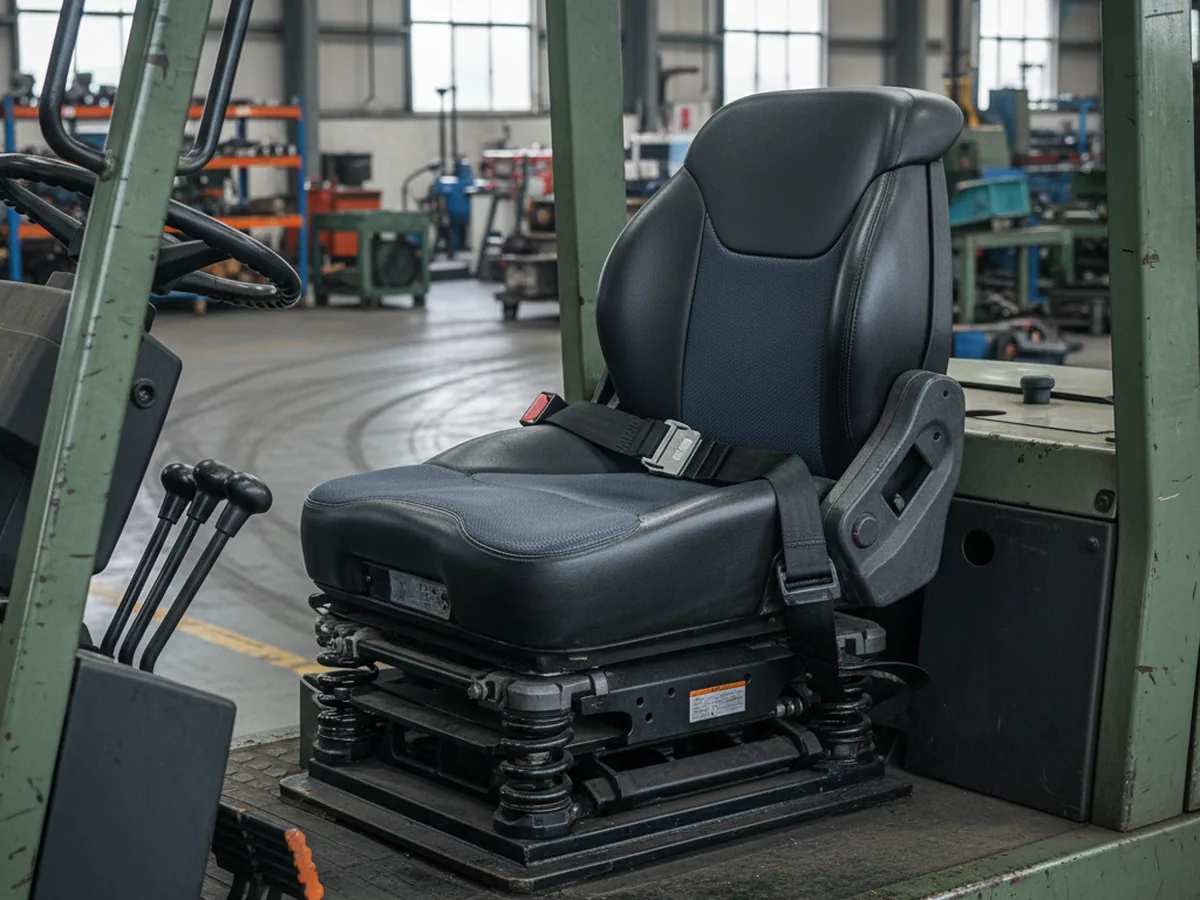
Mechanical, wear-resistant PVC over high-density foam. Operator weight 40–120 kg — the lighter of the two bands, which is the reason to look at it rather than at KL01.
40–120 kg
High-density foam
YY53
Mechanical, PVC. Operator weight 40–120 kg, suspension travel 48 mm.
Order a seat that will not go on, and what you have bought is a truck that stops working while it waits for the next one.
What only you can measure
Three Forklift Seat Measurements to Send
Bolt spacing and mounting pattern decide whether a forklift seat can be attached. These three decide whether it can be used afterwards. All three are specific to lift trucks, and none of them appear on a spec sheet.
A hinged battery cover changes the reference plate and the slack the harness needs
What the Three Numbers Settle
Send those three plus the weight range of the people who actually drive the truck — how a fitment answer is put together is the same across the site.
What you send
Fixed plate or hinged cover · height above the plate in millimetres · presence-switch connector and harness slack · operator weight range.
What it rules out
Which of the three numbers ruled a model out — guard height, the hinged cover, or the presence-switch connector.
That last part is the useful half: knowing a seat is too tall is a different problem from knowing the connector is wrong, and only one of them is solved by picking a different model.
Is the Seat Plate Fixed, or Is It the Battery Cover?
On many electric counterbalance trucks the seat sits on a hinged battery cover that has to be lifted to change or charge the battery. That changes two things at once: the plate is not a fixed reference, and everything routed to the seat has to tolerate being raised. Tell us which of the two you have. If it hinges, tell us roughly how far it opens.
2
How Much Height Is Left Above the Seat Plate?
Measure from the seat plate up to the underside of the overhead guard, with nothing on the plate. One number, in millimetres. This is the figure that decides whether a mechanical suspension can be used at all — a seat that clears the guard when new can still fail at the top of its stroke, or with the battery cover closed on it. It is also the single item most often left out of an enquiry.
3
What Connector Does the Presence Switch Use, and How Much Slack Is There?
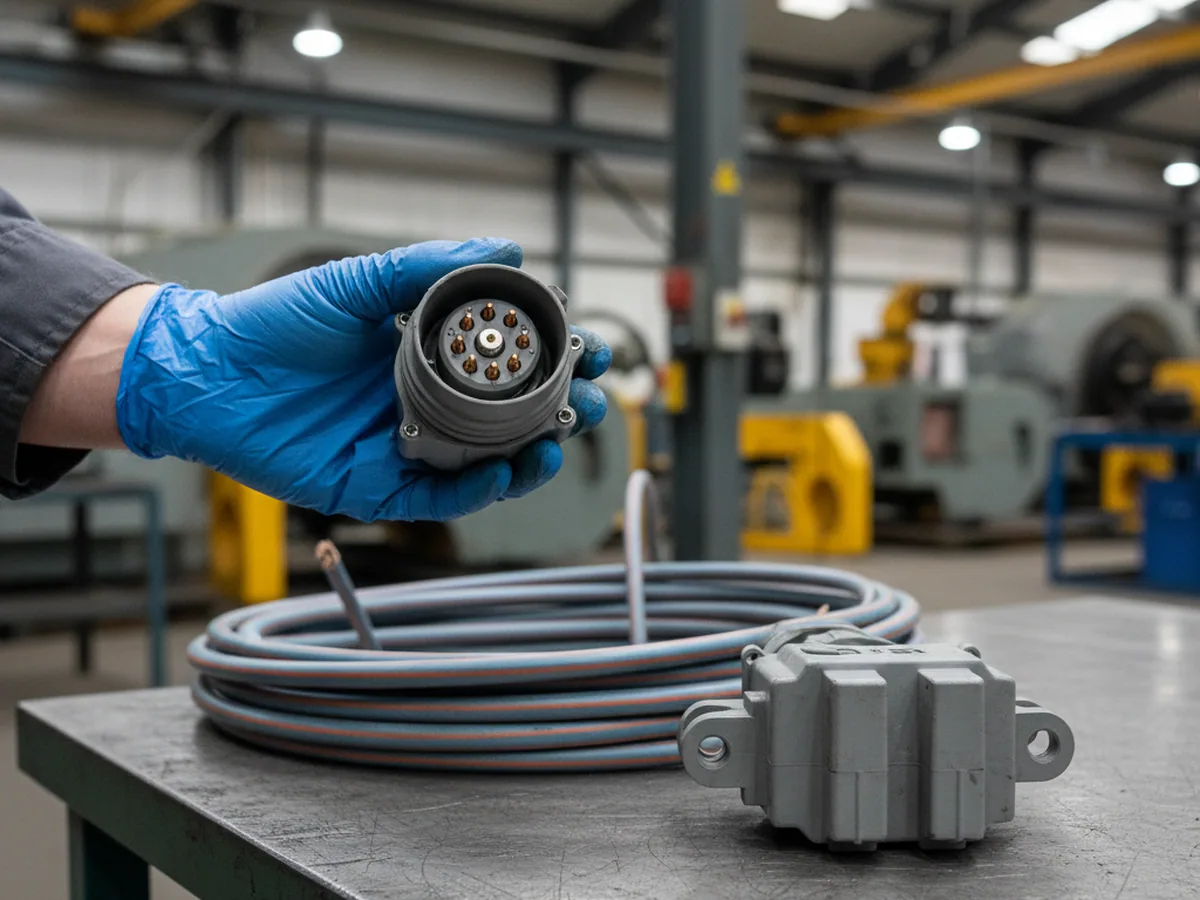
If the truck expects a presence switch, we need the connector type and how much harness slack exists at the seat end. On a hinged cover the slack matters twice: once for the seat position and once for the cover travel.
The plate under the seat is not always a plate
If it hinges, everything routed to the seat travels with it
Slack has to cover the seat position and the cover travel
Interlock, not accessory
Operator Presence Switch: Seat-Side or Machine-Side
It is the one item on a forklift seat that has a safety function, and the one most often treated as a line on an options list.
Seat-side
Machine-side
Two Places It Can Live
On the seat
The switch is built into the seat and the truck reads it through a connector at the seat base. This is what our models are built to take — KL01 carries the provision, KL11 offers it as an option.
On the machine
The truck senses the operator by its own means and expects nothing electrical from the seat at all. A seat ordered with a switch here is a seat with a harness nobody will connect.
What Getting It Wrong Actually Costs
Neither error shows up at goods-in:
A seat with no switch on a truck that expects one will not travel or lift.
A seat with the wrong connector on the right truck does the same.
Both are discovered by an operator on a shift, and both are discovered across the whole batch at once, because a batch is ordered to one specification.
Two configurations, two different things expected from the seat
The One Thing That Is Never an Answer
Bypassing the interlock to get a truck moving turns a seat question into a liability question.
It is the reason we ask for the connector type rather than shipping the common one and letting the site work it out.
Connector type is one of the three items we ask for
What the truck expects to see when the operator stands up
Mechanical only
Operator Weight Band Selection
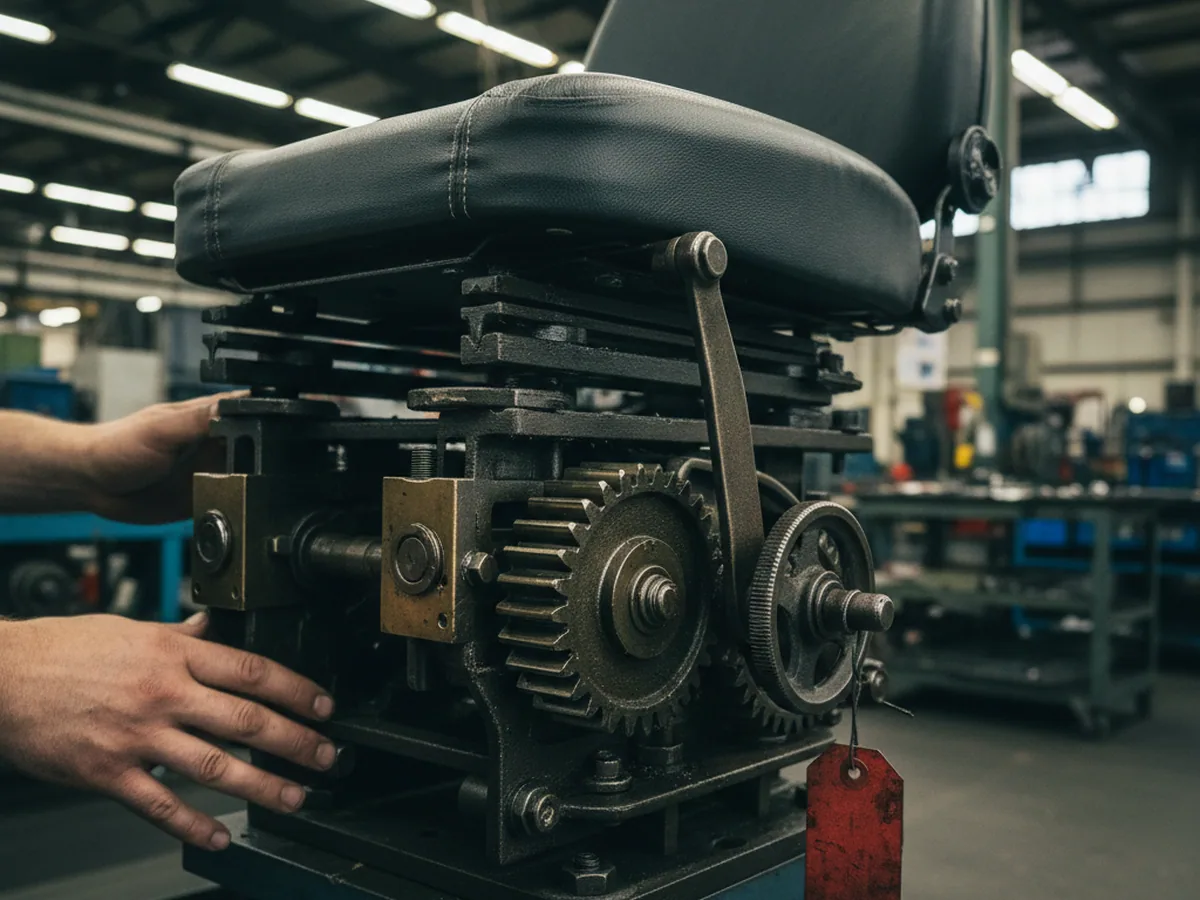
Every forklift seat here runs a mechanical suspension (how suspension type is chosen across duty cycles). The choice that is left is the operator weight band, and it is an organisational question more than a technical one.
KL01 · KL11
YY03 · YY53
Why the Roster Decides It
A forklift is usually shared. Two or three people drive the same truck across a day, and their weights are not close together. There is no single "your operator" to specify against, which is what makes this different from a machine one person is assigned to.
Pick the band from the spread of the roster, not from an average — an average sits comfortably inside both bands and tells you nothing.
Why This Comes Back as a Warranty Conversation
Nobody writes "the weight band is wrong" on a defect report.
What gets written
That the seat is uncomfortable, or that it has failed.
What happens next
The batch gets replaced, and it gets replaced with the same band, because the original reason was never recorded.
If your roster spans both bands, say so in the enquiry and it changes which models we put in front of you.
The Part Nobody Assigns
The weight adjuster is set by hand and it has to be reset when the shift changes. That is a two-second task that belongs to somebody, and on most sites it belongs to nobody. It is worth writing into the handover before it is worth writing into the purchase order.
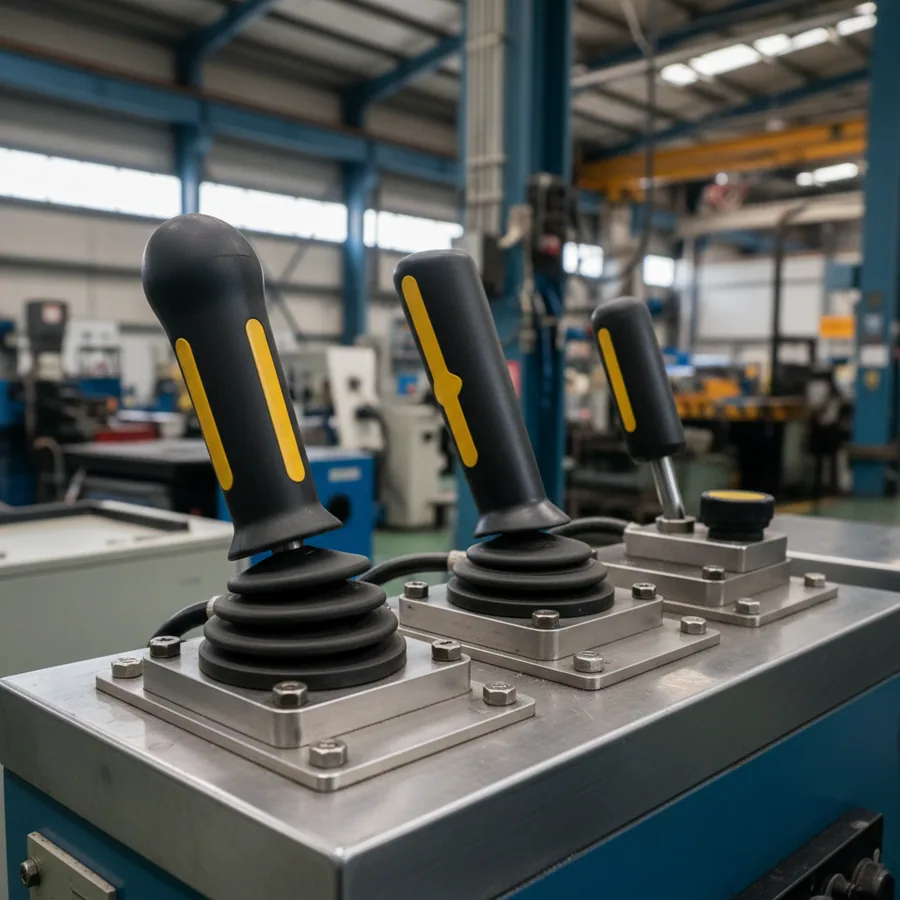
The adjuster is the part that makes a mechanical seat work — and the part nobody is assigned to turn
Mechanical suspension across all four models
Order of failure
Wear Sequence and Spares to Hold
A forklift seat does not fail all at once. It fails in a sequence, and the sequence is predictable enough to stock against.
The Sequence
1Bolster edgeThe outer edge of the cushion, where a hand or a boot lands on the way in. Cosmetic first, then the foam under it.
2Armrest hingeFlip-up armrests are raised and dropped every time somebody gets in. A moving joint on a high-cycle machine — it goes before anything structural does.
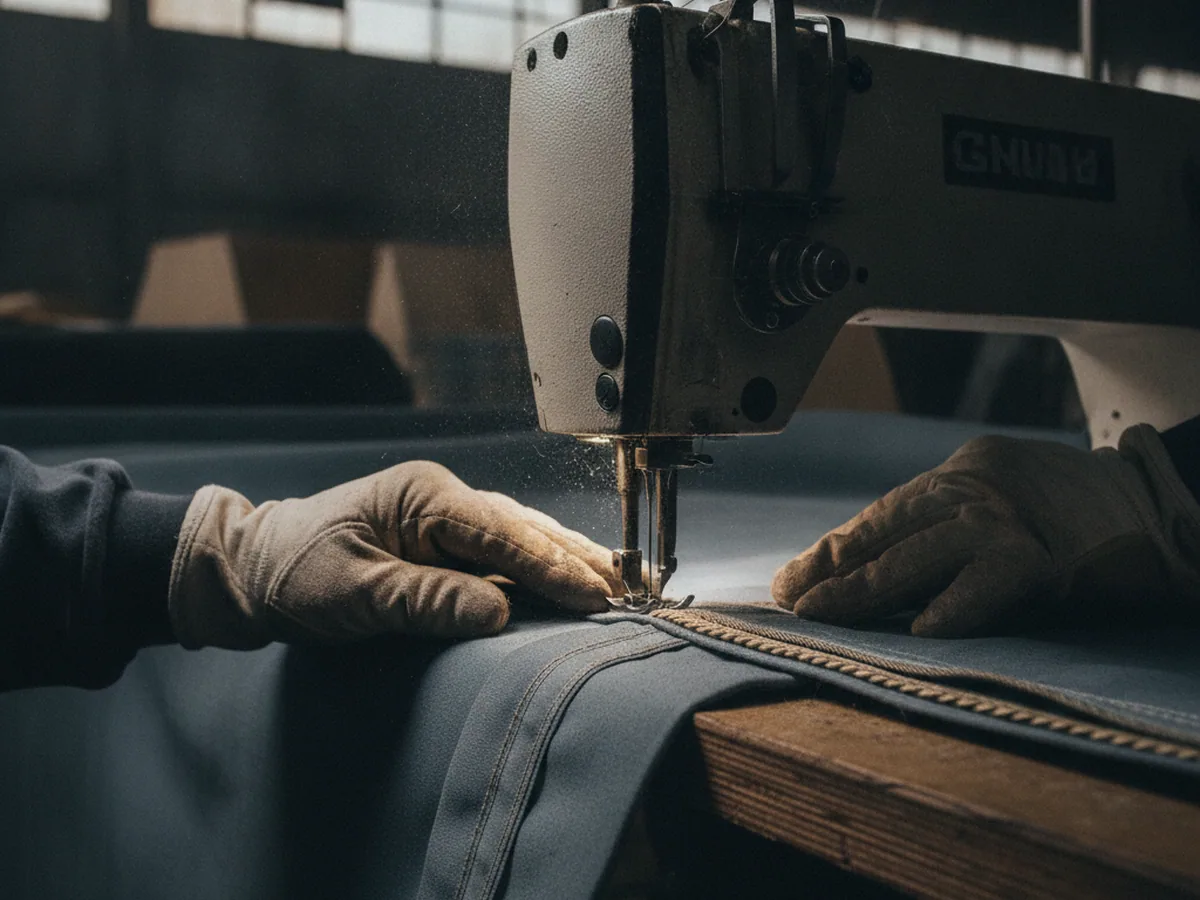
3Cover seamsNot the face of the material — the stitching, which is where a cover that is still watertight starts letting go.
4Presence-switch harnessFlex and pull, particularly where a hinged battery cover adds a second movement the harness was not counted for.
5Suspension, lastBy the time the suspension is soft, the seat has usually been through two or three of the items above.
The Four Parts Worth Holding
Armrest assemblyThe first moving part to go, and the one that makes a seat feel finished or worn out.
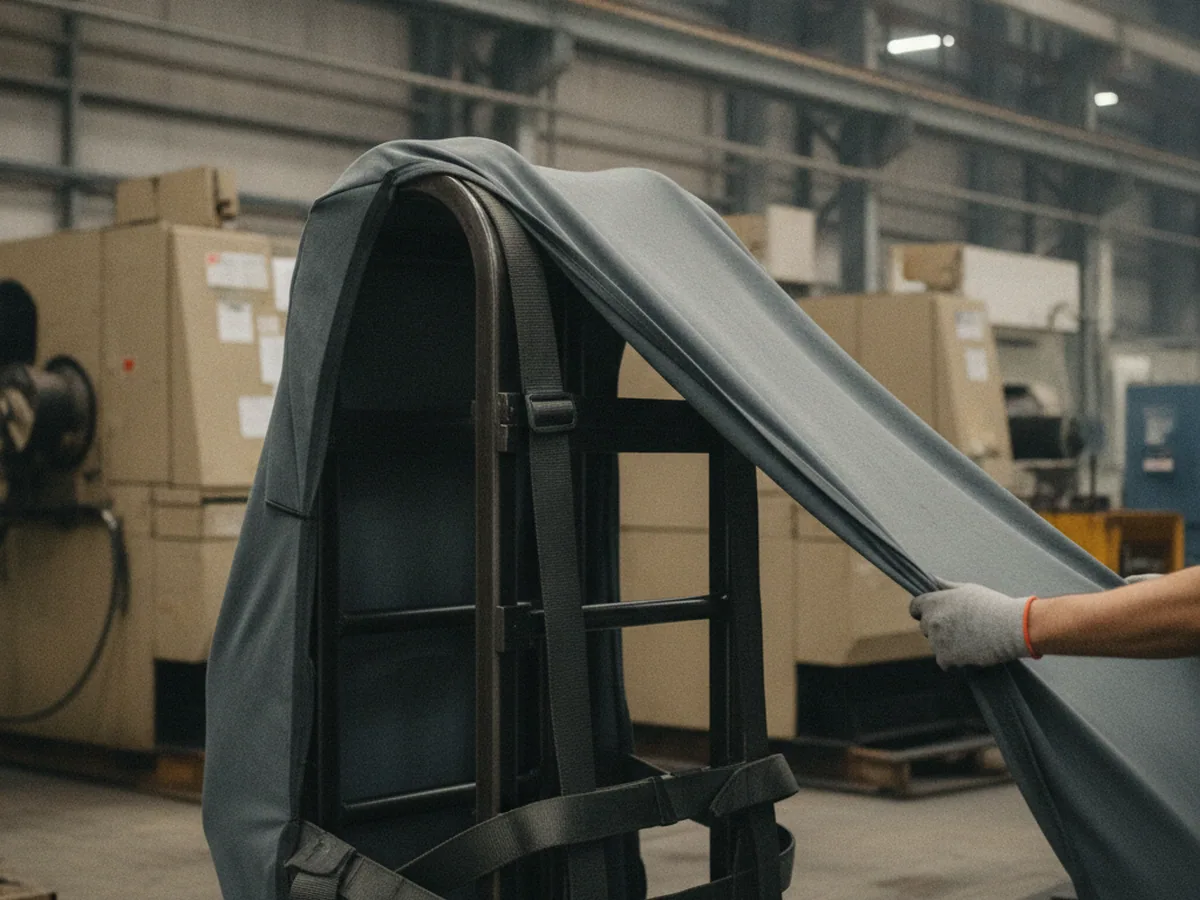
CoverReplaces the two failures above it in the sequence without touching the frame.
Presence-switch harnessThe failure most likely to stop a truck rather than annoy an operator.
Suspension unitStep five, and the only one of the four worth ordering reactively rather than holding.
Stocking these four covers the first four steps of the sequence above, which is most of what a fleet actually consumes before a seat reaches the end of its life.
Step four — the harness, where the cover adds a second movement
Two real axes
Model Comparison: Weight Band and Fore-Aft Travel
Suspension type and backrest height are not axes here — all four are mechanical and all four are low-back, so putting them in a table would manufacture a difference that does not exist.
KL01
KL11
YY03
YY53
KL01
KL11
YY03
YY53
Operator weight band
50–130 kg
50–130 kg
40–120 kg
40–120 kg
Fore-and-aft travel
165 mm
— (not published)
— (not published)
— (not published)
Suspension travel
50 mm
— (not published)
— (not published)
48 mm
Cover
PVC or fabric, same frame
Wear-resistant black PVC
Wear-resistant PVC over high-density foam
PVC
Key options
Flip-up armrest · presence-switch provision
Flip-up armrests both sides · switch, belt and rail optional
— (not published)
— (not published)
How to Use the Two Axes
The weight band is read against the roster — it is the axis that most often decides the answer.
The fore-and-aft travel is read against cab depth: it tells you how much the seat itself can move before it meets something behind it. Only KL01 publishes a figure, which is a reason to start there when cab depth is tight rather than a reason to rule the others out.
Reading the Dashes
A dash means the figure is not published for that model, not that the model lacks it. It only becomes your problem if cab depth or guard clearance is what your decision turns on — and then the three measurements answer it against your truck rather than against the table.
Trucks This Range Does Not Cover
Stand-on and reach trucks are operated standing and have no seat to replace. Order-pickers in the same family are the same case.
Two axes decide it; the rest is preference
Two published axes — the rest is read off your truck
Bolster, cushion, hip point
Three Forklift Seat Test Benches
A forklift seat is mounted and dismounted far more often than it is driven any distance. Where that leaves its marks is not where a load would, and three benches in the test centre are the ones that measure it.
Creep wear
Foam resilience
SIP
Creep wear — abrasion under repeated low-level load
Foam resilience — whether the cushion comes back
SIP — where the operator actually sits
Creep Wear — the One That Matches the Duty Cycle
Creep wear is abrasion under repeated low-level load, which is exactly what the bolster edge takes from entry and exit rather than from the floor. On a category where the dominant input is a person climbing in, this bench measures the failure that actually happens first — the first step in the wear sequence.
Foam Resilience — Whether the Cushion Comes Back
On day one
Foam that recovers its shape between shifts and foam that takes a set look identical.
Before a batch ships
Resilience testing is what separates them, and it is the property behind the high-density foam specification on YY03.
SIP — Where the Operator Actually Sits
The seat index point is the reference the whole cab geometry is measured from. On a truck where the overhead guard fixes the ceiling, knowing where the operator's hip ends up is what connects a seat dimension to the clearance the driver experiences.
Why Three and Not the Whole List
A supplier who lists every machine they own is answering a different question from the one a forklift buyer is asking.
Three of the fourteen produce output that maps onto something on this page:
The other eleven matter on other categories. Ask at qualification and the bench photographs come over by email, one machine at a time — how the test centre is run, bench by bench.
Where the truck works
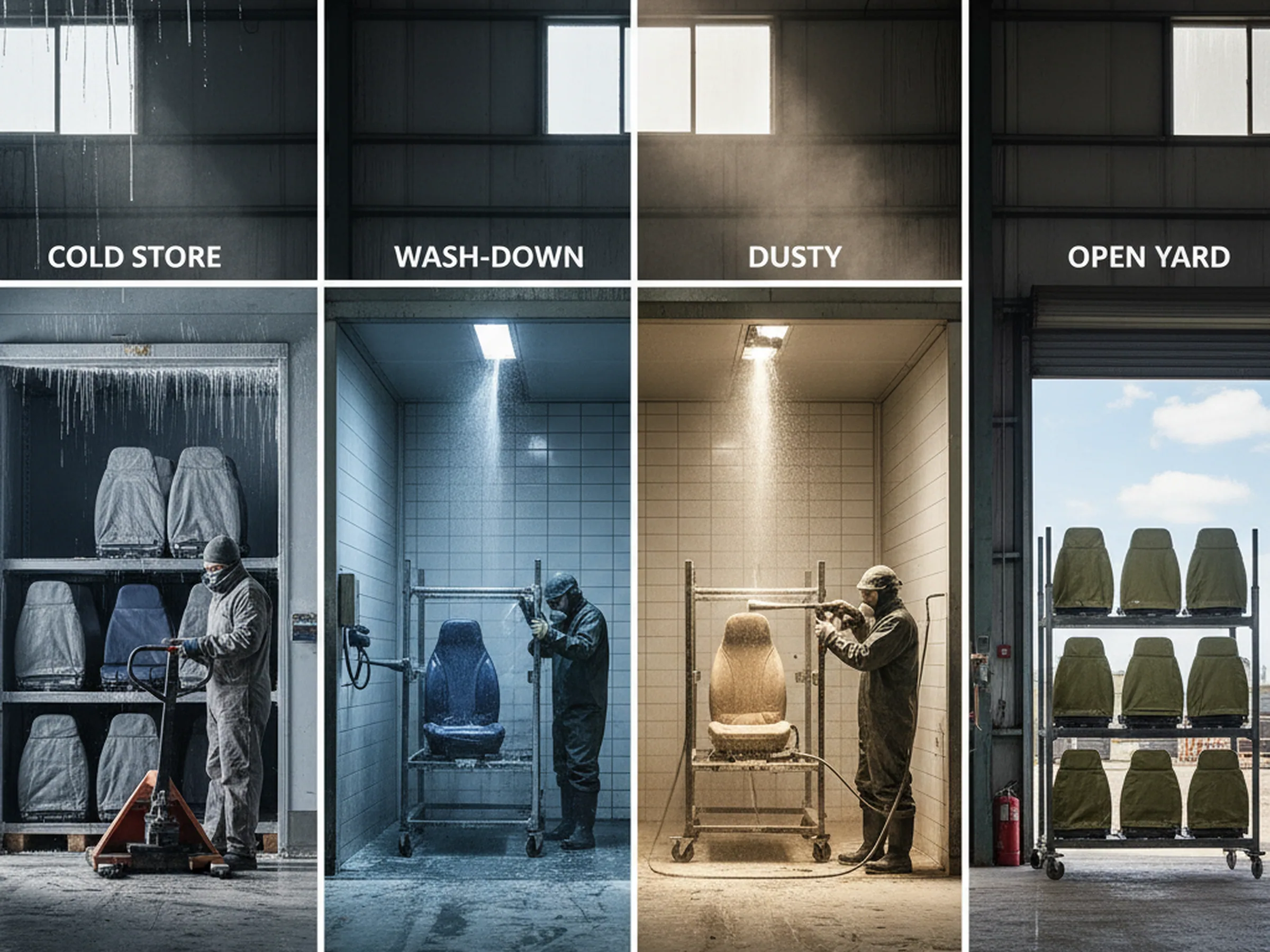
Cover, Suspension and Switch by Working Environment
The environment does not only choose a cover. It reaches the suspension and the switch as well, and those two are the ones nobody asks about until something stops working.
Cold store
Wash-down
Dust and grit
Open yard
What we put forward
What to tell us
Cold store
PVC cover rather than fabric — a non-absorbent face does not hold the condensation that forms on the way back out. Standing cold overnight is what the mechanism has to move freely after.
Store temperature, how long the truck stands in it between runs, and where the switch connector sits.
Wash-down
PVC cover; the seams, not the face, are where water gets in, so the stitching is what the hose should not be pointed at.
Whether the seat is hosed with the truck and how often, and where the hose points relative to the connector.
Dust and grit
Wear-resistant PVC at the bolster (KL11, YY03) — abrasion from clothing and hands is the load here; grit in the moving joints is the second.
Indoor floor or open yard, and whether the connector sits where dust settles.
Open yard
Not a standard-model environment on its own — a seat standing outdoors between shifts is a weather question before it is a seat question. Ask.
Whether the truck is covered between shifts, and whether water reaches the seat base at rest.
Which of the Four We Put Forward
The environment goes in as one input alongside the three measurements, and the answer names which of the four forklift seat models we would put forward for it — or that the environment is outside what a standard model is intended for.
The Column People Skip
The switch column is the one left out of most enquiries. It is also the column where a wrong answer stops a truck rather than shortening the life of a cover.
Wash-down — the seam, the mechanism and the connector
Open yard — weather with no cover between shifts
Every one of these seats is low-backed and short-travelled because the guard over the operator's head was never going to move.
Due diligence
Two Questions for Any Seat Supplier
Both have an answer that can be checked or refused. Ours are below each question. Ask the same two of whoever else is quoting.
1
Which of the four processes do you own?
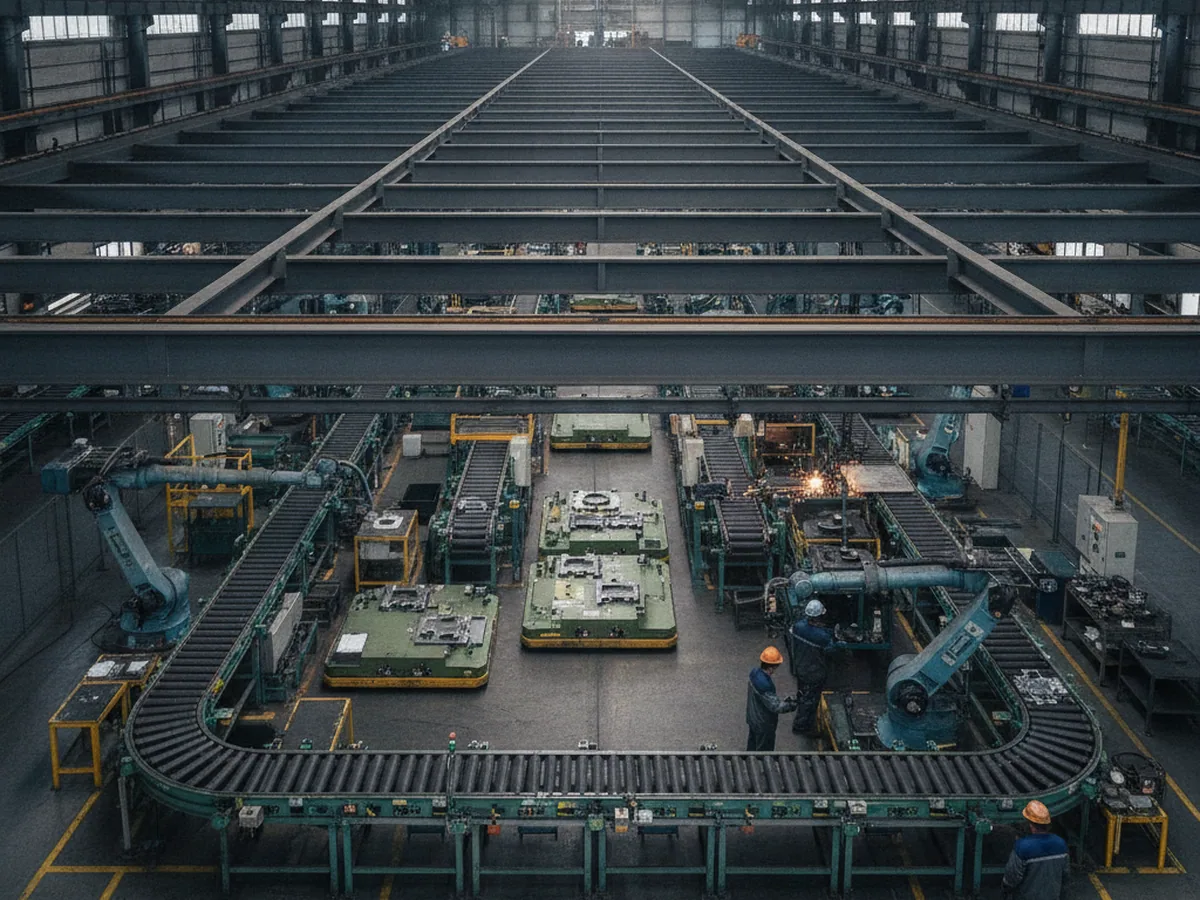
Stamping, welding, foaming and assembly — ours are all four, in one building, which is what makes the traceability in question 2 possible at all. A supplier who owns two and buys two is not disqualified by that, but it changes who can answer question 2. Plant, lines and capacity are on the factory page.
2
Can you trace a specific seat back to a specific batch?
Ours can be, because the four operations in question 1 all sit under one roof and log against the same build. Put this question to a trader and the honest answer stops at the purchase order they placed — a real answer, just not one you can act on when a batch goes wrong.
Stamping — the parts that decide whether your mounting pattern is met
Welding — where batch-to-batch consistency is won or lost
Do your forklift seats come with a presence switch fitted?
KL01 carries the provision and KL11 offers the switch as an option. Whether you need one — and which connector — depends on the truck, which is why it is one of the three items we ask for.
Three measurements and the weight range of the people who drive it. That is enough to name the models that fit — and the ones that do not.
ISO 9001:2015
CE
Photos of the seat plate, the overhead guard clearance and the switch connector go to sales@klseats.com
0086-136 1700 5124 · 0086-791-8577 6525
Whichever question brought you here — the three measurements, a failed part, or the environment the truck works in — put that one in the message box and lead with it.
First reply within 24 business hours; a named fitment answer, not a catalogue, within 48 hours of your measurements.